This attraction introduction is compiled from historical materials in the "Zhangjiajie Tour Guide Network" (33519.com · Scenic Spots section). Ticket prices, opening hours, transportation, and contact information mentioned in the text may be outdated. Please refer to the latest official announcements from the scenic area before traveling; some content consists of historical background/cultural introductions and is for reference only.
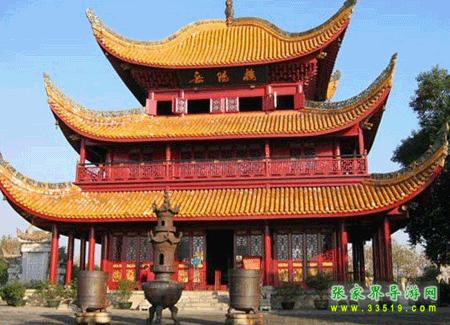
Xichan Temple in Huarong County was first built in the 2nd year of Chuigong of the Tang Dynasty. It was then an important stage-style Zen temple on the pilgrimage route from Mount Emei to Mount Jiuhua. In the Song Dynasty it became a famous temple in Hunan, known as a supreme place for worshipping Buddha and pilgrimage on the Hunan-Hubei Plain. Emperor Taizu Zhu Yuanzhang of the Ming Dynasty bestowed the plaque "First Mountain"; in the 19th year of Qianlong of the Qing Dynasty, Guo Huai, magistrate of Huarong County, personally drafted a proclamation and erected the "Yongzhi Shanmen" stele, praising it as having a "magnificent divine hall, wreathed in incense smoke," and stating that it "is said to contain a statue of Buddha in red gold." Both the Ming and Qing editions of the Huarong County Gazetteer listed Xichan Temple as an important cultural relic and historic site within Huarong.
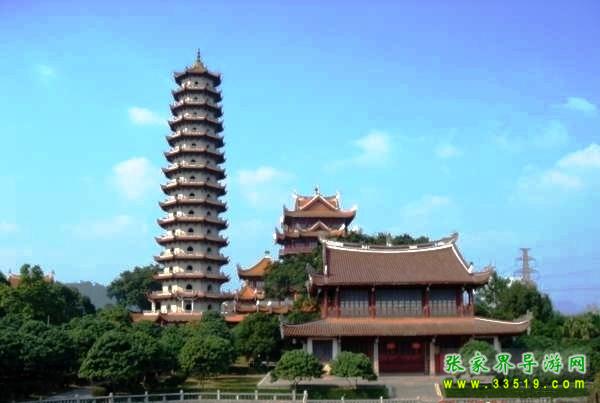
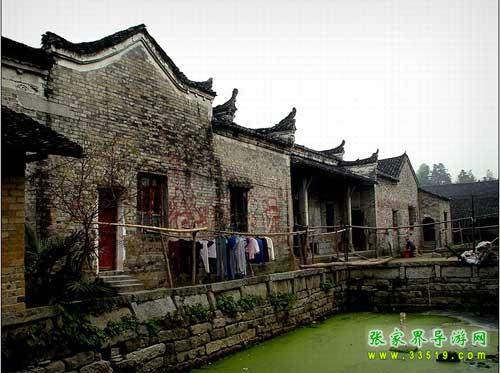
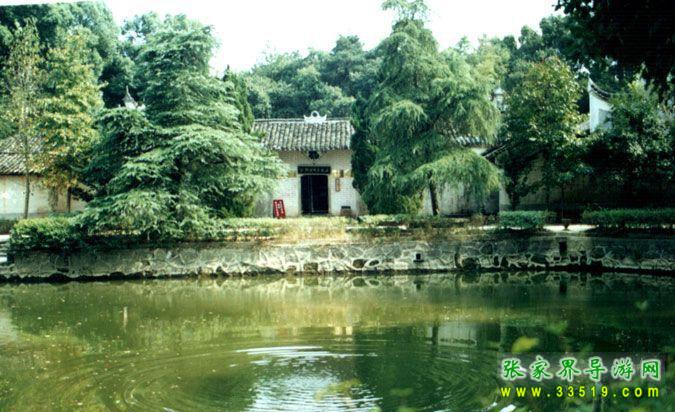
The original site of Xichan Temple was at the west gate of Huarong County town. During the Hongwu period of the Ming Dynasty it was moved to the east gate, adjacent to the City God Temple. During the Guangxu period of the Qing Dynasty, the eminent monk Li Jin from Mount Heng came here to reside, led the monks in collecting alms and donations from all around, obtained huge funds, rebuilt the temple, and also built the east gate stone street and purchased one hundred mu of incense-field land in what was then Huangpengyuan. The rebuilt Xichan Temple was magnificent in scale and exquisite in construction. The temple covered more than 2,600 square meters and consisted of five successive sections: the main gate, the Hall of Heavenly Kings, the Mahavira Hall, the Guanyin Hall and the Zen Grove, facing south from the north, with the main gate opening onto East Main Street. In front of the Zen Grove was a large life-release pond, connected front and back by a stone arch bridge; the walls around the life-release pond were carved with bluestone reliefs showing the full panorama of the drama "Flooding Jinshan Temple," with water light and sunlight reflecting each other and incense smoke and tree mist intertwining; the shrimp soldiers and crab generals in the stone carvings on the walls seemed to chase the real turtles and snakes in the pond, making it hard to tell true from false, a truly spectacular sight. Whenever there were natural or man-made disasters, Xichan Temple would hold rituals, chant sutras, release sky lanterns and river lanterns; especially during the "Zhongyuan Festival" in the seventh lunar month, the Yulan Assembly invited eminent monks from famous mountains and ancient temples to perform Buddhist services, chant sutras and worship the Buddha, purifying folk customs and cleansing society.
Karma cycles and worldly affairs change. In the middle and late Republic of China period, morals declined, eminent monks left the temple, and Buddhist activities waned. The first three sections of Xichan Temple were often used as public places such as the "Land and Grain Office" and the "Honglu Law Office," and the pure realm of the Zen Grove was broken. After Liberation, the incense offerings of Xichan Temple were confiscated as feudal property. Religious activities of worshipping Buddha and practicing Zen were confused with feudal superstition and were for a time restricted and prohibited. In 1952, Xichan Temple was used to open the labor reform team's "Xinsheng Rice Mill." During the "Great Leap Forward" in 1958, streets were expanded and factories were built, and the temple was basically destroyed. It was not until 1992, when the Party's religious policy was implemented and Buddhist culture was revitalized, that the county people's government decided to relocate and rebuild Xichan Temple on the basis of the original "Ding'an" Buddhist site built in the Ming Dynasty and the scenic land-and-water landscape of Xianqiao Mountain.
The reconstruction of Xichan Temple was designed in imitation of the ancient Xichan Temple model, with plans to build three halls (the Mahavira Hall, the Hall of Heavenly Kings and the Guanyin Hall), seven rooms (the Buddha-Recitation Hall, the Lecture Hall, the Dining Hall, the Reception Hall, the Elderly Hall, the Self-Cultivation Hall and the Patriarch Hall), three towers (the Sutra Library, the Bell Tower and the Drum Tower), one dormitory (monks' quarters), and one pond (the Lotus Pond). This plan of three halls, seven rooms, three towers, one dormitory and one pond is simple, elegant and magnificent, complementing the natural scenery of Zhutou Mountain, and both clergy and laity applauded it. The total land area for the temple buildings is more than 35,000 square meters, of which the building area is more than 6,500 square meters, twice the building land area of its heyday. Through the joint efforts of clergy and laity, the Buddha-Recitation Hall, the Mahavira Hall, the Three Sages Hall, the Guanyin Hall, the Dining Hall and corresponding monks' rooms have been built successively. The three characters of the temple plaque, "Xichan Temple," were inscribed by Mr. Zhao Puchu, vice chairman of the National Committee of the Chinese People's Political Consultative Conference and president of the Buddhist Association of China.