This attraction introduction is compiled from historical materials in the "Zhangjiajie Tour Guide Network" (33519.com · Scenic Spots section). Ticket prices, opening hours, transportation, and contact information mentioned in the text may be outdated. Please refer to the latest official announcements from the scenic area before traveling; some content consists of historical background/cultural introductions and is for reference only.
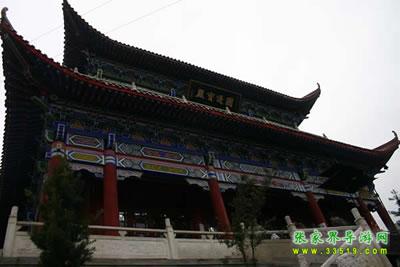
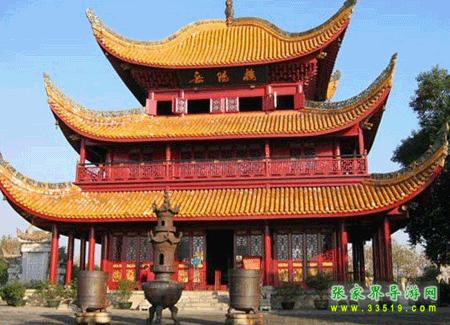
Since 1996, leaders of Pingjiang County and towns have developed the "Huaifu Scenic Area" and built the Du Fu Pavilion at the summit of the main mountain. Completed at the end of 1997, it has three stories, with scale and architectural features just like the Yueyang Tower. Du Fu's poems and contemporary verses are carved on it. On the second floor of the pavilion is a large statue of Du Fu, and on the first floor is a large screen carving inscribed with "Record of Du Fu Pavilion," written by Mai Fu and calligraphed by Qi Wang. Within the Huaifu Scenic Area, construction has begun on Du Fu's "Wangxiang Pavilion" (Gazing Homeward Pavilion) and "Jiangjun Pavilion" (General Pavilion).
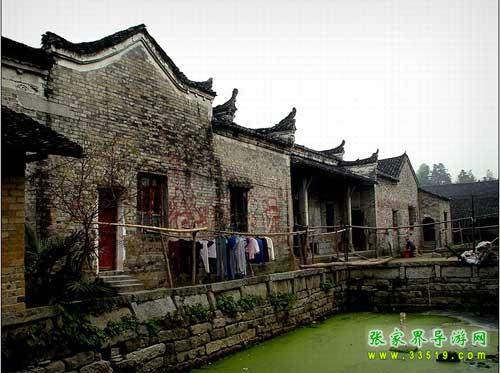
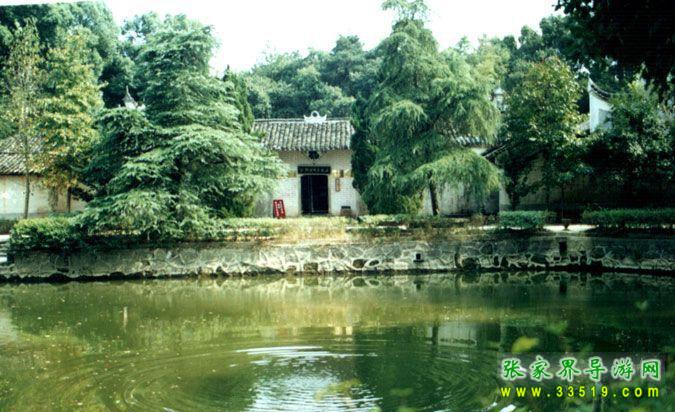
The Du Fu Tomb in Xiaotian Village, Pingjiang, is the burial place of Du Fu, the great patriotic poet of the Tang Dynasty, a world cultural celebrity, and the "Sage of Poetry." According to historical records and expert verification, in 768 AD, Du Fu took his wife and children by boat into Dongting Lake and drifted through Hunan. Gravely ill and out of funds, he had no choice but to turn from Dongting Lake into the Miluo River toward Changjiang County (present-day Pingjiang County) to seek medical treatment. He unfortunately died of illness there and was buried in Xiaotian Village. The Du Fu Tomb and Ancestral Hall, first built in the Tang Dynasty, and the Tieping Poetry Society built in the late Qing Dynasty to commemorate the "Sage of Poetry," together form a group of ancient buildings of great cultural relic, historical, and ornamental value. In 1988, the state designated this as a national key scenic and historic site. Through the vicissitudes of history, the Du Fu Tomb and Ancestral Hall have been severely damaged.
In August 2000, with approval from the Hunan Provincial Cultural Relics Bureau, and with restoration plans formulated and specific guidance provided by ancient architecture restoration experts from the Yueyang Cultural Relics Office in Hunan, Pingjiang County officially launched the restoration project of the Du Fu Tomb and Ancestral Hall. For over a year, the county strictly followed the principle of "restoring the old as it was," restoring a total area of 2,552 square meters of the Du Fu Tomb and the surviving ancient buildings—the Du Gong Ancestral Hall gate, monk's quarters, and Tieping Poetry Society—and reconstructing the destroyed and lost Du Gong Ancestral Hall offering hall and Huanhua Thatched Cottage. According to Li Chun, deputy head of the Pingjiang County Du Fu Tomb Construction Leading Group, the county is raising funds from various sources to build a road directly from the county town to the Du Fu Tomb, and is starting to build a poetry stele corridor, embedding all of Du Fu's poems throughout his life into the corridors, pavilions, bridges, and gazebos of the ancestral hall, making it the world's number one Du Fu poetry stele corridor.