This attraction introduction is compiled from historical materials in the "Zhangjiajie Tour Guide Network" (33519.com · Scenic Spots section). Ticket prices, opening hours, transportation, and contact information mentioned in the text may be outdated. Please refer to the latest official announcements from the scenic area before traveling; some content consists of historical background/cultural introductions and is for reference only.
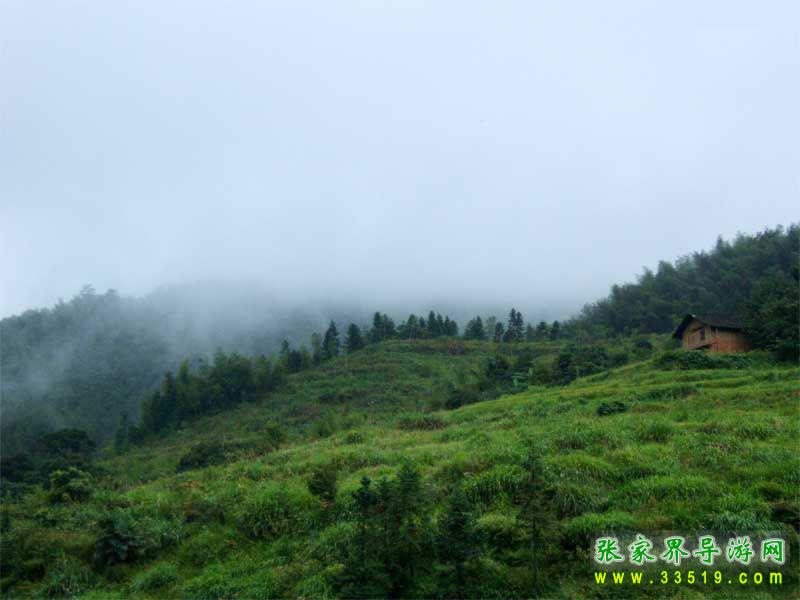
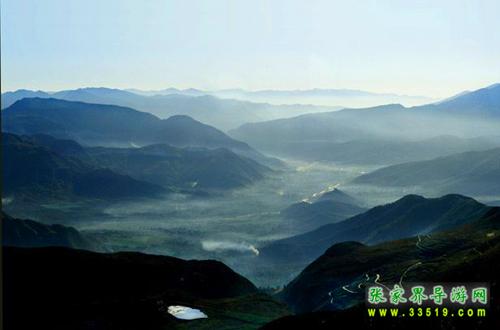
Lianyun Mountain is the highest peak within Pingjiang, with an elevation of 1,600.3 meters. It has three caves—Gujia, Xujia, and Zaomen—each with its own distinctive features. Gujia Cave boasts ten thousand mu of rejuvenated bamboo sea; Xujia Cave has a high-mountain reservoir and an arched dam; Zaomen Cave features the Yixian Spring, where one pool follows another. The natural scenery and cultural landscape here are remarkably rich, long known for the saying 'Lianyun Green Cliffs,' among which the Lianyun Bamboo Sea is the finest. The Bamboo Sea stretches 22.47 kilometers from north to south and 12.6 kilometers from east to west, covering a total area of 282 square kilometers. The Bamboo Sea is surrounded by high mountains on three sides, and more than 30 small streams converge into the 30-kilometer Huanxin River, which flows into Wuxing Reservoir and then connects with the Miluo River. Xiangu Cliff: Five kilometers east of Changshou Town lies the nationally renowned former site of the Xiangu Rock Red Army Camp. At an elevation of over 280 meters and covering an area of 3.5 square kilometers, it is located within Tangkou Village, Changshou Town, and features Danxia landform with crisscrossing ravines, scattered rock caves, sheer cliffs, and precipitous mountain terrain. The former site of the Xiangu Rock Red Army Camp is a relatively well-preserved Red Army camp site in China. In 1928, Marshal Peng Dehuai launched the Pingjiang Uprising, founded the Fifth Army of the Chinese Workers' and Peasants' Red Army, and then led his troops to Jinggangshan. Passing through Changshou and Longmen, they fought bloody battles with the enemy and broke through the encirclement. Some of the wounded were transferred to Xiangu Rock. Revolutionary forebears Fang Zhengping (former Deputy Political Commissar of the Navy of the Central-South Military Region, awarded the rank of Lieutenant General in 1955) and Wu Qinmin and others used this place as a base to wage a guerrilla war lasting three years. The site still preserves relics such as the 'Red Army Sentry Post,' 'Red Army Command Post,' 'Red Army Grand Stage,' 'Military Supply Depot,' 'Red Army Well,' and 'Troop Hiding Cave.' These are integrated with 40 scenic natural attractions at Xiangu Rock, including 'Immortal Hanging Painting,' 'Immortal Selling Meat,' 'Immortal Gathering Herbs,' 'Yang Gong in Evening Glow,' and 'Wild Deer Carrying Flowers.' In 1994, after the passing of old Commander Fang Zhengping, in accordance with his last wishes, his ashes were buried beside the Red Army Camp. In 2000, the Pingjiang County Government, Yueyang Youth Travel Service, and Changshou Town Government jointly invested to develop it into a moral education base integrating tourism and moral education. It is the best place to receive traditional education and enjoy natural scenery.