This attraction introduction is compiled from historical materials in the "Zhangjiajie Tour Guide Network" (33519.com · Scenic Spots section). Ticket prices, opening hours, transportation, and contact information mentioned in the text may be outdated. Please refer to the latest official announcements from the scenic area before traveling; some content consists of historical background/cultural introductions and is for reference only.
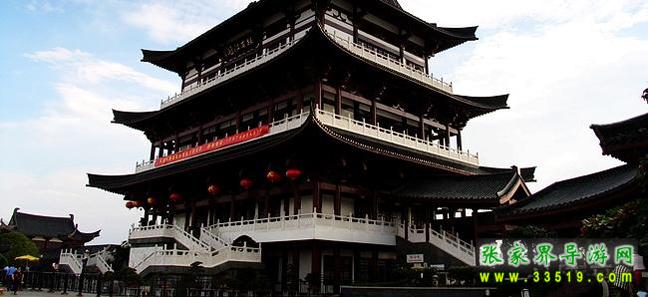
Tianxin Park sits at the southeastern corner of the ancient city wall of Changsha, above which towers the Hunan landmark—Tianxin Pavilion. The park takes its name from the pavilion, and the pavilion illuminates past and present. A single glance takes in all of Chu's skies, stirring boundless reflections.
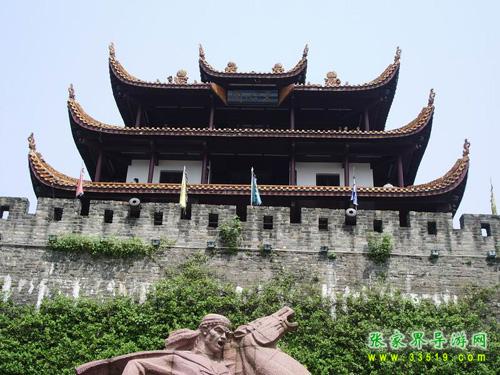
As a famous city of Chu and Han, Changsha already had broad rammed-earth city walls over 2,000 years ago. In the early Ming dynasty, these were entirely rebuilt with stone foundations and brick, surrounded by a moat. After the Xinhai Revolution, the city wall was demolished to build a ring road, and only the highest section at Tianxin Pavilion was preserved as a historic site. A contemporary couplet reads: "Above the pavilion, the nine heavens greet the sun and moon; the city keeps one corner to view the rivers and mountains." This surviving section of the ancient wall is now 387.8 meters long, 13.4 meters high, and 6.1 meters wide at the top. It is divided into inner and outer walls, with the outer wall further built into north and south barbicans. Within are troop-hiding caves and cannon embrasures, and four Qing dynasty iron cannons remain. The mottled bullet marks still visible on the wall tell of a tragic chapter in the history beneath it: on September 10, 1852, the Taiping army reached the south gate of Changsha. The Western King, Xiao Chaogui, led from the front, spurring his horse and brandishing his sword as he directed the assault from the front line, and tragically fell to cannon fire on September 12. Against this backdrop, the group sculpture "Souls of the Taiping Army" was unveiled at the foot of the ancient Tianxin Pavilion wall in October 1993, presenting to the world a tragic and heroic hymn of peasant revolutionary war.
Tianxin Pavilion Park was first established in 1924, when those climbing the pavilion paid two copper coins. In 1952, the people's government restored and reorganized Tianxin Park. After decades of construction, it has become a garden of ancient elegance and refined beauty, a green oasis in the bustling city. The city wall, tall pavilion, and kiosks are arranged in pleasing disorder, connected by winding paths. Ponds ripple, green shadows sway in the clear light, and visitors throng like clouds. Those practicing martial arts and strolling by moonlight are especially numerous morning and evening. To climb the pavilion and gaze afar, from the north there is a parapet-lined path where "Rusheng Pavilion" welcomes you; passing through the "Xiongzhen" gate, you feel as though you have entered a fairyland. Entering from the "Zhuangguan" gate at the southern end, the stone steps are steep, the shade blocks out the sun, and suddenly a hidden world opens up.
In the winter of 1993, beneath the majestic ancient city wall of Tianxin Pavilion, a large sculpture titled "Souls of the Taiping Army" was erected, combining warhorses, weaponry, and group figures into one, recreating the heroic scene of the Taiping army's fierce battle at Changsha in 1852: after the Western King Xiao Chaogui led from the front and fell to cannon fire, a female soldier calls out to her comrades, an old soldier stands angry and unyielding, and officers and soldiers charge forward. The expressions are lifelike and the sense of motion powerful. Seeing it, one seems to hear and witness once more the battle scene of fluttering banners, rolling war drums, thundering cannons, and the cries of men and neighing of horses. The group sculpture is 6 meters tall, covers a base area of 54 square meters, weighs about 100 tons, and is carved from fine Sichuan "General Red" granite. With vivid sculptural language and a sense of rhythm, it presents to the world a tragic and heroic hymn of peasant revolution.
Though Tianxin Park covers less than 4 hectares, it is a city within a city and a heaven beyond heaven, where north and south differ and every step reveals a new scene.