This attraction introduction is compiled from historical materials in the "Zhangjiajie Tour Guide Network" (33519.com · Scenic Spots section). Ticket prices, opening hours, transportation, and contact information mentioned in the text may be outdated. Please refer to the latest official announcements from the scenic area before traveling; some content consists of historical background/cultural introductions and is for reference only.
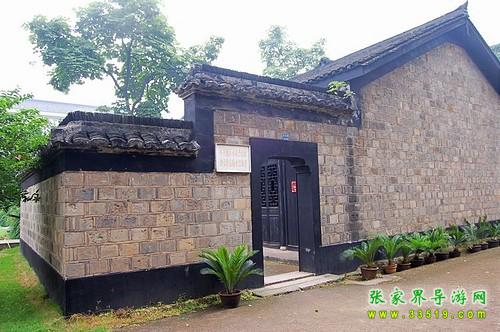
The Former Residence of Yang Kaihui, a Hunan Provincial Cultural Relic Protection Unit, is located in Bancang, Qingtai Township (now Kaihui Township), Changsha County. It is about 70 kilometers from Changsha. First built in the late Qing Dynasty, it is a civil structure with small blue tiles, facing a field with a mountain at its back, oriented north-south, with a low protective wall in front forming a courtyard. It covers an area of about 680 square meters. The buildings are arranged in three parallel rows—front, middle, and rear—with the front lower and the rear higher. The front row has double wooden doors with a wooden latticed revolving door set in the middle; the middle row has three steps leading up to a reception hall, with a horizontal plaque inscribed with the two characters "Bancang" hanging above the door; the rear row has the central main hall, with living rooms on either side. The side rooms on both sides were mostly used as storage and auxiliary rooms. Between the rows are small courtyards or light wells, planted with osmanthus and privet trees. To the west of the courtyard is a vegetable plot, and outside the courtyard is a pond.
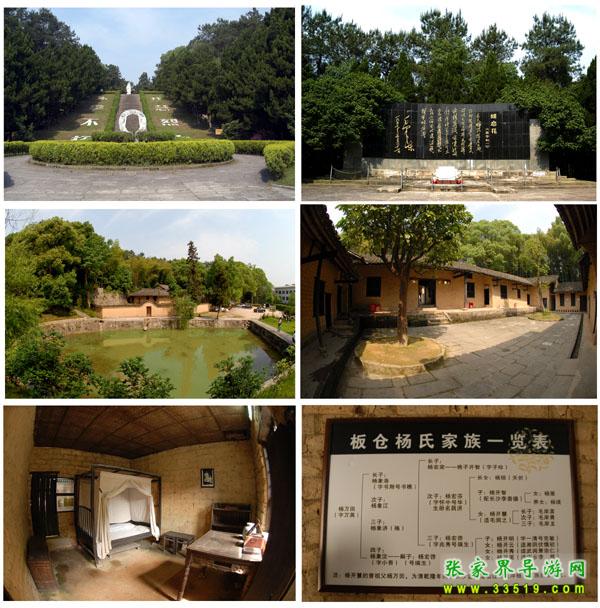
On November 6, 1901, Yang Kaihui was born in the north room at the east end of the rear section of the former residence. It was repaired and opened to the public in November 1966, with the rooms of Yang Kaihui, Yang Changji and his wife, and Mao Zedong and Yang Zhan restored and furnished. During repairs in 1980, multiple manuscripts and letters written by Yang Kaihui in 1928 while living at home were found in wall crevices. About 300 meters to the right of the former residence, on the Mianhua Slope hilltop, is the Yang Kaihui Cemetery. In November 1930, after Yang Kaihui was executed at Shiziling in Changsha, she was buried on the north-facing slope of Mianhua Slope. Mao Zedong sent 30 silver dollars to erect three steles in the names of the three sons he had with Yang Kaihui. In 1959, a memorial pavilion and memorial tower were built in front of the grave. In April 1967, the grave was rebuilt and a cemetery established. In 1969, Yang's mother Xiang Zhenzhao was interred with her, and a new joint burial tomb was built at the present site, covering about 1.3 hectares. From the foot of the hill to the grave area is about 150 meters, connected by three terraced platforms, each with stone steps totaling over a hundred. The tomb mound is within the topmost square platform, which has sides 18 meters long. The tomb is stone-built with a concrete structure and marble facing, measuring 6.6 meters long, 5.8 meters wide, and 0.4 meters high. The tombstone is placed horizontally and at a slant, 2.7 meters long and 2.3 meters wide, made of white marble, with regular-script inscription reading "Old Madam Yang and Martyr Kaihui Buried Together." On the tomb stone behind the stele is inscribed the date of the tomb's construction. Parallel to the tomb, a large inscription stele was built behind it, engraved with Mao Zedong's handwritten poem "Butterfly in Love with Flowers · Reply to Li Shuyi." The cemetery is surrounded by green pines to comfort the heroic spirit. The joint tomb of Yang Kaihui's grandfather Shuqiao and father Changji, as well as the tomb of her cousin the martyr Yang Kaiming, are also among the pines, cypresses, camphor, and catalpa trees of the cemetery.