This attraction introduction is compiled from historical materials in the "Zhangjiajie Tour Guide Network" (33519.com · Scenic Spots section). Ticket prices, opening hours, transportation, and contact information mentioned in the text may be outdated. Please refer to the latest official announcements from the scenic area before traveling; some content consists of historical background/cultural introductions and is for reference only.
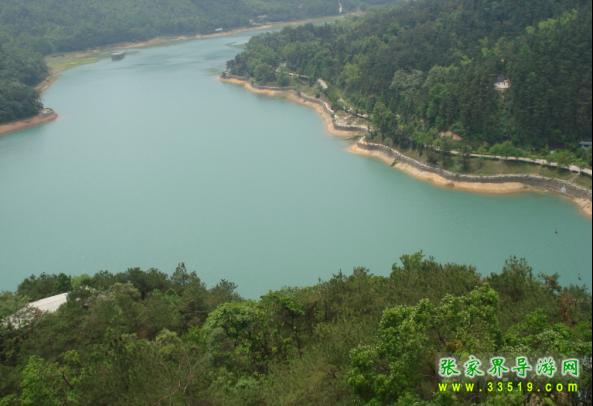
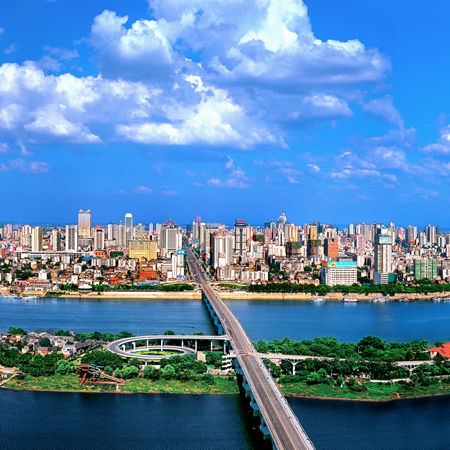
Juzizhou, the Isle of Oranges, is located in Yuelu District, Changsha City, Hunan Province. It is an island in the middle of the Xiang River, about five kilometers long. It was formed in the second year of Yongxing of Emperor Hui of Jin (305 AD) and has a history of more than 1,600 years.
As far back as the Tang Dynasty, this place was rich in southern oranges, which were sold as far as Jianghan and other places. Du Fu once wrote for this the verse, "In the Peach Blossom Spring, the people easily change their ways; but the fields of Orange Isle remain fertile." Juzizhou has been a famous tourist destination in Hunan Province since ancient times. One of the eight ancient Xiaoxiang scenes, "Evening Snow on the River and Sky," is located here. In the Song Dynasty, Xiao Dajing's "Xiaoxia Poems" praised Juzizhou as "Little Penglai." The famous couplet in the Water and Land Temple among the scenic sites, "In the Gongji Tower, in the fifth and sixth months there is no summer heat; on the Xiaoxiang River, in the second and third watches there are fishermen's songs," is still widely admired today.
Orange Isle is a painting that displays local charm. Neighboring Yuelu Mountain and accompanied by the Xiang River, its scenery is breathtaking, forming the unique landscape of "a green mountain on one side and a city on the other." To the west, it looks toward the verdant, layered peaks of Yuelu Mountain and is adjacent to Yuelu Academy, Aiwan Pavilion, and the Yuelu Mountain University Town under construction; to the east, it overlooks the Xiang River scenery belt and takes in the full prosperity of the city. From west to east, mountain, water, isle, and city merge into one, like a flowing painting, like an enlarged bonsai. Visitors ascending the isle can listen to fishermen's evening songs, view the red maples of Yuelu Mountain, see the soaring pavilions of Tianxin, admire the orange-red trees all over, and recite the verses of former sages, all in great joy.
Orange Isle is a bridge that carries history. It is steeped in Huxiang culture and has formed a rich historical heritage. On the south side, the Zhu-Zhang Ferry, where Zhu Xi and Zhang Shi crossed the river between Yuelu Academy and Chengnan Academy to lecture, explains the flourishing scene of Huxiang students seeking learning eight hundred years ago; the Water and Land Temple and Gongji Tower tell of the prosperity of religious culture in the Yuan Dynasty; the sound of Zeng Guofan drilling the Xiang Army on the water still seems to echo over Orange Isle; the weather-beaten foreign consulates and luxury villas bear witness to the history after Changsha opened as a treaty port; and Mao Zedong's heavenly question from the head of Orange Isle, "I ask the vast earth, who determines rise and fall?" changed the course of Chinese history.
Mao Zedong had a special affection for Orange Isle. After the founding of the People's Republic, he swam seven times in the Xiang River waters near Orange Isle. On June 24, 1959, he came from Wuhan to inspect Hunan. As soon as he got off the train, he rode straight to Houzishi, swam for more than an hour, and landed on Orange Isle from what is now Lanyue Pavilion. On the isle, he visited vegetable farmers, met with primary school teachers and students, and took photos with them, still leaving people with warm and happy memories today. In 1974, Mao Zedong returned to Hunan for the last time, at the advanced age of eighty-one. In the early morning of October 15, he insisted on riding to the head of Orange Isle. One day in early December, he again proposed swimming in the Xiang River, but because the water temperature was too low, he had to give it up.
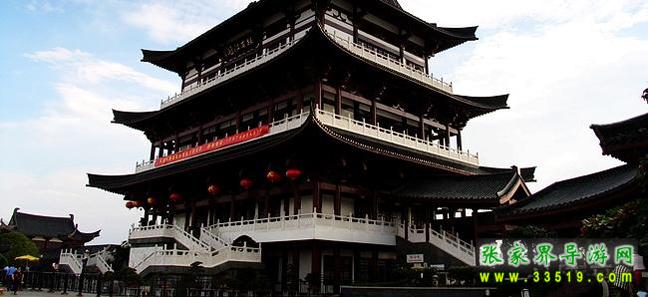
In July 1982, Orange Isle Park was officially opened. It now covers fourteen hectares and includes scenic spots such as the Mao Zedong Poetry Stele, Songju Pavilion, Zhenjiang Pavilion, and Lanyue Pavilion. The park takes contiguous orange groves as the main body of its greenery, mixed with precious flowers and trees. It has beautiful scenery and a quiet environment, integrating greening, beautification, fragrance, and purification into one, with each offering its own merits in viewing mountains, water, oranges, and flowers.
Orange Isle—some say it is a painting: peach and plum blossoms vying in spring, clear islets and white sand, oranges yellow and tangerines green, and plain white wrapped in silver.
Orange Isle—some say it is a poem: coming and going, the sky flows beyond heaven and earth; in all the world, ancient and modern figures are within right and wrong.
Stirring nostalgic feelings for the past, presiding over the rise and fall of the great earth.
Orange Isle is a green pearl set in the middle flow of the Xiang River and the pride of the people of Changsha.