This attraction introduction is compiled from historical materials in the "Zhangjiajie Tour Guide Network" (33519.com · Scenic Spots section). Ticket prices, opening hours, transportation, and contact information mentioned in the text may be outdated. Please refer to the latest official announcements from the scenic area before traveling; some content consists of historical background/cultural introductions and is for reference only.
Changsha is an ancient city with more than 2,000 years of long cultural history. As early as the Spring and Autumn period, it was one of the strategic places where the Chu state dominated the south. After Liu Bang founded the Han Dynasty, in 206 BC he changed Linjiang to Changsha and established the Han Dynasty vassal state—the State of Changsha. From then on, Changsha began to build city walls and gradually became a place contested by strategists. Because Changsha had a precipitous geographical environment and the areas under its jurisdiction were all prosperous, with relatively developed economy and transportation, it has been a place producing many famous people and literati through the ages. Its culture and arts were extremely flourishing and occupied an extremely high position in China's literary history.
Changsha is located in the central part of Hunan Province, in the lower reaches of the Xiang River. It administers 4 counties—Changsha, Wangcheng, Liuyang, and Ningxiang—and 5 districts—East, South, West, North, and Suburban. The main rivers within its territory are the Xiang River and Liuyang River. The total area is 12,500 square kilometers, with a total population of 5.5 million, of which the urban area is 352 square kilometers with a population of 1.1 million. The average annual temperature is around 17 degrees Celsius.
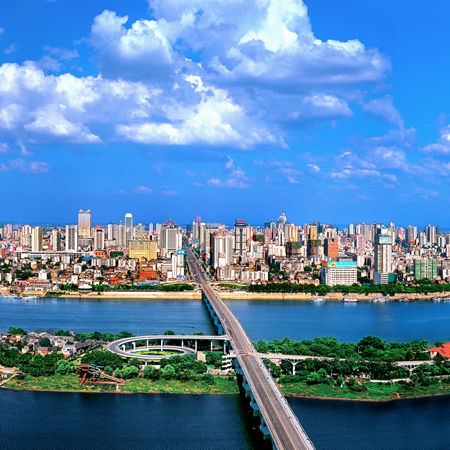
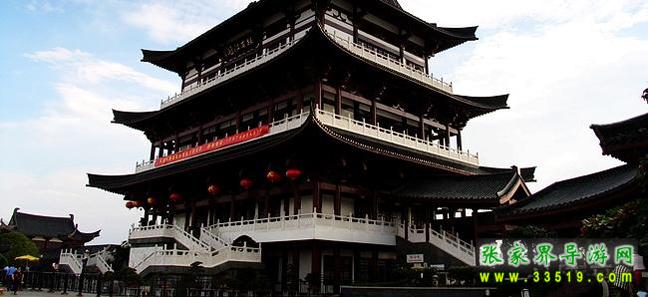
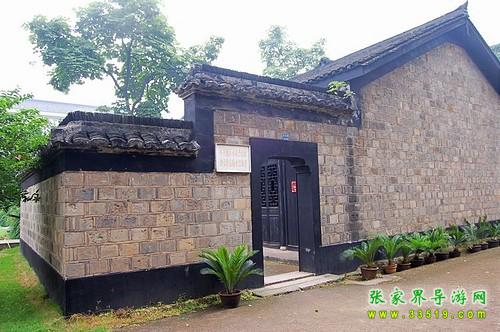
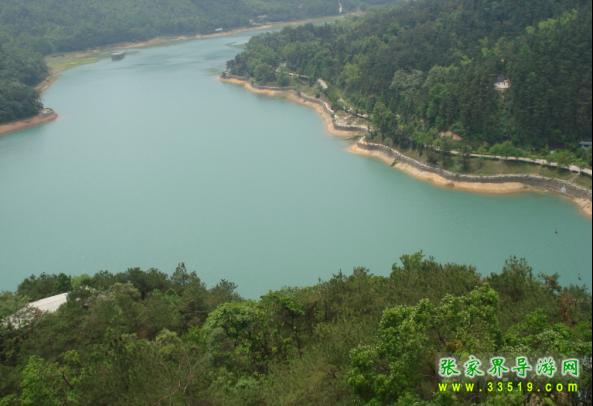
The main scenic areas include Yuelu Mountain, Orange Isle, Tianxin Pavilion, Martyrs' Park, and Moon Island. The main famous historical sites and memorial sites of the Chinese revolution include the Mawangdui Han Tomb, Yuelu Academy, Kaifu Temple, Tao Kan Temple, Jia Yi's Former Residence, the "Former Site of the CPC Xiang Region Committee" at Qingshuitang, the former site of Hunan Self-Study University at Chuanshan Society, and Hunan Provincial First Normal School.
The capital of Hunan Province, China, with the laudatory name "Star City." The urban area is 556.33 square kilometers, with a population of 6.476 million (2007), of which the main urban district has more than 2.8 million people. It is located in the central part of Hunan Province, in the lower reaches of the Xiang River, on the Beijing-Guangzhou railway line. It is a "famous city of Chu and Han" with a history of 3,000 years, one of the first 24 historical and cultural cities announced by the State Council, and one of the first tourist cities opened to the outside world.
Changsha is the political, economic, cultural, educational, scientific and technological, transportation, communications, and financial center of Hunan Province. It is a comprehensive industrial and commercial city mainly based on machinery, textiles, commerce and trade, and food processing industries, and is also one of the major regional central cities in the central and western regions.
Changsha is located in the eastern part of Hunan Province, slightly to the north, in the lower reaches of the Xiang River and the western edge of the Changliu Basin. Its geographical range is longitude 111°53′ to 114°15′ east and latitude 27°51′ to 28°41′ north. It borders Yichun Prefecture and Pingxiang City of Jiangxi Province to the east, Zhuzhou and Xiangtan to the south, Loudi and Yiyang to the west, and Yueyang and Yiyang to the north. It is about 230 kilometers from east to west and about 88 kilometers from north to south. The city's land area is 11,819.5 square meters, of which the main urban area is 556 square kilometers.
As early as the Spring and Autumn period, Changsha was one of the strategic places where the Chu state dominated the south. After Liu Bang founded the Han Dynasty, in 206 BC he changed Linjiang to Changsha and established the Han Dynasty vassal state—the State of Changsha. From then on, Changsha began to build city walls and gradually became a place contested by strategists. On December 25, 2008, Changsha was selected as one of the 2008 Happiest Cities in China.