This attraction introduction is compiled from historical materials in the "Zhangjiajie Tour Guide Network" (33519.com · Scenic Spots section). Ticket prices, opening hours, transportation, and contact information mentioned in the text may be outdated. Please refer to the latest official announcements from the scenic area before traveling; some content consists of historical background/cultural introductions and is for reference only.
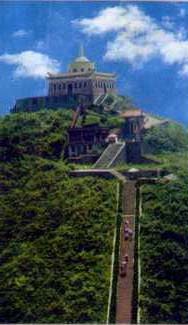
Legend has it that when Emperor Shun made his southern inspection tour, he brought palace maidens and played Shao music, enjoying himself so much at Shaofeng Peak that he lingered and forgot to return. Later generations, based on the legend, built a unique temple at the summit of Shaofeng Peak—the Shaofeng Ancient Temple. Inside the temple, nearly a hundred statues of Bodhisattvas with different expressions, including the Holy Emperor, Emperor Shun, and Thousand-Hand Guanyin, are lifelike. Devout monks chant scriptures, and worshipping visitors pray amid swirling incense smoke for peace and prosperity. Being there makes one feel as if one has become a believer of the gods and a reader of the immortals, and worldly trivialities are suddenly forgotten.
Shaofeng Peak, 518.9 meters above sea level, is the seventy-first peak of the Nanyue mountain range, more than 200 meters higher than Yunlu Peak of Yuelu Mountain in Changsha, the seventy-second peak. The ancients praised Shaofeng Peak:
From ancient times the fairy realm has been called Shaofeng, / Like a brush-cut peak, three mountains pierce the sky.
Of the three hundred and sixty famous mountains under heaven, / This is the first dragon of Hunan.
Shaofeng Peak is also known as Fairy Maiden Mountain and Xian Ding Ling Feng, both related to the story of the three daughters of the Shao family ascending to immortality. Wang Yun, in the Guangxu edition of the Xiangtan County Gazetteer, recorded:
The first of the northwestern mountains is called Shaoshan. To the west it borders Xiangxiang; to the east is Shutang Mountain. The Yunhu River emerges from it, flowing southeast for seventy li into the Lian River. In it are many bamboos, orchids, and coal. An old account says: the three daughters of the Shao family lived in the mountains studying the Way; a phoenix brought a heavenly book to them, and they ascended as immortals. On the mountain is the Fengyin Pavilion; on its shady side are the Dongtai and Peach Blossom Cave.
Climbing Shaofeng Peak, one finds a myriad of scenes. On clear days, the splendid landscapes of the three counties of Xiangtan, Xiangxiang, and Ningxiang are all taken in at a glance; or on a summer morning, watching the sunrise, one sees a golden sun wrapped in white clouds and rosy clouds, rising at dawn, just like a peculiar and magnificent scroll painting.
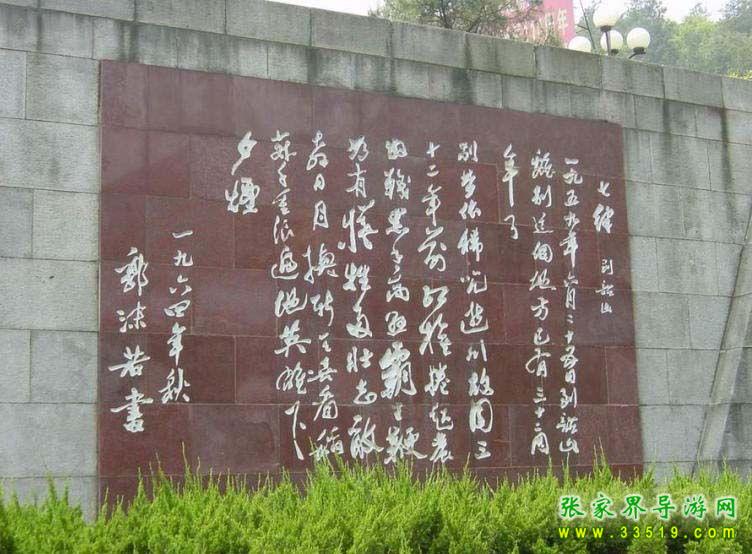
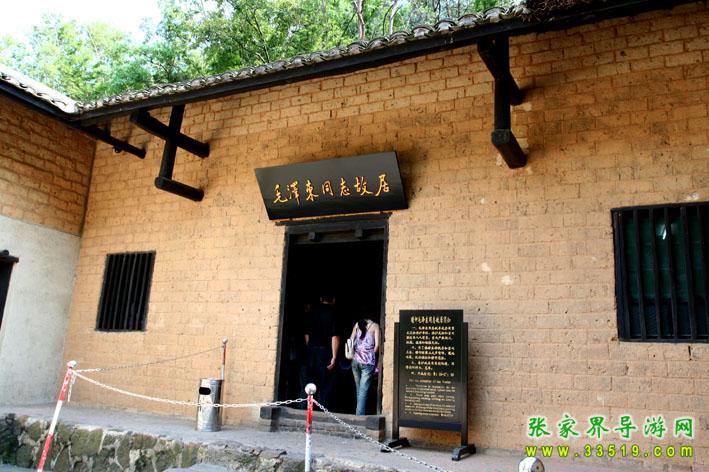
At present, on the summit of Shaofeng Peak, the old temple has been restored, named "Shaofeng Temple." Halfway up Shaofeng Peak, a magnificent forest of steles of Mao Zedong's poetry has been built. Connecting the stele forest and Shaofeng Temple is the Shaofeng Cableway. Shaofeng Peak is located south of Shaoshanchong, 3 kilometers from Mao Zedong's former residence, with Xiangxiang to the south of the mountain and Xiangtan to the north.
Legend says that when the Holy Emperor inspected Jiangnan, he observed from the clouds and saw a peak that was wondrous and precipitous, covered with rare flowers and grasses and full of ancient cypresses and green pines. He wished to establish a divine temple here as the headquarters for governing and managing the seventy-two peaks of Nanyue. Unexpectedly, the strange beasts within the bounds of Shaofeng Peak fought over favor, especially the Dragon God and Tiger God, whose fighting and tearing disturbed the Holy Emperor as he sat in meditation at midnight. In great anger, the Holy Emperor subdued the Dragon and Tiger gods, confining one at Longtou Mountain and the other at Huxieping. Having encountered these two gods at Shaofeng Peak, the Holy Emperor thought that among the seventy-two peaks of Nanyue there must certainly be demon gods causing disturbances and making life unbearable for the people, and that they needed to be dealt with one by one. So he decided not to establish the temple here and flew away from Shaofeng Peak the next day. Later, people built a temple at the summit of Shaofeng Peak, called the "Holy Emperor Temple," also known as the "Xian Ding Ling Temple."
Climbing Shaofeng Peak, one finds a myriad of scenes. On clear days, the splendid landscapes of the three counties of Xiangtan, Xiangxiang, and Ningxiang are all taken in at a glance; or on a summer morning, watching the sunrise, one sees a golden sun wrapped in white clouds and rosy clouds, rising at dawn, just like a peculiar and magnificent scroll painting.
At present, on the summit of Shaofeng Peak, the old temple has been restored, named "Shaofeng Temple." Halfway up Shaofeng Peak, a magnificent forest of steles of Mao Zedong's poetry has been built. Connecting the stele forest and Shaofeng Temple is the Shaofeng Cableway. Visiting Shaoshan and touring Shaofeng Peak has become an indispensable part of visitors' itineraries.