This attraction introduction is compiled from historical materials in the "Zhangjiajie Tour Guide Network" (33519.com · Scenic Spots section). Ticket prices, opening hours, transportation, and contact information mentioned in the text may be outdated. Please refer to the latest official announcements from the scenic area before traveling; some content consists of historical background/cultural introductions and is for reference only.
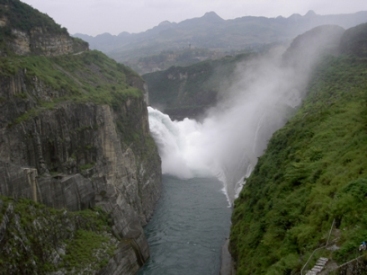
Youth Reservoir is located among the mountains between Qingxi Town and Shaoshanchong. Youth Reservoir was originally a broad valley, within which was a deep ravine, with large tracts of paddy fields distributed on both sides of the ravine. On October 28, 1958, the people of Shaoshan began building a dam across the river between Jingwanli and Majing'ao to create the reservoir.
Jingwanli is located at the mouth of the valley north of Shaoshanchong, and is also the narrow pass where the Shaoshan River breaks free from the shackles of the Shaoshan mountains. The opening is only about a hundred meters wide, and it was by damming the river here that the largest reservoir by water storage capacity within Shaoshan—Youth Reservoir—was formed. The Shaoshan River has thus been submerged within the reservoir area, and only in the dry season do its upstream riverbed and the stone arch bridge over it become visible.
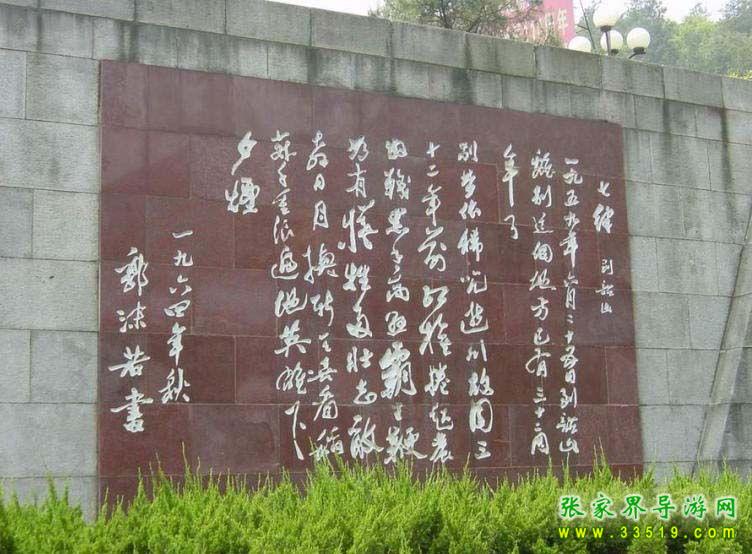
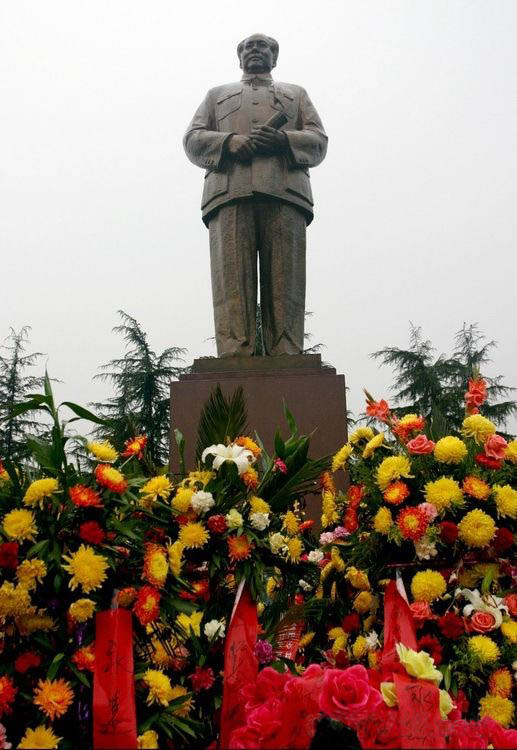
Jingwanli backs onto a great mountain, faces the man-made lake to the side, and directly faces Majing'ao. A folk rhyme says, "When water crosses Majing'ao, a top scholar will arrive." Today, the reservoir water is pumped up to the ridge by pumping equipment to supply drinking water to the residents of Shaoshan's urban area. Jingwanli is where Mao Zedong studied for more than half a year in 1906 (at age 12). At that time, his teacher was Mao Yuju, and teacher and student once had a conflict, for which Mao Zedong wrote the poem "Ode to the Well" as a farewell gift.
Along the water's edge of Youth Reservoir runs a winding path one to two chi wide. Walking on the path, the lake scenery and mountain colors wrap around one's whole body. The mountains are mainly covered with pine trees, beneath which are dense shrubs, and among the shrubs there are especially many azaleas. Even in winter, as long as the weather is slightly warm, there are scattered red blossoms here and there; in mid-spring they cover the mountains and plains like a blazing fire. Among the flowers, thrushes chirp, intoxicating the heart.
Youth Reservoir was originally a broad valley, within which was a deep ravine, with large tracts of paddy fields distributed on both sides of the ravine. On October 28, 1958, the people of Shaoshan began damming the river between Jingwanli and Majing'ao, investing 180,700 workdays and 70,000 yuan in state funds, completing 184,500 cubic meters of earth and stone work, and finally completing in February of the following year this man-made lake with a rainwater collection area of 17.8 square kilometers, a dam height of 20.5 meters, and an effective storage capacity of 4.3 million cubic meters. Because the main force in its construction was the hot-blooded youth of Shaoshan, it was named Youth Reservoir. Although the reservoir submerged 780 mu of farmland, relocated 70 households and 250 people, and moved 240 houses, it brought great economic benefits to the people of Shaoshan. In addition to irrigating 15,300 mu of farmland in Shaoshan, Ruyi, Yanglin, and Yongyi townships as well as Qingxi Town, it also provides more than one million cubic meters of industrial and domestic water to urban and rural areas each year. Another benefit is that a new scenic spot has appeared in Shaoshanchong.
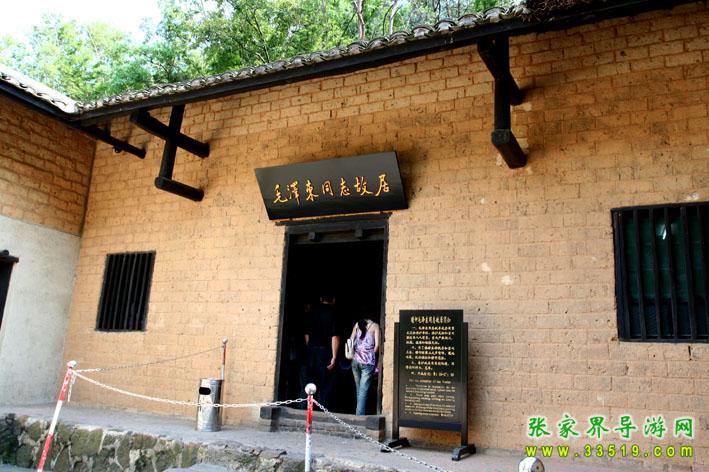
The Youth Reservoir lies among the mountains between Qingxi Town and Shaoshanchong, winding along the curves of the hills and rising and falling with the lay of the land. Passing near Mao Zedong's former residence and flowing through two or three li of fertile fields, it silently plunges into the lake. Fengzi Mountain and Heishi Stockade stand facing each other, using the lake as a mirror to vie in beauty. On the banks, the green pines are especially tall and graceful; in spring, azaleas dye the lake water crimson, and the sound of cicadas is carried by the breeze to the water's edge. Again and again there are anglers on the rocks by the shore, quietly savoring the delights of nature. In winter, she is a slender Xi Shi; upstream, a broad stretch of sandbank is exposed, and green grass seizes the chance to spread, drawing flocks of cattle and sheep. The winding old river and the humpbacked stone arch bridges are all as poetic as a poem. On the lake surface there are often a few small boats—those are fishermen, drifting amid the green waves……
Here, human artifice and beautiful nature have achieved harmonious unity.
The reservoir area has another wonderful spot: on its west side there is a rather large stream. Following the stream upstream, there is a mountain pass just wide enough for one person to enter. Once inside, one cannot help being startled: here there is actually a hidden paradise—cocks crow, dogs bark, there are fine fields and beautiful plots, springs gurgle, and houses stand in neat order. Among them is an ancestral hall named the Tang Family Shrine, whose stele inscription reads:
Our clan branched from Gantian in the county seat, then branched from the county seat to Meihu, and later came to Shaoshan, where for several hundred years our clan has lived, been born, and died.
Shaoshan is more than a hundred li from the county seat. Its peaks are tall and graceful. About four li north of the mountain, a rock suddenly rises high; between its two peaks the shape is like a closed door, and so it is named Shimenchong (Stone Gate Gap). The mouth of the gap is only a few chi wide. Treading on stones and following a footpath into it, one suddenly emerges into openness: a stone spring flows through, its sound heard in all four seasons, making it a nearby scenic spot without equal……