This attraction introduction is compiled from historical materials in the "Zhangjiajie Tour Guide Network" (33519.com · Scenic Spots section). Ticket prices, opening hours, transportation, and contact information mentioned in the text may be outdated. Please refer to the latest official announcements from the scenic area before traveling; some content consists of historical background/cultural introductions and is for reference only.
The Mao Zedong Memorial Park is located on layered hills and ridges about 500 meters west of Mao Zedong's former residence. The memorial park was initially named the "Mao Zedong Road Scenic Park." Its conception was clearly inspired by the miniature landscapes of "Window of the World" in many large cities across the country. The entire scenic park took only one year to build. By the end of 1995, covering about 200,000 square meters and with nearly a hundred structures large and small, a scenic park integrating commemoration, education, and sightseeing was presented to the public.
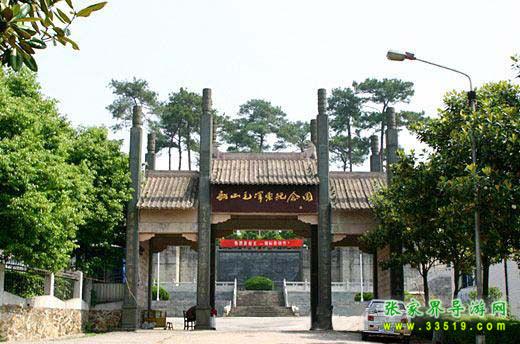
The greatest feature of the Shaoshan Mao Zedong Memorial Park is that it embodies commemorative significance in replicated physical objects, allowing people to experience the course of history while touring the park. The scenic park has two main entrances, namely the South Gate and the East Gate. The South Gate extends naturally from the passage in front of Mao Zedong's former residence, passes Guogong Bridge, crosses the Shaoshan River, and goes around Shaoshanzui. Between the bridge and the promontory there is an antique archway that guides visitors northward, which accords very well with Mao Zedong's journey from south to north in those years.
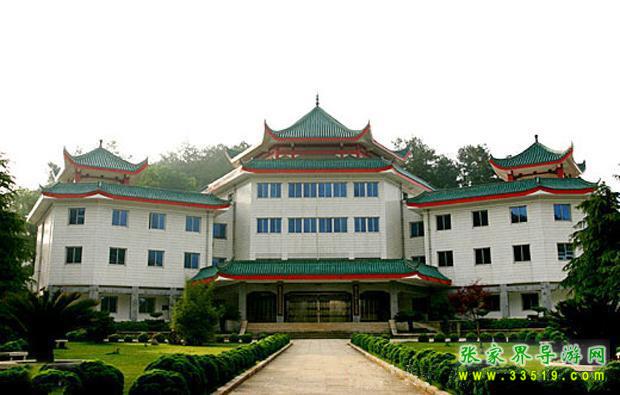
Entering the scenic park from the South Gate and passing through a towering and majestic gate tower, one is confronted head-on by a section of ancient Great Wall ramparts, symbolizing the national soul of the great man Mao Zedong. Along the main road and up the steps, one sees a magnificent building standing on the high rock ahead: this is the most imposing place in the park—the Shaoshan Mao Zedong Memorial Hall. The memorial hall is the main building of the entire park and echoes the former residence from afar. It covers 5,000 square meters, with a floor area of 1,300 square meters. The building adopts the traditional temple style, with whitewashed walls and glazed gray tiles, possessing both the grandeur of a high hall and the characteristics of Shaoshan dwellings.
The memorial hall complex consists of the entrance forecourt, the main building, and the rear mountain garden. The entrance forecourt is a place for paying respects, gathering, dispersing, and resting. The main building is an inner-courtyard-style structure enclosed by front and rear halls, side halls, and corridors. Indoors are exhibitions introducing Mao Zedong's life in various periods, and in the rear hall there are white marble sculptures of Mao Zedong and six of his relatives. Walking along the small gate on the right, one can enjoy representative scenic spots of various periods in the order of Mao Zedong's life journey.
First is the Well Pavilion of Hunan First Normal School standing among flowers and trees, followed by the site of the First National Congress of the Chinese Communist Party: Nanhu. A pleasure boat is moored by the lake. Then come the old site of Qingshuitang, No. 41 Dufu Di in Wuchang, the Octagonal Building at Maoping in Jinggangshan, the Huangyangjie Monument, the Sweet Water Well in Ruijin, and the second-largest building in the park—the site of the Zunyi Conference. The Ruijin well and the Zunyi Conference are in a valley, suggesting that the revolutionary cause led by Mao Zedong would move from low tide to high tide.
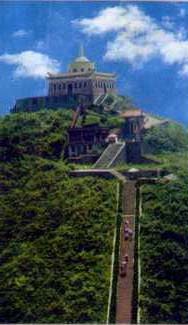
At the highest point of the scenic park are the Yan'an Cave Dwellings and the Yan'an Pagoda. Besides replicating the memorial objects most closely associated with Mao Zedong's life, the scenic park also provides some amusement facilities, implying that "the predecessors toiled so that later generations may enjoy happiness." Some of the mythological and legendary figures in the park also reflect Mao Zedong's personal traits combining realism and romanticism.