This attraction introduction is compiled from historical materials in the "Zhangjiajie Tour Guide Network" (33519.com · Scenic Spots section). Ticket prices, opening hours, transportation, and contact information mentioned in the text may be outdated. Please refer to the latest official announcements from the scenic area before traveling; some content consists of historical background/cultural introductions and is for reference only.
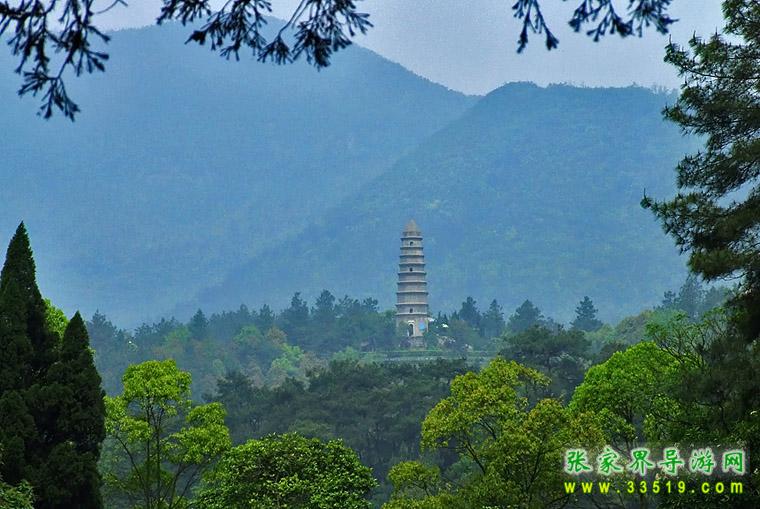
Shaoshan, a single peak rising up and towering above the clouds, is the ancestor of all the mountains. It lies between Xiangtan and Xiangxiang, so the local records of both Xiangtan and Xiangxiang record it, and the Provincial Gazetteer, Guangyu Ji, and Woyou Ce all include it. Ascending its summit and looking down, the surrounding mountains are like grandchildren; Mount Heng to the south and Dongting Lake seem close at hand. According to legend, in ancient times the Great Shun made a southern inspection tour and performed the Shao music nine times, whereupon the phoenix came to pay homage. There are the remains of the Phoenix Sound Pavilion and Phoenix Sound Bridge. It is also called Fairy Peak; legend says that three daughters of the Shao family entered the mountain to cultivate the Way and ascended to heaven in broad daylight. There are the Rouge Well, the Thatched Hut, and the remains of the fairy's portrait. It is also called Putou Mountain, because one can only slowly climb to its summit by following behind the peak, while the front mountain rocks are as steep as a headlong plunge, and absolutely no one reaches there. According to legend, agalloch and licorice are produced in the rocks, and visitors sometimes unexpectedly obtain them by chance amid the clouds and mist. Could this not be called the spirituality of the mountain and the wonder of the scene? The tradition of the Eight Scenes has already been collected and recorded in the county gazetteer. One purpose is to record the excellence of the land obtained by our surname, and the other is to echo the fame of the Eight Scenes of Xiaoxiang.
This is the interpretation of the Eight Scenes of Shaoshan in the Shaoshan Mao Clan Genealogy from the Guangxu period of the Qing Dynasty. The naming of the Eight Scenes of Shaoshan was inspired by the "Eight Scenes of Xiaoxiang." According to Shen Kuo's Dream Pool Essays: Calligraphy and Painting, the great Northern Song painter Song Di, a Yuanwailang of the Ministry of Revenue, was skilled at painting, especially flat-distance landscapes. Among his most satisfying works were Wild Geese Alighting on Level Sand, Returning Sails from the Distant Shore, Clearing Mist over a Mountain Market, Evening Snow on River and Sky, Autumn Moon over Dongting, Night Rain over Xiaoxiang, Evening Bell from a Misty Temple, and Sunset over a Fishing Village, called the "Eight Scenes of Xiaoxiang." The famous calligrapher, painter, and poet Mi Fu viewed his paintings and splashed ink into poems, calling them the "Poems on the Eight Scenes of Xiaoxiang." Emperor Ningzong read them with great interest and even wrote the group of eight-scene poems in vermilion imperial calligraphy. Later someone built the Eight Scenes Terrace in Changsha, and from then on the Eight Scenes of Xiaoxiang became famous throughout the world. At the same time, it also became the source of Eight Scenes throughout the realm, and the term "Eight Scenes" became popular everywhere.
The formal naming of the Eight Scenes of Shaoshan occurred approximately in the late Qing Dynasty. Judging from historical records, the one who named them was Mao Lanfang, that is, Mao Zedong's cousin once removed on his grandfather's side. Volume 9 of the fourth revision of the Mao Clan Genealogy records: Mao Zuji…… in the Qing was a county vice-magistrate of the ninth rank, courtesy name Lanfang, style name Chunye, also named Guoshun, another sobriquet Shaoshan Lazy Daoist. Born at the yin hour on the twelfth day of the first lunar month in the bingxu year of the Daoguang reign (1826), and died at the yin hour on the twenty-eighth day of the second lunar month in the renchen year of the Guangxu reign (1892)……
Mao Lanfang and Mao Zedong's great-grandfather Mao Zuren were full brothers. This poet, born and raised in the Mao clan of Shaoshanchong, loved the mountains and waters of his hometown deeply. In his early years he once left home to serve in the army, and in his later years he returned to his hometown to eat vegetarian food and chant Buddha's name, and opened the Dongmaotang Mianshanlou private school. In his leisure time he recited poetry and painted. In the poetic form most popular in the Song Dynasty—the ci—he wrote the Eight Scenes of Shaoshan.
The "Eight Scenes of Shaoshan" are: Shaofeng Towering Green, Pagoda Ridge Clearing Rosy Clouds, Fairy Thatched Hut, Phoenix Ceremony Pavilion Site, Rouge Ancient Well, Stone Wall Flowing Spring, Sudden Stone Forming a Gate, and Stone House Clear Breeze. In addition, in front of the Fairy Hut there is a huge rock shaped like a boat called the "Flying Boat" and a six-dynasties pine more than a thousand years old.