This attraction introduction is compiled from historical materials in the "Zhangjiajie Tour Guide Network" (33519.com · Scenic Spots section). Ticket prices, opening hours, transportation, and contact information mentioned in the text may be outdated. Please refer to the latest official announcements from the scenic area before traveling; some content consists of historical background/cultural introductions and is for reference only.
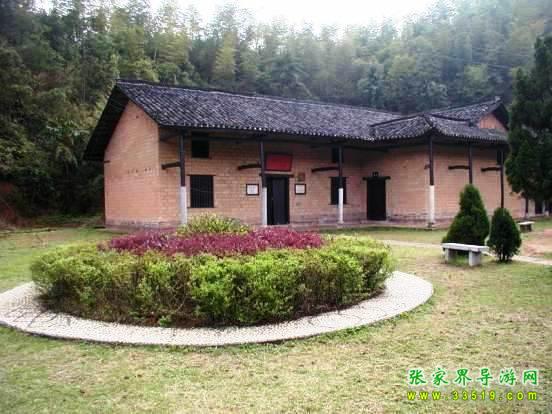
Huang Gonglue was one of the leaders of the Pingjiang Uprising and an outstanding general of the Red Army. Mao Zedong highly praised him with the line, "On the Gan River a red corner, the detached force relied on Huang Gonglue." His former residence is located in Gaomochong, Chaoyang Village, Zhongsha Town, Xiangxiang City, more than 40 kilometers from the urban area. This place is not only a revolutionary memorial site but also a scenic spot.
Chaoyang Village is named because it is located on the upper part of Chaoyang Mountain. Chaoyang Mountain has a magnificent terrain. For dozens of li around, mountain peaks large and small stretch continuously, like stars surrounding the moon, lifting its main peak, Chaoyang Peak, into the sky. Huang Gonglue's former residence is hidden deep in the embrace of the peak top.
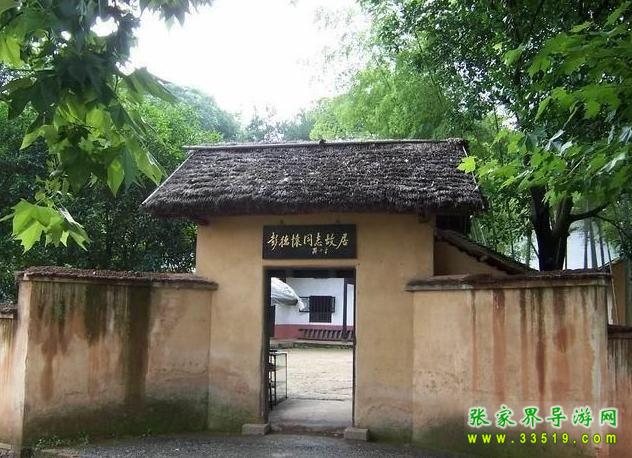
Huang Gonglue's former residence was razed to the ground before liberation. In 1984, the CPC Hunan Provincial Committee and the Hunan Provincial People's Government decided to rebuild it. According to villagers' recollections, the original building was restored on the ruins. The former residence contains three exhibition rooms, displaying through numerous photographs, paintings, and some relics of the martyr the short but glorious life of this hero. On October 5, 1986, a grand gathering of more than 1,000 people was held here to solemnly commemorate the 55th anniversary of Huang Gonglue's sacrifice and the opening ceremony of Huang Gonglue's former residence. Since then, the number of people coming to pay respects and sightsee has increased day by day.
People say that every mountain of Chaoyang Mountain has scenery, and every scene is extraordinarily wonderful and endlessly changing. Not only are the scenes different in the four seasons, but even within a single day and within one mountain, the scenery in the morning, noon, and evening is entirely different. This saying is absolutely true. Look: at the foot of the mountain, fir and Chinese fir stand tall, with dense shade covering the sky; halfway up, green bamboo sways gracefully in many postures; at the summit, mixed flowers grow among the trees, with layered green and flying red. Look: below the mountain the fields are already green, while the terraced fields higher up on the mountain are still bare. This inevitably brings to mind Bai Juyi's line, "In the fourth month on earth all fragrant flowers have faded, yet the peach blossoms in the mountain temple have just begun to bloom."
The sea of clouds on Chaoyang Peak is magnificent and fantastical. After summer rain or in the early morning, standing on the mountaintop, one can see clouds rising slowly from the valley bottom, first in thin threads and wisps, drifting and floating like light gauze, then gradually expanding, gathering, and rising, like balls of cotton wadding and plumes of thick smoke. In an instant, waves surge and billows roll, filling the space between heaven and earth. The originally clear and bright space suddenly becomes shrouded in rising clouds and mist, all hazy. Standing within it, one truly feels as if floating like an immortal. When the clouds disperse and the sun comes out, facing the poetic and picturesque small bridge and flowing water, the story that happened at the old bridgehead will add to your admiration for the hero. Villagers say that Huang Gonglue was brave and righteous even as a boy and did not fear brute force. One day, a tax policeman bullied a young woman. He, then thirteen or fourteen years old, stepped forward to stop him but was instead reprimanded. Enraged, he pushed the tax policeman from the bridge into the stream with one palm. His father was pleased that he had a strong sense of justice but also worried that he was brave but not shrewd, so he made him often recite Su Shi's "On the Marquis of Liu." From then on, he understood that true great courage should be "not alarmed when suddenly confronted, not angered when insulted without cause." His original name was Chu, courtesy name Hanhun. Because he admired Huang Shigong, who was versed in military strategy, he changed his name to Shi and took the style name Gonglue.
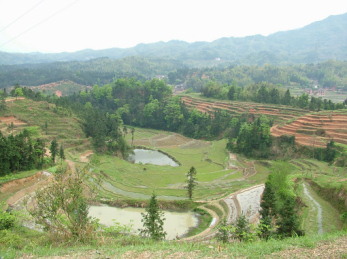
Chaoyang Mountain has several flying waterfalls, like white silk hanging in the air, plunging a thousand feet. The Chaoyang Gate Waterfall on the high platform of a sheer cliff a thousand ren tall has two peaks facing each other to form a natural gateway, as if a heavenly gate had opened, or like a stage with its curtain drawn. Standing within it, you will not be able to tell whether you are in heaven or in the human world. To the left of the former residence is Xuefeng Peak, standing proudly, as high as the sky, covered with ice and snow for nearly one third of the year. This is extremely rare in Jiangnan. To the right is Tiger Mountain, with an arched back and bent waist, tail upright and head raised, like a fierce tiger ready to pounce at any moment. Legend says this tiger was originally the mount of the God of Wealth, Zhao Gongming. One day, while traveling here with Zhao Gongming, it became so enchanted by the mountain scenery that it crouched down and stayed. "Chaoyang hides a crouching tiger" thus became a beautiful legend here. Villagers say that Huang Gonglue was the crouching tiger that leaped out of Chaoyang Mountain; they also say that in battle he was fiercer than a tiger. In only 15 years in the army, he fought hundreds of battles and was renowned throughout the land. He was as famous as Mao Zedong, Zhu De, and Peng Dehuai, and people called them "Zhu, Mao, Peng, Huang."
People say that the extraordinary landscape of Chaoyang Village shaped Huang Gonglue's extraordinary character. Is that so, or did an extraordinary figure add extraordinary color to the landscape? Visitors may each interpret it for themselves!