This attraction introduction is compiled from historical materials in the "Zhangjiajie Tour Guide Network" (33519.com · Scenic Spots section). Ticket prices, opening hours, transportation, and contact information mentioned in the text may be outdated. Please refer to the latest official announcements from the scenic area before traveling; some content consists of historical background/cultural introductions and is for reference only.
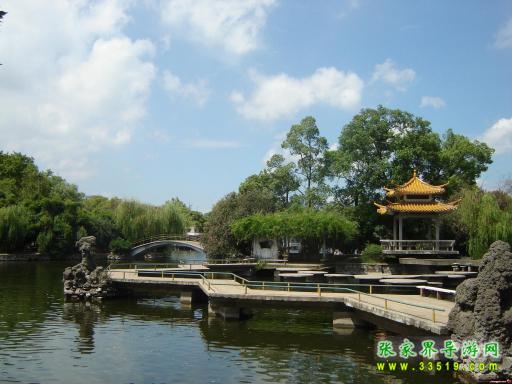
Yuhu Park is located in the center of Xiangtan City. It gets its name because the low-lying terrain collects rain to form a lake. It has long been a scenic spot of Xiangtan, and since ancient times the famous line "weeping willows by the green lone pagoda, the setting sun reddens half the bridge" has been recited down to the present.
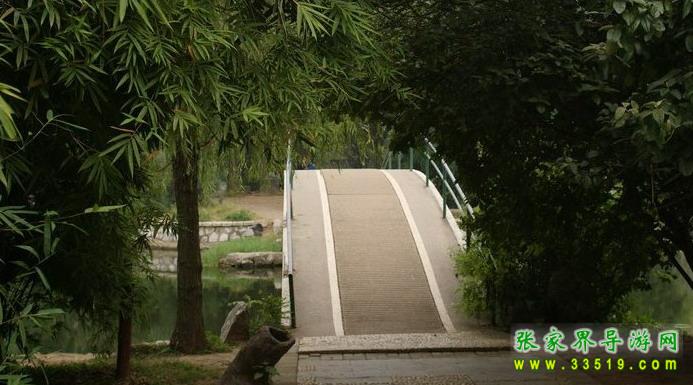
The entire lake is divided into upper, middle, and lower lakes, covering about 12 hectares. In the lake, two bridges of very different styles, Qixing and Baxian, have been built. The bridge arches are wide, allowing tour boats to pass freely. The upper lake is the essence of the scenery, with water bright as a mirror, weeping willows gently swaying, and pavilions, terraces, and towers scattered along the lakeside, connected by winding corridors, graceful and beautiful. It has now been opened as a park. On the south bank are historic sites such as Fengzhu Nunnery, Taogong Shrine, Doumu Pavilion, and Wanshou Palace. In addition to restoring the original famous scenes such as Fayuan Hall, Anhua Pavilion, Shuangbi Workshop, and Xizhao Pavilion, the park has also newly built a children's playground, waterside pavilions, windmills, flower beds, and greenhouses. The park also often holds various small exhibitions of flowers, calligraphy and painting, and photography, and has become a central place for entertainment and rest for Xiangtan citizens and outside tourists. Xiangtan City's annual chrysanthemum exhibition is also held here, where various chrysanthemums vie in splendor, too beautiful to take in fully, adding infinite charm to the lake scenery.
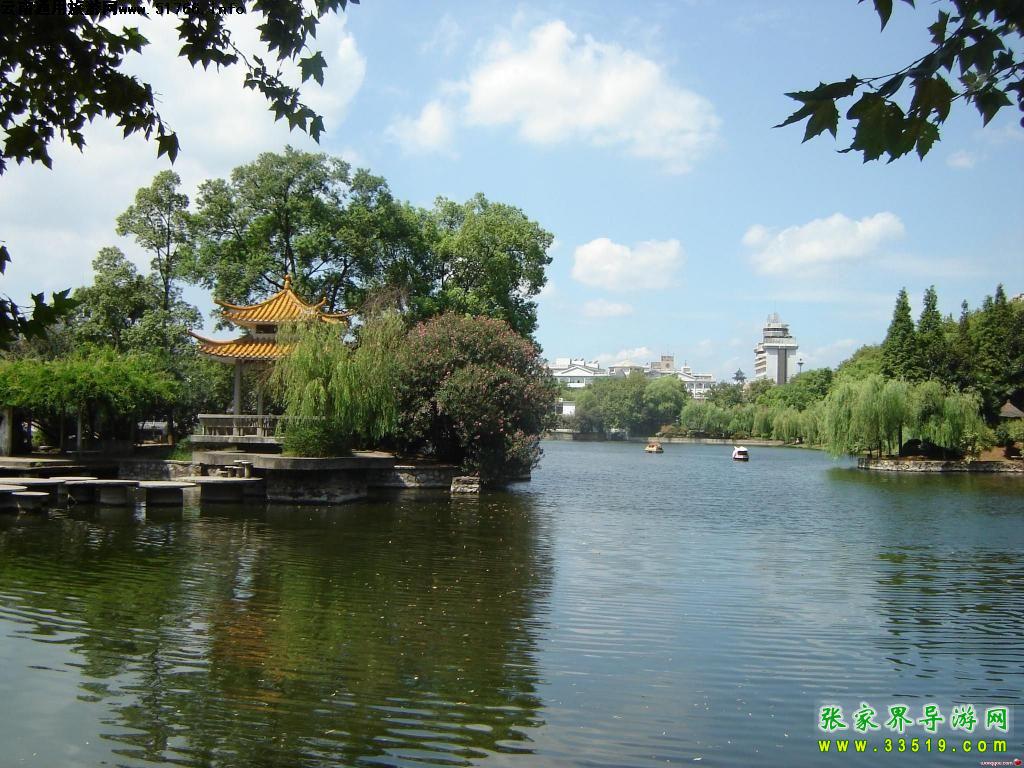
In the lake are pavilions, terraces, and towers, with weeping willows and misty colors; the lake banks are lushly green with vivid fresh flowers. It has long enjoyed the reputation of being "exquisite beyond West Lake and surpassing Tiger Hill." The main scenic spots include Fayuan Hall, Anhua Pavilion, Shuangbi Workshop, and Xizhao Pavilion.
Rain Lake has a long history. According to "Historical Sites of Tancheng": "It is said that about six hundred years ago, the third-generation Prince Ji of Ming and Consort Xu went on a spring outing here. Caught in the rain, they saw raindrops falling on young lotus leaves like thousands of dancing pearls, and were so moved by the scene that they named it. Another account says that Rain Lake was named so because it lies in a low-lying area where accumulated rainwater formed a lake." The Guangxu edition of the "Xiangtan County Gazetteer" states: "The Xiangpu channel was dredged and opened up as Hou Lake, which was later renamed Rain Lake. Above it is the Misty Willow Embankment, and beyond are many gardens and temples." So this place was originally just a channel connected to the Xiang River, and only became a lake after artificial excavation. The entire lake is divided into upper, middle, and lower sections, with a total water surface of about 360 mu. Before Liberation, the lake was silted up and the water stank; some people called it Xiangtan's Dragon Whisker Ditch. In 1954, it was established as a park, and dredging began, with willows planted extensively along the lakeshore—probably to restore the old "Misty Willow Embankment."
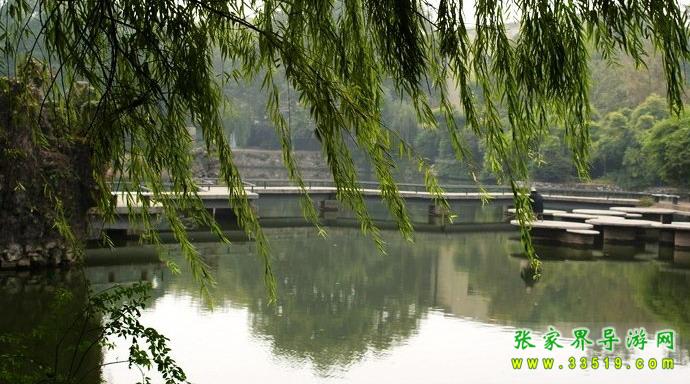
Since ancient times, many famous poets have left fine works here, including the celebrated line "Weeping willows by the green lone pagoda, the setting sun reddens half the bridge," which has been passed down to this day. Today, Rain Lake features pavilions, terraces, and towers, winding balustrades and corridors, dense bamboo and tree shade, and towering rockeries, all exceedingly serene and elegant. Two bridges of strikingly different styles—the Seven Stars and the Eight Immortals—have been built across the lake, with wide arches allowing pleasure boats to pass freely; a children's playground, waterside pavilions, windmills, flower beds, and greenhouses have been newly built, and famous scenic spots such as the Fayuan Hall, Anhua Pavilion, Xizhao Pavilion, and Shuangbi Archway have been restored. Among these, the origin of the "Shuangbi Archway" is as follows: during the Jiaqing period of the Qing Dynasty, two young women of the common people, known at the time as "matchless in beauty and talent," were tricked into a brothel in Xiangtan. Remaining steadfast and unyielding, they threw themselves into Rain Lake at night and died. The local people erected an archway for the two women beside Rain Lake, and the local tanhua (third-place imperial scholar) Shi Chengzao inscribed their tomb as "Shuangbi Zhong" (Twin Jades Tomb) and the archway as "Shuangbi Wuxia" (Twin Jades Without Flaw), and for a time poets composed many verses in their honor.
The archway was destroyed after Liberation and rebuilt in 1985: two statues of young girls with double-loop hairstyles stand side by side facing the lake, and both the statue pedestal and the newly built archway are inscribed with the four characters "Shuangbi Wuxia" (Twin Jades Without Flaw). On the vertical pillars, the original two couplets of the archway have been restored:
Not reaching the Yellow Springs, how could they avoid harm; Like the white water, they pledged their hearts as one.
Green tombs, fragrant souls leave a fragment of stone; White waves and bright moon shine on the two maidens.