This attraction introduction is compiled from historical materials in the "Zhangjiajie Tour Guide Network" (33519.com · Scenic Spots section). Ticket prices, opening hours, transportation, and contact information mentioned in the text may be outdated. Please refer to the latest official announcements from the scenic area before traveling; some content consists of historical background/cultural introductions and is for reference only.
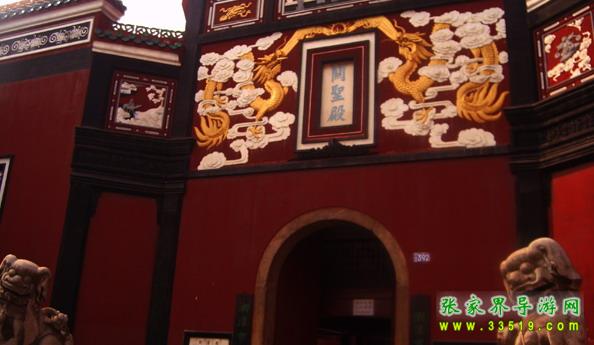
Guansheng Hall is located on Pingzheng Street in Xiangtan City, on the east side of Erhu Park. According to the "Record of Rebuilding the Spring and Autumn Pavilion" from the 45th year of the Qianlong period of the Qing Dynasty (1780 AD): "It was founded in the early Ming Dynasty. Over the years, it was repaired from time to time. In the 39th year of Qianlong (1774 AD), the main hall was repaired, the dance tower was rebuilt, and then the Weituo Hall, walls, and meditation rooms were all made splendidly magnificent."
Guansheng Hall has more than 400 pieces of various carvings, clay sculptures, plaques, and couplets. In 1956, it was designated a provincial-level cultural relic protection unit.
The existing buildings include the main hall, Spring and Autumn Pavilion, bell tower, and drum tower. The main hall has a double-eaved hip-and-gable roof and is built on a granite platform base. It is about 16 meters high, 24 meters long, and 14 meters wide, magnificent in momentum, complex in structure, and rich in carved decoration. Among these, what most amazes visitors are the giant stone lions and stone-carved dragon columns in front of the Spring and Autumn Pavilion. On the stone steps in front of the pavilion lies a coiled dragon, with a pair of giant stone lions arranged on either side. Each stone lion carries a cub on its back, and the cubs scratch their heads and press their ears, their cute and naive expressions utterly charming. On the inner side of the pavilion ceiling hangs an inverted giant gilded wooden dragon, holding a red pearl in its mouth, with a soaring expression; the surrounding wooden walls are pierced with carvings of human figures and stories, like a pictorial history book.
In front of the pavilion, a pair of openwork white marble dragon columns stands on both sides of the pavilion gate, supporting the eaves and corridor above and resting on white jade lion bases below. They are 4.8 meters high and about 1.5 meters in circumference. The columns are of one piece, and the dragons are fully formed; the dragons coil around the columns, with dragon and column as one body. The carved dragons raise their heads and lift their tails, as if soaring through clouds and mist or riding waves, with vivid forms that seem ready to come alive. Especially praiseworthy is that the carvers used openwork techniques, with every scale and claw, every whisker and pearl, perfectly fitted and extremely delicate and refined; visitors are all captivated by the superb craftsmanship. This openwork dragon column is a rare treasure in China; apart from similar items in the Confucius Temple in Qufu, Shandong, there are no others.
On the enclosing wall behind the hall are more than 10 stone steles, recording the history of commercial prosperity since Xiangtan opened as a port, as well as the original reasons for the reconstruction of Guansheng Hall, and the number and location of temple properties and fields. They are important materials for studying the economy and commerce of the early Qing Dynasty. In the spring of 1923, the underground branch of the CPC in Xiangtan opened a common people's night school at Guansheng Hall, with county committee secretary Yang Zhaozhi as principal, training many revolutionary patriots. Therefore, it is also a commemorative site of revolutionary significance.