This attraction introduction is compiled from historical materials in the "Zhangjiajie Tour Guide Network" (33519.com · Scenic Spots section). Ticket prices, opening hours, transportation, and contact information mentioned in the text may be outdated. Please refer to the latest official announcements from the scenic area before traveling; some content consists of historical background/cultural introductions and is for reference only.
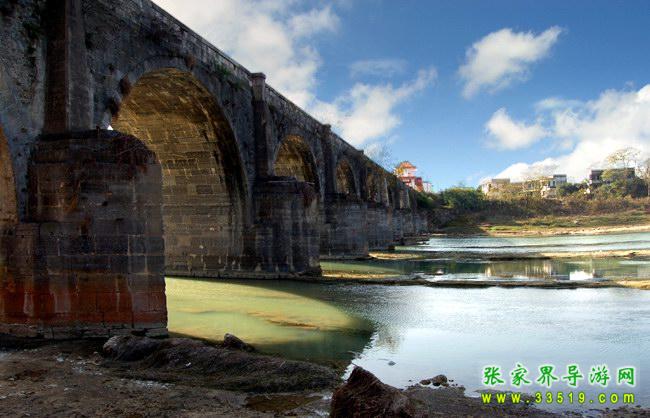
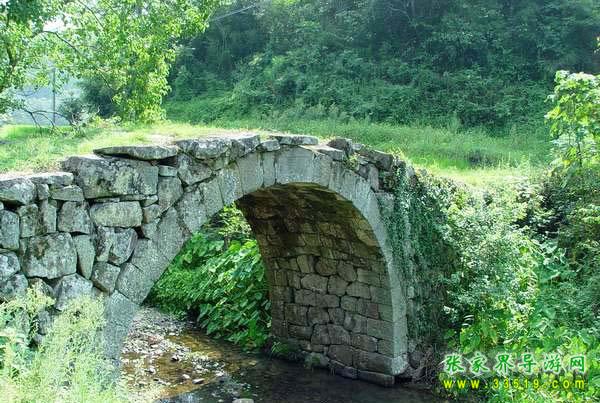
At Zhujin Ferry, five kilometers southwest of Xiangxiang City, there is an ancient stone arch bridge spanning the Lian River and connecting Xiangtan and Shaoyang. It is a fairly famous large stone arch bridge in Hunan Province.
Before the Qing dynasty, a Hunan folk rhyme said: "Travel all the roads under heaven, but Zhujin Ferry is the hardest to cross." According to "Nan Zhong Ji Wen": "The ferrymen at Zhujin Ferry are the most cunning. Travelers and bearers passing through, there is none who does not gnash his teeth after being extorted by them." Xu Gongming of Shaoyang was very angry about this and resolved to sell his family property and widely raise funds to build a bridge at the ferry. Construction of the bridge began in the autumn of the first year of the Yongzheng reign of the Qing dynasty (1723 AD) and was completed in the summer of the fourth year. Thus there was once a saying: "In the first year of Yongzheng, the pier below the bridge; in the second year of Yongzheng, one arch was built; in the third year of Yongzheng, eight arches were built; in the fourth year of Yongzheng, the bridge was completed." It was also said that during the bridge construction, Xu Gongming's painstaking efforts moved a deity to descend to the mortal world. Every day a hundred people worked, but only ninety-nine ate. It was also said that when the bridge was being assembled as a whole, it was discovered that one stone block was still missing, and for a time it was difficult to obtain. Later, guided by the deity, it was said that the stone slab used by the old woman who boiled tea for the craftsmen to wash clothes would work. When it was brought and tried, it fit exactly. On the day of completion, the bridge was named "Wanfu" (Ten Thousand Blessings), meaning bringing blessings to all the people.
The bridge underwent numerous repairs thereafter. In particular, three generations of one family—Huang Wenyu, Huang Dulun, and Huang Jingyun—repaired the bridge three times, a story that has been passed down as a much-told tale. In 1923, the Tan-Bao Engineering Office of the China International Famine Relief Commission widened the bridge piers and deck and reinforced the abutments and riverbanks, resulting in the present-day highway bridge: 166.8 meters long, 6.7 meters wide, and 10.8 meters high, with 9 arches and 10 piers. On the east side of the bridge, a memorial archway inscribed "Grand View of Southern Chu" was erected, with a stone tablet reading "Wanfu Bridge" standing beneath it. In 1967, the Hunan Provincial Shaoshan Irrigation District Engineering Command added the "Zhujin Aqueduct" east of Wanfu Bridge, and Mr. Tan Zhenlin personally inscribed five large characters: "Flying Ripples Irrigate Ten Thousand Hectares." This giant aqueduct added new luster to the "Grand View of Southern Chu."