This attraction introduction is compiled from historical materials in the "Zhangjiajie Tour Guide Network" (33519.com · Scenic Spots section). Ticket prices, opening hours, transportation, and contact information mentioned in the text may be outdated. Please refer to the latest official announcements from the scenic area before traveling; some content consists of historical background/cultural introductions and is for reference only.
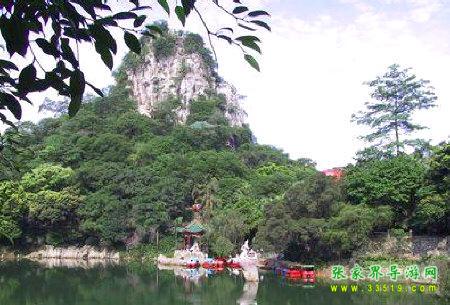
Shiyu Mountain (Stone Fish Mountain) is located in Hushan Township, ten li west of Xiangxiang City. It is also known as Shiyu Ping (Stone Fish Screen) and was once celebrated as "Stone Fish with Peng's Mane," one of the Eight Scenic Spots of Xiangxiang.
Over a thousand years ago, China's ancient outstanding geographer Li Daoyuan recorded in the "Commentary on the Water Classic": "The Lian River flows east into Xiangxiang, passing Shiyu Mountain. The mountain is several tens of zhang high and ten li wide. At its foot are many stones, black in color with veins like mica. When a layer is split open, fish shapes appear—scales, fins, head, and tail as if carved or painted, several cun in length, with the fish form complete. When burned, they produce a fish-oil odor. Hence the name."
The "fish" of Shiyu Mountain have attracted people to visit and search here for thousands of years. Zhang Zheng, a notable figure of the Six Dynasties, once visited this mountain and, upon seeing the stones, composed a rhapsody saying: "Fish leap in the waters of Xiangxiang," and had it carved on stone and erected a stele. During the Tang Dynasty, the literary figure Duan Chengshi also came here and recorded his observations at Shiyu Mountain in his "Youyang Zazu."
The stone fish give people a sense of the strange and mysterious, yet they are simply a kind of stone. According to research, several million years ago, the Hushan area of Xiangxiang and as far as Supo Township were a vast lake where fish and other plankton lived. Later, due to violent crustal movements, these organisms were buried batch by batch beneath mud and sand. Over long periods under pressure and the earth's internal heat, the mud and sand became rock, and the fish, after carbonization, were cemented into the rock layers, becoming fossils.
Stone fish can be said to be artistic treasures reflecting geological evolution. They not only give people a simple and pure enjoyment but also provide intellectual inspiration. When the Xiangqian Railway was built in 1958, the roadbed passed through Shiyu Mountain, and large quantities of stone fish were discovered. Today, although the mountain has been buried beneath the railway, fish stones still emerge on both sides of the railway. If developed, "fish" can be found at every turn.