This attraction introduction is compiled from historical materials in the "Zhangjiajie Tour Guide Network" (33519.com · Scenic Spots section). Ticket prices, opening hours, transportation, and contact information mentioned in the text may be outdated. Please refer to the latest official announcements from the scenic area before traveling; some content consists of historical background/cultural introductions and is for reference only.
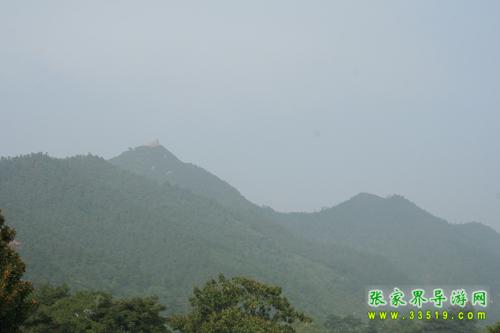
Wushi Peak in Xiangtan County is one of the 72 peaks of Mount Heng. It has an elevation of 377.5 meters, connecting to Mount Heng to the south and Yuelu Mountain to the north, towering into the clouds, endowed with natural beauty and spiritual vitality. In his youth, Peng Dehuai cut firewood, herded cattle, gathered wild fruits, and picked wild vegetables here. This place bears the footprints of his youth and is soaked with the sweat of his younger days. At the eastern foot of the mountain lies Pengjia Weizi, his former residence, about 40 kilometers from Xiangtan City, now accessible directly by road.
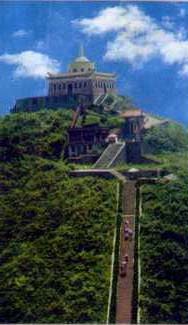
At the summit stands Wushi Temple, a structure commemorating Yi Hua, a general of the peasant uprising army during the late Yuan and early Ming dynasties, who served as a government advisor. Yi Hua's stories of robbing the rich to help the poor and dispensing wealth in the cause of justice influenced the young Peng Dehuai, shaping his martial and staunch character. Combined with the influence of the martial spirit deposited in Xiangtan's local culture, this cultivated Peng Dehuai's noble qualities of uprightness, loyalty, and righteousness.
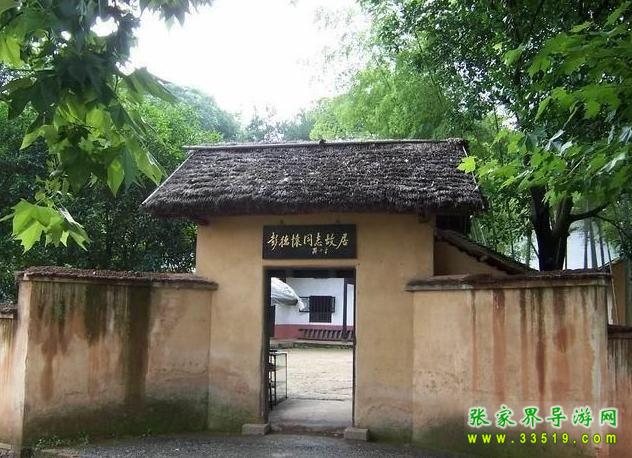
The former residence where Peng Dehuai was born consisted of only a few thatched huts. The present residence was rebuilt between 1925 and 1927 by his younger brothers Jinhua and Ronghua using his salary. It faces southeast with its back to the northwest, with a main section three bays wide and two bays deep, built of brick and wood with whitewashed walls and dark tiles—an ordinary farmhouse with Jiangnan flavor. At the time it was called "Sanhua Tang" (Peng Dehuai's original name was Peng Dehua, and with his younger brothers Peng Jinhua and Peng Ronghua, they formed three "Hua"). Peng Dehuai personally wrote the door couplet: "Doing good is the greatest joy; seeing evil one must eliminate it."
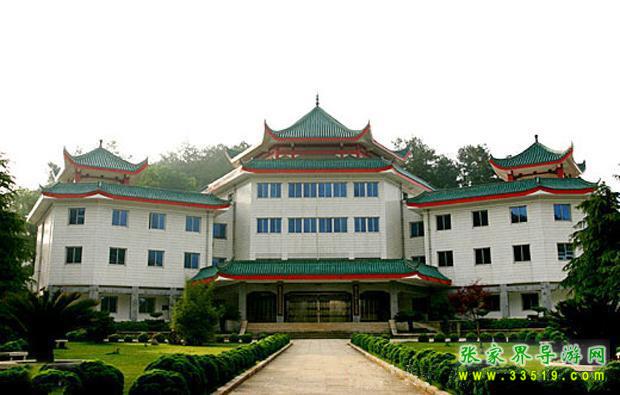
In 1958 and 1961, Marshal Peng returned to his hometown twice, staying at the former residence for 36 days in total, receiving over 2,000 visiting citizens, conducting in-depth investigations of rural production and people's living conditions at the time, and writing investigation reports of important historical significance. From 1980 to 1983, the Xiangtan County People's Government repaired the former residence according to its original appearance, restoring the front gate and earthen walls, and adding stone enclosure walls at the rear and on both sides. The former residence has a total area of 460 square meters. Above the main hall entrance is embedded a white marble plaque with gilded incised characters reading "Comrade Peng Dehuai's Former Residence," inscribed by Deng Xiaoping in 1982. The main wall of the central hall originally hung a color portrait of Marshal Peng in his marshal's uniform, flanked by a chronological table of major events in Peng Dehuai's life. The north main room is the bedroom where Peng Dehuai stayed during his two returns to the former residence; in 1961, Peng Dehuai drafted five investigation materials here. The southern section of one horizontal row of three bays serves as an auxiliary exhibition room, divided into sections on his youth, his two returns home, and his glorious achievements, displaying 61 photographs of Peng Dehuai, 54 cultural relics, and related charts. On August 1, 1983, the former residence was officially opened to the public. On October 10 of the same year, the Hunan Provincial People's Government designated it as a provincial-level cultural relic protection unit. Fifty meters northeast of the former residence is the tomb of Peng Dehuai's mother. Fifty meters southwest is the joint tomb of his younger brothers Peng Jinhua and Peng Ronghua, with a tombstone erected in 1984. Wang Zhen inscribed "Tombs of Martyrs Peng Jinhua and Peng Ronghua," and the back of the stone is engraved with a brief biography of the martyrs' lives.
When Marshal Peng returned to his hometown in 1958, he personally planted a pomelo tree beside the house. At that time the tree was dark green and deep blue-green, with luxuriant branches and leaves. But before long, the branches and leaves withered and the tree grew old and its blossoms faded; later, however, it flourished again, laden with fruit and full of fragrance. The local elders and villagers said: "Dehuai was a star in heaven; the prosperity and decline of the fragrant pomelo he planted mirrored his own fate exactly." The star theory is obviously unfounded, but it expresses the people's deep affection for him. As for the prosperity and decline, on careful reflection, it seems not without reason: when the master's fortunes were under a cloud, the former residence was deserted and the household desolate. Woodcutters came, herders went, cattle and sheep damaged its leaves, axes and bills ruined its branches. Moreover, with neither irrigation nor fertilizer, it was only natural that the tree grew old and its blossoms faded. Now with sunshine everywhere and rain and dew bestowed, the earth has renewed itself in spring, and the tree must again be luxuriant in branches and leaves.