This attraction introduction is compiled from historical materials in the "Zhangjiajie Tour Guide Network" (33519.com · Scenic Spots section). Ticket prices, opening hours, transportation, and contact information mentioned in the text may be outdated. Please refer to the latest official announcements from the scenic area before traveling; some content consists of historical background/cultural introductions and is for reference only.
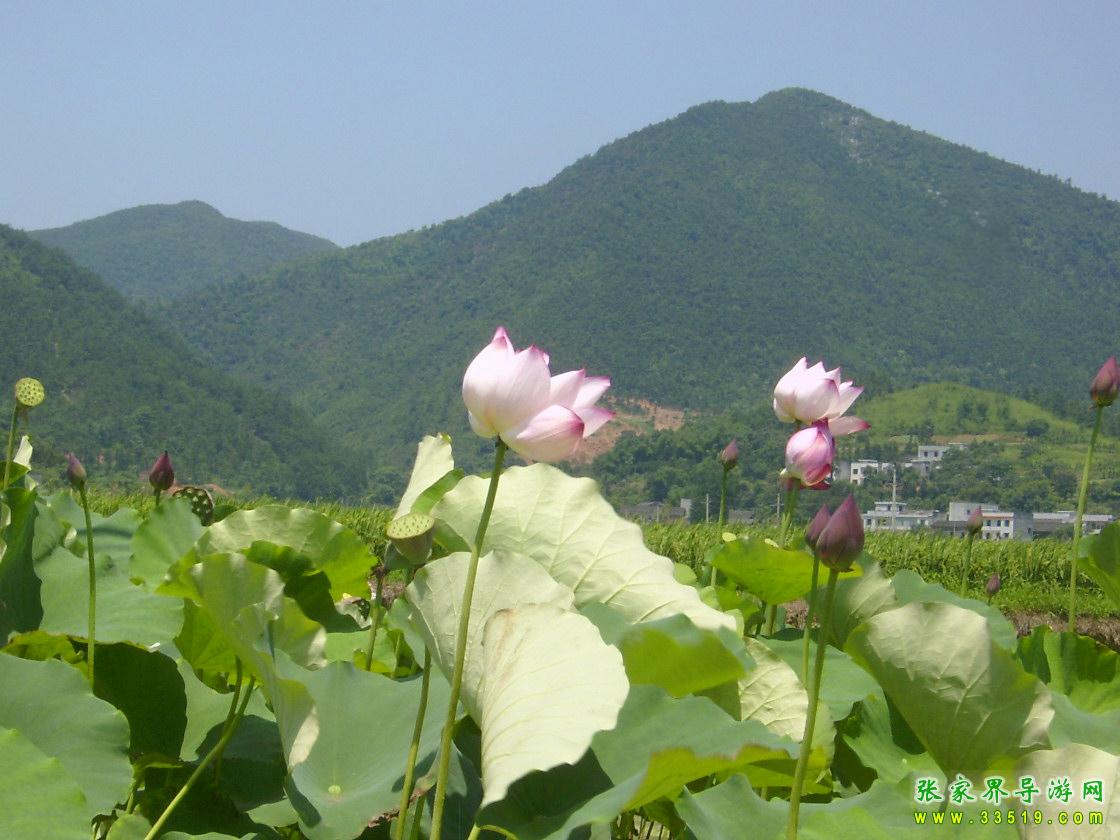
Yinshan, also known as Longshan or Longwang Mountain, has long been one of the four famous mountains of Xiangtan. At 437 meters above sea level, it stands majestically at Huangjingping on the southwestern frontier of Xiangtan County. There are different accounts of how Yinshan got its name. One says it was named after Zhou Dunyi, the Song Dynasty literary figure, who once lived in seclusion here and lectured. Another says that during the Six Dynasties period, the monk Mishi Bobo accompanied Dongshan Liangjie through this mountain, where they saw floating greens emerging with the stream. They pushed through the grass and followed the creek for six or seven li, until they came upon a thatched hut where an old monk lived. Dongshan Liangjie took the old monk as his master, and at midnight burned down the hut. Together they entered the deep mountains and stayed at Baiyun Jingshe, and so he came to be known as the Hermit Monk of Yinshan, or the Monk of Longshan. A poem on the stone cliff reads: "Three thatched rooms I have come and gone through all along; one divine light spans ten thousand realms. Do not bring right and wrong to judge me; the contrivances of a lifetime have nothing to do with me." From this came the name Yinshan (both accounts above are found in the Xiangtan County Gazetteer). Another account says that during the Ming Dynasty, Emperor Zhengde traveled south to this place and saw the splendor of the temple halls, the carvings and calligraphy, the couplets and plaques, the murals and scrolls, a dazzling array; monks and nuns ferrying all beings across, incense smoke curling, benefactors bowing in worship. It truly had the air of a Peach Blossom Spring beyond the world. He could not help clapping his hands in admiration and, on impulse, inscribed a plaque reading "Yinshan Under Heaven" above the front door of the Guanyin Hall. From then on, the name Yinshan became greatly renowned.
From the Song Dynasty to the early Republic of China, Yinshan became a place visited by prefectural officials, literati and refined scholars, and wandering poets. Both the Changsha Prefecture Gazetteer and the Huanyu Ji contain records of "Yinshan Under Heaven." Yinshan has many scenic sites, which can be summarized as one temple, one tomb, two ancestral halls, two trees, four ponds, and eight bridges, all famous far and near.
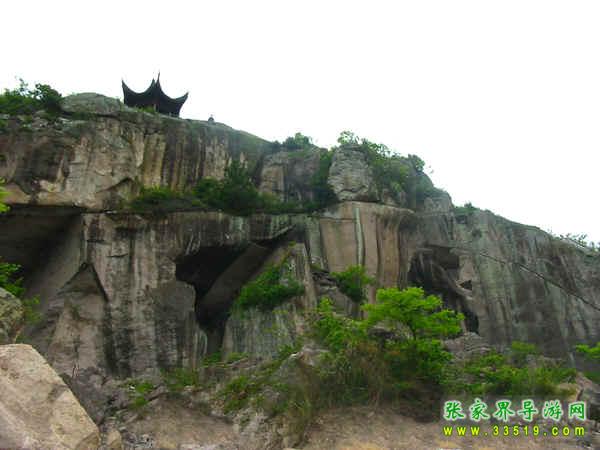
The one temple is Ciyun Chan Temple, also called Longwang Temple. The temple originally had several hundred mu of monk-owned farmland and nearly a hundred rooms. The whole temple was built with blue bricks, roofed with glazed tiles, with dragon eaves and phoenix pavilions, flowered railings and painted pillars, relief carvings and colored paintings, poems and paintings on the walls, magnificent and splendid, very imposing. The front gate tower of the temple bore the four characters "Yinshan Under Heaven" in white on a black background, each character two chi square; the plaque on the opera stage read "All Greatly Rejoice"; the Guanyin Hall hung a horizontal plaque reading "Compassion's Boat Ferries All Across," with couplets on both sides: "A great belly can contain what the world finds hard to contain; a kindly face often smiles at the laughable people of the world." Here there were once morning bells and evening drums, curling incense smoke, and a period of great prosperity. After the Cultural Revolution, the Chan temple was completely gone.
The one tomb is that of Hu Anguo (Lord Wending), the Northern Song Neo-Confucian scholar and literary figure. The tomb was first built in the fourth month of the eighth year of Shaoxing in the Southern Song Dynasty (1138 CE), surrounded by a granite fence, with 14 pines and cypresses planted around it. It was later destroyed and repaired several times. In 1981, Hu's descendants rebuilt it and inscribed the tomb name as "Tomb of the Founding Ancestor Lord Hu Wending and Lady Hu, née Liu, with the Second-Generation Ancestor Lord Wufeng Attached." The tomb is 7 meters long and 9 meters wide, and in 1986 it was designated a county-level cultural relic protection unit.
The two ancestral halls and two trees. One hall is the Lianxi Shrine. Zhou Dunyi, styled Lianxi, lived in seclusion at Yinshan in his later years and lectured here, and once wrote the widely praised "On the Love of the Lotus" at this place. Later generations built the Lianxi Shrine to commemorate him. The Lianxi Shrine had three successive halls, and the shrine gate couplet read: "The Way inherits Confucius and Mencius; learning opens Cheng and Zhu." The central building was the ancestral hall, hung with several huge plaques such as "Learning Reaches Nature and Heaven" and "Carrying Forward the Past and Opening the Future." In front of the shrine was a weeping cypress more than ten zhang tall, with a trunk one zhang five in girth. Three zhang away there was also a ginkgo tree about eight zhang tall, with a trunk nearly one zhang in girth. These two trees are said to have been planted by Zhou Dunyi himself, and to this day they remain majestic and upright. In 1986 they were designated county-level protected cultural relics. The other hall is the Three Worthies Shrine, established to commemorate Lord Hu Wending and his son, as well as Zhang Nanxuan, who often came here.