This attraction introduction is compiled from historical materials in the "Zhangjiajie Tour Guide Network" (33519.com · Scenic Spots section). Ticket prices, opening hours, transportation, and contact information mentioned in the text may be outdated. Please refer to the latest official announcements from the scenic area before traveling; some content consists of historical background/cultural introductions and is for reference only.
1. Introduction to Xiannü Mountain National Forest Park
Xiannü Mountain National Forest Park is one of Chongqing's top ten tourist attractions and a distinctive tourist destination. It belongs to the Wuling Mountain Range and is located on the north bank of the Wujiang River in Wulong County, Chongqing, with convenient transportation. The Chongqing-Fuling Expressway and the Fuling-Wulong High-Grade Highway run through Wulong, with a total distance of 180 kilometers. The newly built Chongqing-Hunan Expressway starts from Jieshi in Nan'an, Chongqing, passes through Nanchuan, and goes directly to Wulong, with a total expressway distance of 139 km. Driving from the Chongqing urban area, one can reach Wulong county town in one and a half hours.
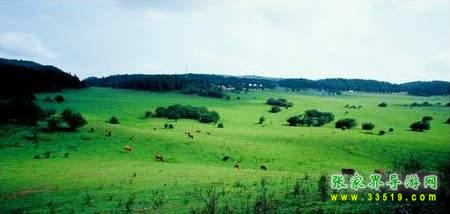
Xiannü Mountain National Forest Park has a total area of 8,910 hectares, with an average elevation of 1,900 meters and the highest peak at 2,033 meters. It is known as the "Switzerland of the East" for its uniquely charming alpine grasslands of Jiangnan, the rare forest-and-snow scenery of the south, and its serene and beautiful forest and green wilderness landscapes. Together with the magical Furong Cave, the beautiful Furong River, the world's largest geological wonder of natural bridge clusters, and the classic and elegant Huabang Hotel (4-star), it forms Chongqing's best tourist sightseeing and vacation resort.
The sea of forest, fantastic peaks, grasslands, and snowfields are called the Four Wonders. Climbing the peak and gazing afar at the plateau landforms of Xiannü Mountain, they rise and fall yet do not lose their flatness; the vast sea of forest is lush and dripping with green, with waves of pine rustling; the vast grasslands set among the mountain forests stretch to the horizon, like poetry and painting, giving people a harmonious beauty that combines softness and strength. Mountain peaks, valleys, forests, and grasslands merge into one, enhancing each other, with clearly layered scenery, forming geological and landform features that are majestic, steep, beautiful, wondrous, and broad.
Long known as the "Switzerland of the East" and the "Summer Palace of the Mountain City," Xiannü Mountain is beautiful in its vastness, beautiful enough to take one's breath away. Everywhere are green grasses, and blooming wildflowers cluster into balls, as if a gorgeous carpet had been laid. Standing in the natural giant "oxygen bar" formed by 330,000 mu of forest and 100,000 mu of grassland, a trace of coolness seeps into the skin, and one deeply inhales the freshness of the grasslands. Horseback riding, archery, kite flying, go-karts, off-road vehicles, paragliders, grass skiing... they form the pulsing melody of life on the vast grasslands. Accompanied by a joyful atmosphere, melodious songs, and delicious roast lamb, the body has already melted into this endless dream of grasslands.
Xiannü Mountain National Forest Park has a total area of 8,910 hectares, with an average elevation of 1,900 meters and the highest peak at 2,033 meters. It is known as the "Switzerland of the East" for its uniquely charming alpine grasslands of Jiangnan, the rare forest-and-snow scenery of the south, and its serene and beautiful forest and green wilderness landscapes. Together with the magical Furong Cave, the beautiful Furong River, the world's largest geological wonder of natural bridge clusters, and the classic and elegant Huabang Hotel, it forms Chongqing's best tourist sightseeing and vacation resort.
In winter, Xiannü Mountain is blanketed in white snow, wrapped in silver gauze; skiing on the great grasslands, enjoying the snow, and roasting lamb in the snow, raising a cup in the wind, one's spirits soar. In summer, the park has a humid climate, a vast sea of forest, blowing breezes, and is cool and pleasant, making it an excellent place for leisure, vacation, and escaping the heat. The alpine grasslands are the most proudly regarded sightseeing landscape, and their charming and gorgeous scenery has been praised by many visitors as a "Grassland Park" with Western European pastoral charm and the "Number One Pasture of the South."
Snow scenery of Xiannü Mountain
Snow scenery is the finest landscape of Xiannü Mountain. In winter, the average daily temperature at Xiannü Mountain is below 0°C, and the boundless sea of forest and wild plains are shrouded in ice and snow, presenting a holy and pure beauty of forest and snowfields, white with snow and dressed in silver. Rime and ice waterfalls stir the emotions. At such times, Xiannü Mountain becomes an excellent tourist, sports, and leisure resort around Chongqing for viewing snow scenery and engaging in snow sports. The holding of the first Wulong Xiannü Mountain Forest and Snowfield Tourism Festival means that winter tourists in Chongqing need not travel far; at Xiannü Mountain they can fully appreciate the endless charm and romantic thrill of snow sports.
The Xiannü Mountain artificial ski resort, built with an investment of 30 million yuan, has a total area of 120,000 square meters, including a reception hall with modern facilities covering 3,000 square meters and a large parking lot of 10,000 square meters. The four ski runs are each equipped with tow cableways; each run is 65 meters wide, with an average length of 500 meters and a maximum slope of 12°. Visitors can choose beginner or intermediate ski runs according to their own skiing level and preference. The entire ski resort can accommodate nearly 1,500 people skiing and playing in the snow at the same time.
Snow sports activities at Xiannü Mountain
Snow sports activities at Xiannü Mountain include double-board skiing, single-board skiing, snow frisbee (snow tube), ski poles, ski carts, thunderboard skiing, ski boats, snow sledges, snowmobiles, snow bicycles, and other recreational facilities. They let visitors experience the passion of "a true forest and snowfield, snow carnival every week." The completion of the Xiannü Mountain ski resort makes it currently China's lowest-latitude and largest-scale alpine skiing and grass-skiing venue. The launch of these sports facilities has changed Chongqing's regret of lacking snow sports in winter, making Xiannü Mountain's advantages as a scenic area integrating vacation, leisure tourism, and sports increasingly prominent, and allowing Chongqing people who love ice and snow sports to enjoy tourism costs 30% lower than those of other places.
2,Xiannü Mountain
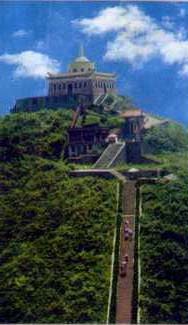
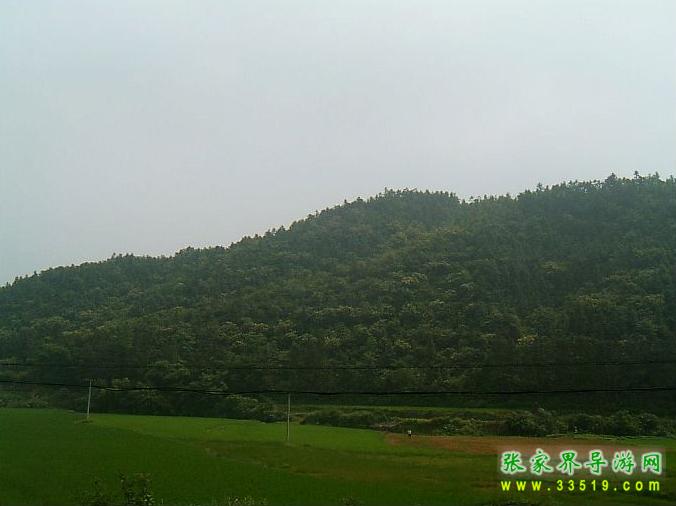
Xiannü Mountain ranks first among the four famous mountains of Xiangtan, Hunan (Xiannü Mountain, Zhaoshan, Jinxia Mountain, and Yinshan). It is located about 20 kilometers northwest of Xiangtan City. A granite stone stairway winds up the mountain, reaching all the way to the summit. It is 311.6 meters above sea level and is one of the seventy-first peaks of Mount Heng.
The Xiannü Mountain Scenic and Historic Area covers 15 square kilometers and has nine major scenic zones: the Long'an Temple Buddhist Scenic Zone, the Primitive Secondary Forest Scenic Zone, the Yaojia Reservoir Water Park, the Sanxiang Cultural Celebrity Zone, the Horticultural Viewing Zone, the Tea Culture Zone, the Folk Customs Zone, the Hotel and Catering Service Zone, and the Construction Tourism Development Zone Archway.
Xiannü Mountain was originally named Long'an Mountain. During the Tang Dynasty, the eminent monk Chan Master Hai from Shaanxi came here, built a thatched hut, and lived in it. Soon afterward, devout men and women set about building a temple, naming it "Long'an Temple" (according to Liu Zongyuan's "Stele of Chan Master Long'an Hai"). As for why people all call the mountain "Xiannü Mountain," while Long'an Mountain has instead faded from memory, it is because of a legend: around the Song Dynasty, at the foot of the mountain lived a mother-in-law and her daughter-in-law. The mother-in-law was honest and kind, accumulating good deeds and delighting in charity; the daughter-in-law was hardworking and frugal, gathering herbs and weaving. One day, the mother-in-law suddenly fainted, and when she woke, everything before her eyes was pitch black; both eyes had gone blind. To cure her mother-in-law's eyes, the daughter-in-law went up the mountain every day to gather herbs. Once, utterly exhausted, she sat under a large tree to rest. Just as she closed her eyes, she hazily saw a young and beautiful girl holding a bright red large honey peach, smiling as she walked toward her and said: "Take this peach back and give it to your mother-in-law to eat, and her eyes will recover." The daughter-in-law was both startled and overjoyed, and hurriedly opened her eyes to look, but the girl had vanished without a trace. Strangely enough, as soon as the mother-in-law finished eating the peach, she felt her whole body grow warm and her eyes swell. In a short while, both eyes regained their sight, and were even clearer than before. Everyone said that the mother-in-law's good heart and the daughter-in-law's filial piety had moved the immortal maiden who saves the suffering. To express their reverence for this immortal maiden, people renamed the mountain "Xiannü Mountain," and "Long'an Temple" was also called "Xiannü Temple" by the people.
The Xiannü Temple is divided into three successive halls and pavilions. Each has its own gate archway. Facing south and built against the mountain, with blue brick walls, glazed tiles, carved beams and painted rafters, it is magnificent in momentum. On the temple gate are written the three characters "Long'an Temple," and the gate couplet reads "Four Dynasties of Spiritual Traces; A Grand View of the Three Chu," written by the Qing Dynasty calligrapher He Shaoji. Behind the mountain gate is the King Wu Temple, with a pair of stone lions in front of the gate, and inside the temple is enshrined a statue of Guan Yunchang. The central hall is the Niangniang Hall, with east and west side halls to its left and right. The east hall has the "Xiannü Mountain Stele Record" hung on its front, and on its four walls are inscriptions and poems by officials and visitors of successive dynasties; the west hall has monks' quarters and a visitors' lounge, and on its walls are relief carvings of the Eight Immortals, exquisitely crafted. Outside the west hall are two ponds. One is the Life-Release Pond, in which there is a live turtle as big as a dou, with the four characters "A Thousand Years Unaging" carved on its back. The other is the Swan Pond, whose stone crevices on all four sides seep water, never drying up even in long droughts. Legend says this Swan Pond could also automatically produce oil, salt, and grain. The rear hall is the Patriarch Hall. On the mountain there is also a slope called Riding Horse Ridge, where the Northern Expedition general Tang Shengzhi once came to ride horses and view the mountain.
The former scenery of Xiannü Mountain was once destroyed, and since 1960 it has gradually been restored. Now it is lush with green trees, shaded by firs and pines, with birds chirping, and the scenery is picturesque. In summer and winter each year, visitors come in crowds.
Preparing to build an international outdoor sports center; by the end of the year you can go off-roading at Xiannü Mountain
At present, Wulong County is conceiving and building the Wulong International Outdoor Sports Center. When the time comes, you too can try your hand on Wulong's international outdoor racing courses.
The Olympic Village inspired Wulong to create an "Outdoor Village"
While summing up experience, Liao Yu suddenly thought of the Olympic Village. Why couldn't we create an "Outdoor Village"? Afterward, specific planning began, and the "Outdoor Village" was named the "International Outdoor Sports Center." The reason it is labeled "international" is that this center is oriented toward the world, and no such professional institutional organization yet exists anywhere in the world.
In support of the planned center, Wulong is also preparing to establish an International Outdoor Sports Alliance. At present, according to the instructions of Vice Mayor Xie Xiaojun, Fu Mingqiu of the Municipal Sports Bureau is preparing to form a professional outdoor athlete team of more than eight people.
At present, the county government has asked Liao Yu to inspect construction sites. Liao Yu said the site will be chosen somewhere between Xiannü Mountain Town and the county town, covering about 100 mu, with an investment of 100 million. The center will have a four-star hotel for reception; athletes' apartments, a catering department, and an entertainment department to meet the needs of athletes from various countries; an outdoor sports exhibition hall to explore and display outdoor sports culture; in Liao Yu's conception, there will also be leisure venues serving white-collar workers; and to meet the needs of outdoor enthusiasts, they will also build an outdoor sporting goods store.
What citizens can look forward to is this: the "center" will specially set up outdoor experience venues, where outdoor enthusiasts can experience the routes taken by professional athletes and also receive professional training. "Before the end of the year, citizens will be able to come for training," Liao Yu said. "Chongqing's more than twenty thousand backpackers will enjoy professional services and insured sports here."