This attraction introduction is compiled from historical materials in the "Zhangjiajie Tour Guide Network" (33519.com · Scenic Spots section). Ticket prices, opening hours, transportation, and contact information mentioned in the text may be outdated. Please refer to the latest official announcements from the scenic area before traveling; some content consists of historical background/cultural introductions and is for reference only.
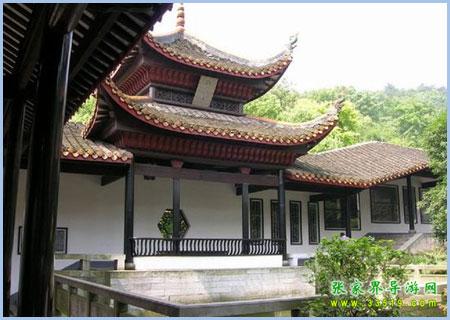
Yuelu Academy is a Major Historical and Cultural Site Protected at the National Level and one of the four great ancient academies of China; it enjoys the reputation of being a "millennium-old seat of learning."
Yuelu Academy is located at the foot of Yuelu Mountain by the Xiang River in Changsha. It is one of the four great ancient academies of China, and its predecessor can be traced back to the late Tang and Five Dynasties period (958 AD), when the two monks Zhirui and others ran a school. In the ninth year of the Kaibao era of the Northern Song Dynasty (976 AD), Tanzhou prefect Zhu Dong formally founded Yuelu Academy on the basis of the monks' school. Thereafter, it passed through the Song, Yuan, Ming, and Qing dynasties until the 29th year of the Guangxu era at the end of the Qing Dynasty (1903 AD), when it was converted into the Hunan Higher School, and subsequently into the Hunan Higher Normal School and the Hunan Industrial Specialized School. In 1926 it was officially named Hunan University, a name it retains to this day. Across a thousand years, its scholarly tradition has never ceased, which is why it is known as a "millennium-old seat of learning." Southern Song Neo-Confucian scholars such as Zhu Xi once lectured here, and it is said that in its heyday it had as many as a thousand students. The thousand-year history of education from Yuelu Academy to Hunan University reflects the changes in China's educational system and is a microcosm of the development of higher education in China.
Yuelu Mountain has been a famous cultural mountain since ancient times. Before the Western Jin Dynasty, it was a base for Daoist activities, where the Wanshou Palace and Chongzhen Temple were built. In the fourth year of the Taishi era of the Western Jin Dynasty (268 AD), the Lushan Temple was founded. During the Six Dynasties, the Daolin Temple was built. In the Tang Dynasty, Ma Sui built the "Daolin Retreat." In the late Tang and Five Dynasties, the two monks Zhixuan and others built houses to run a school, forming the prototype of the academy. In the ninth year of the Kaibao era of the Northern Song Dynasty (976 AD), Tanzhou prefect Zhu Dong expanded it and founded Yuelu Academy; in the eighth year of the Dazhong Xiangfu era (1015 AD), Emperor Zhenzong of Song bestowed the plaque "Yuelu Academy," and Yuelu Academy thus became one of the four great academies of the country. From the very beginning of its founding, Yuelu Academy was renowned throughout the world for its teaching and its dissemination of academic culture.
Beginning in the Xuande era of the Ming Dynasty, local officials restored and expanded the academy many times. Each time, the main buildings of Yuelu Academy were concentrated on the central axis, with the main axis extending forward to the west bank of the Xiang River and backward to the summit of Yuelu Mountain, complemented by pavilions and archways, and with a Confucian temple built on one side of the axis. This formed the magnificent historic landscape of the academy, with pavilions and terraces complementing one another, towers and halls facing each other, and mountains and waters blending together. The academy's three major functions—teaching, book collection, and sacrificial rites—were fully restored and developed, laying the foundation for the basic layout of the existing buildings.
"The green mountains are fortunate to bury loyal bones." After the Revolution of 1911, the remains of many noble-minded patriots were laid to rest here, which is also one of the great wonders of Yuelu Mountain. The most famous include the old-democratic revolution pioneers Huang Xing, Cai E, Jiang Yiwu, Liu Daoyi, and Chen Tianhua; Jiao Dafeng and Chen Zuoxin, the chief and deputy governors of Hunan during the 1911 Restoration; important members of the Tongmenghui Yao Hongye and Yu Zhimo; the famous scholar Yang Shuda; and the public tombs of large numbers of soldiers who died in battle. Their stirring and heroic deeds have merged with the green mountains of Yuelu, forming a chapter in the enduring noble spirit of Yuelu Mountain's culture and the page most imbued with concern for the country and the people in the beautiful scene of red maple leaves and loyal blood.
In the Ming Dynasty, Yuelu scholarship still took the learning of Zhu Xi and Zhang Shi as its orthodox tradition. In the Qing Dynasty, Yuelu Academy mainly taught Confucianism and Han learning. During the Daoguang era, Wu Rongguang founded the Xiangshui Jingxue Hall within the academy, making it an important center for Han learning research. In the late Qing Dynasty, with the rise of the reform movement, the academy also began to spread new learning and exerted a considerable influence.
After the First Sino-Japanese War, the reform movement arose, calling for the abolition of the imperial examination and the establishment of schools. In the 23rd year of the Guangxu era (1897 AD), the Hunan Shiwu Academy was founded, later successively renamed Qiushi Academy and Hunan Higher School. In the 29th year of the Guangxu era (1903 AD), it merged with Yuelu Academy and was converted into the Hunan Higher School. After the Revolution of 1911, the school was changed from an academy to a school, and plans were made to establish Hunan University; during this period, the Hunan Higher Normal School and the Hunan Public Industrial Specialized School moved in successively. In 1926, Hunan University was formally established.
Although the school underwent several reforms and changed its name many times, it remained the highest institution of learning in Hunan, and the original academy buildings have always remained unchanged. Today's Hunan University has developed into a comprehensive university with coordinated development across multiple disciplines. The restored Yuelu Academy has been listed as a Major Historical and Cultural Site Protected at the National Level, and this millennium-old seat of learning is continuing to write a new chapter in its history.
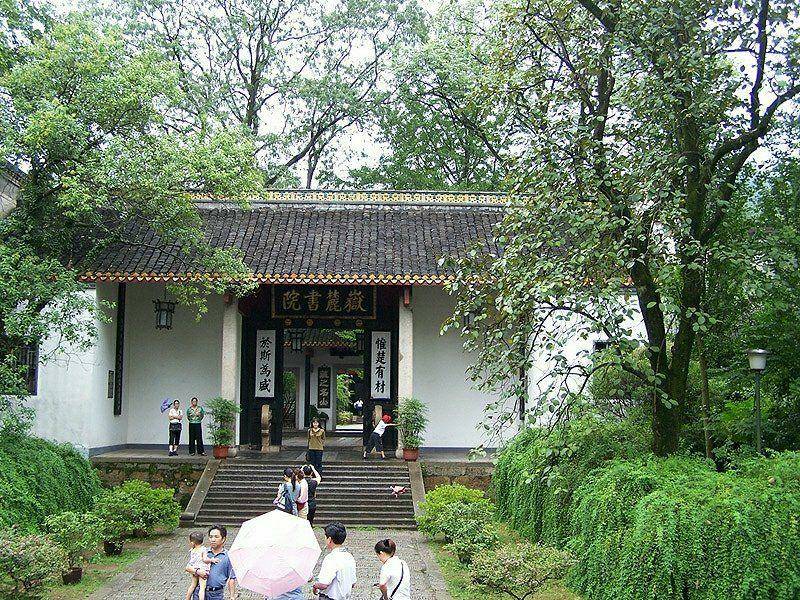
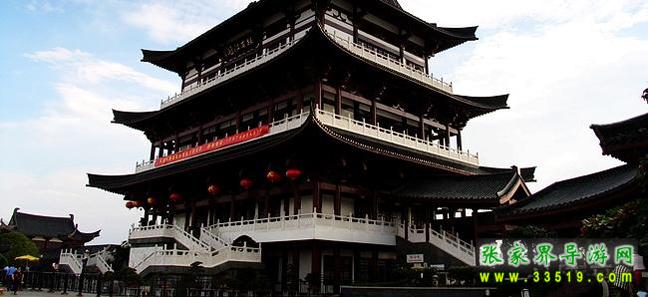
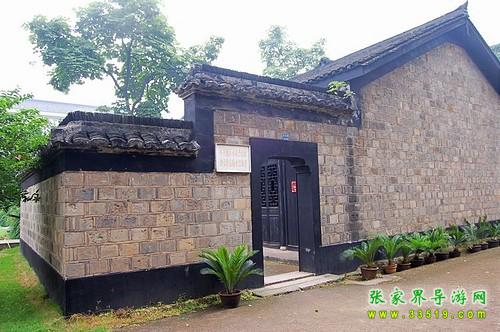
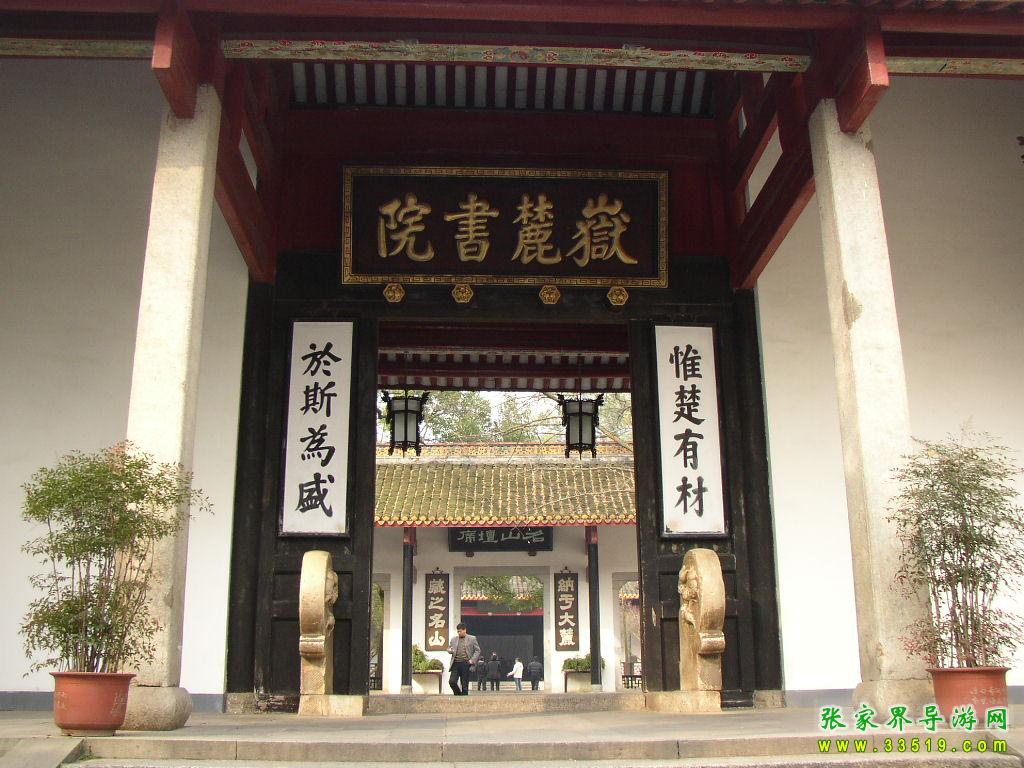
Yuelu Academy covers an area of 21,000 square meters. Most of its existing buildings are relics from the Ming and Qing dynasties. The main structures include the Head Gate, Second Gate, Lecture Hall, Banxue Studio, Jiaoxue Studio, Baiquan Pavilion, Imperial Library, Xiangshui Jingxue Hall, and Confucian Temple. They are divided into three major sections—teaching, book collection, and worship—and each section is interconnected, forming a complete whole that fully displays the magnificent grandeur of ancient Chinese architecture.
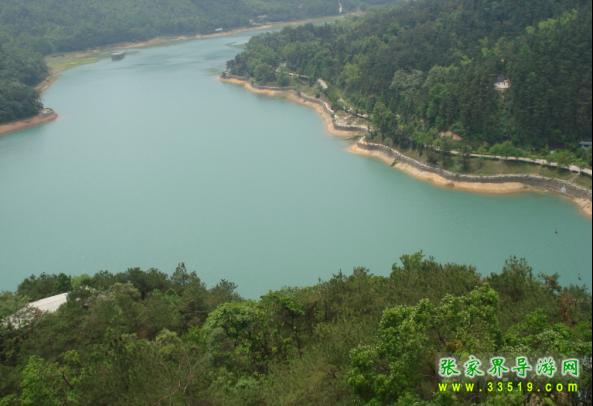
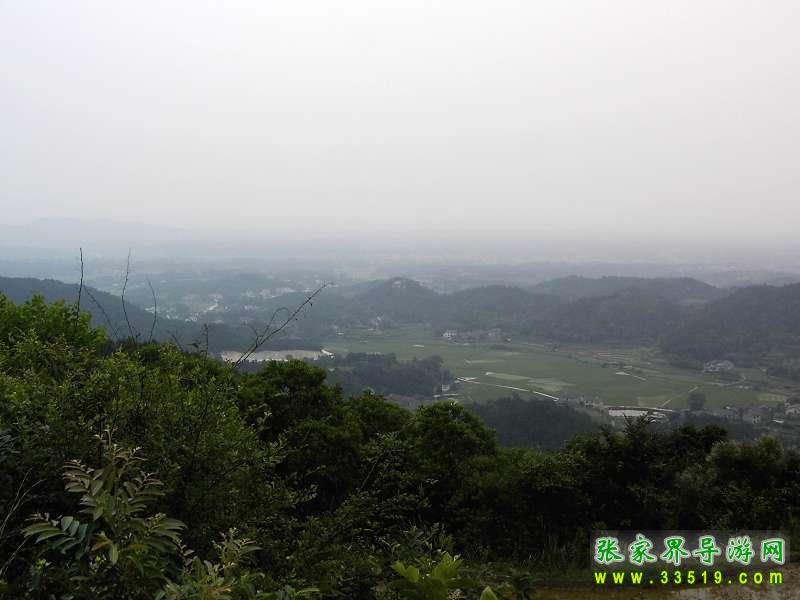
The scenery of Yuelu Mountain consists of two parts: natural scenery and cultural landscape. The natural scenery fully embodies the four qualities of wonder, rarity, seclusion, and beauty. Wonder refers to the lush forests and grasses of the Yuelu Mountain area, which contain several thousand species of plants. Famous trees such as glossy privet, ginkgo, camphor, sassafras, sweet oak, and sweetgum are all present, and ancient trees over a thousand years old can even be seen, along with endangered species such as Chinese honeylocust and white magnolia. Flowers and trees such as peach blossoms, winter jasmine, magnolia, wintersweet, osmanthus, lilies, hibiscus, and roses cover the mountains and fields, embroidering a brocade-like picture of Lushan amid a riot of color. Rarity refers to the thriving wildlife in the Yuelu Mountain area: among the trees flit and sing thrushes, orioles, cuckoos, and azaleas, as well as woodpeckers, parrots, owls, and more, while deep in the dense forest, foxes, goats, wild rabbits, pheasants, and others appear faintly from time to time. Seclusion refers to the countless secluded ravines and trickling springs; if you come here in winter and happen to encounter snow flying all over Yuelu, the word "seclusion" will be felt to the very bone. One of the famous Eight Views of Xiaoxiang is "Evening Snow on the River and Sky," which refers to this. Beauty: Yuelu Mountain is beautiful in all four seasons—beautiful in winter snow and beautiful in spring flowers—and when autumn comes, not only is the beauty seen by the eyes, but even the treats for the palate are beautiful beyond measure: pomegranates, chestnuts, southern tangerines, wild jujubes... and the inedible red leaves are even more breathtakingly beautiful.
The cultural landscape of Yuelu Mountain is another brilliant scenery of the mountain. The millennium-old Yuelu Academy is a historical record of the many talented people produced by the three Xiang region, while in Aiwan Pavilion, the old scholar with a long beard chanting "I stop the carriage because I love the maple woods at dusk; frost-covered leaves are redder than spring flowers"—that mood and scene make people linger and forget to return.
Lushan Temple Stele. Yuelu Academy is also famous throughout the world for preserving a large number of stele and plaque relics, such as the Tang-dynasty "Lushan Temple Stele," carved in the 18th year of the Kaiyuan era of the Tang Dynasty (730 AD), with text composed and written by the famous calligrapher Li Yong; it was carved in stone and seal script by Huang Xianhe of Jiangxia. Because the text, calligraphy, and stone carving are all exquisite, it has long been known as the "Three Excellences." The stele is 4 meters high and 1.35 meters wide, with more than 1,400 characters in the inscription. This stele is famous throughout the world for its calligraphy and is most valued by the art world; rubbings of the inscription were once all the rage, and its brushwork is vigorous and powerful, making it one of the most famous Tang steles. In addition, there are the Ming-dynasty stone archway inscribed with Emperor Zhenzong of Song's handwriting "Yuelu Academy," the "Chengzi Four Admonitions Stele," the Qing-dynasty imperial plaques "Learning Reaches Nature and Heaven" and "Orthodox Lineage of the South," the Qing-dynasty carved Zhu Xi "Loyalty, Filial Piety, Integrity, and Honesty Stele," Ouyang Zhenghuan's "Orderliness and Solemnity Stele," Wang Wenqing's "Yuelu Academy Study Regulations Stele," and many others.
The garden architecture of Yuelu Academy has profound Hunan cultural connotations. It is different both from the grand and gorgeous expression of official gardens and from the noisy and flashy pursuit of private gardens; instead, it reflects a spirit of scholar culture and has an elegant and simple style.