This attraction introduction is compiled from historical materials in the "Zhangjiajie Tour Guide Network" (33519.com · Scenic Spots section). Ticket prices, opening hours, transportation, and contact information mentioned in the text may be outdated. Please refer to the latest official announcements from the scenic area before traveling; some content consists of historical background/cultural introductions and is for reference only.
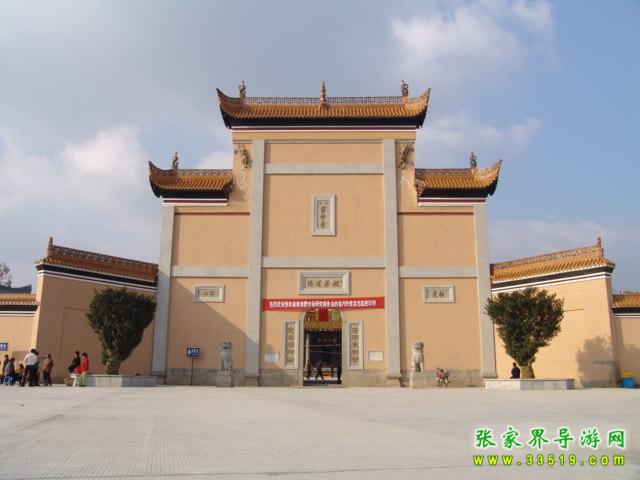
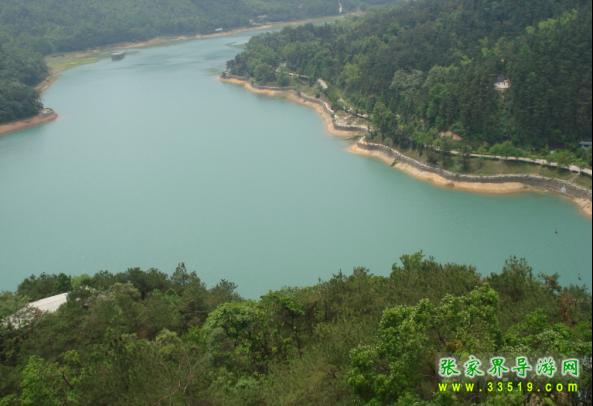
Miyin Temple is located at the foot of Pilu Peak on the mountainside of Weishan in Ningxiang County. Although this is a mountainside, it stretches for miles with green fields and flat plains, with gurgling streams and gentle breezes. Green pines, emerald bamboo, ginkgo, and red maples set each other off beautifully, creating a most picturesque scene.
Miyin Temple is the ancestral temple of the Weiyang School of Chan Buddhism and has a history of more than a thousand years. Its founding patriarch was the eminent monk Chan Master Lingyou. At the end of the Yuanhe reign of Emperor Xianzong of Tang (820 AD), Lingyou came to Weishan and built a thatched hut to preach and expound the scriptures. Through the petition of Prime Minister Pei Xiu, the temple was granted the name "Miyin Chan Temple" and thus established. Lingyou insisted on "no work, no food" at Weishan, living a life combining farming and Chan practice. In his later years, thanks to the support and esteem of Pei Xiu, Li Jingrang, and others, the temple received large land donations and the community of monks grew steadily. Later, Chan Master Lingyou transmitted the Dharma to Yangshan (in present-day Yichun, Jiangxi), founding the Weiyang School.
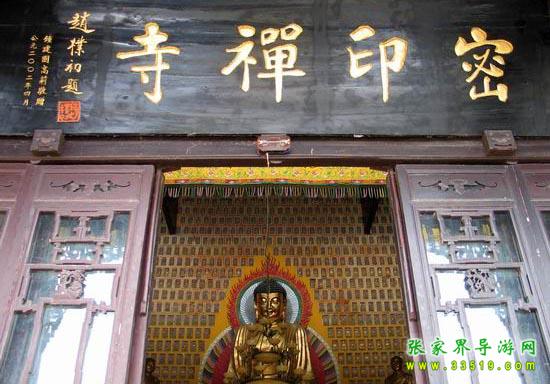
According to historical records, during the Tang and Song dynasties, Miyin Temple covered a vast area with magnificent halls, housing more than 3,000 monks and 3,700 mu of temple land, flourishing to an extraordinary degree. Legend has it that the temple then had a "thousand-monk pot" capable of cooking rice for 1,000 people. In the first year of the Daguan reign of Song (1107 AD), a great bell weighing 5,048 jin was cast, coated with gold, and placed in the bell tower; struck at dawn and evening, its sound could be heard for miles. Together with the 5,048 volumes of scriptures originally kept in the temple and the original 5,048 dan of land rent, it earned the name "Miyin Three 5,048s."
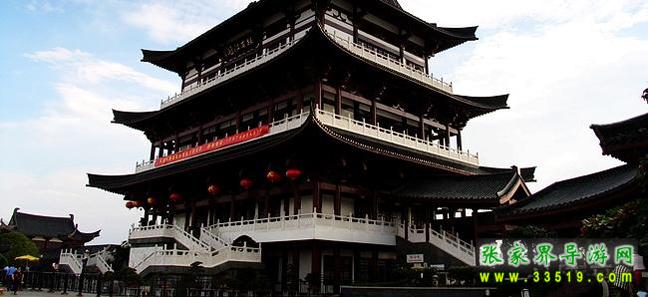
Since its founding over a thousand years ago, Miyin Temple has passed through successive dynasties, repeatedly suffered from warfare and fire, and been rebuilt many times. The existing buildings include the mountain gate, main hall (Ten Thousand Buddha Hall), rear hall, side halls, meditation hall, and patriarch hall, covering a total area of more than 9,000 square meters. Except for the meditation hall, which was built in the 12th year of the Shunzhi reign of Qing (1655 AD), most were rebuilt in the 1920s and 1930s. The Ten Thousand Buddha Hall is the most famous building in Miyin Temple. Modeled after the main hall of the Great Temple of Mount Heng, it is nine zhang tall with a double-eaved hip-and-gable roof. Its thirty-eight inner and outer pillars are all white granite, and the roof is covered with golden glazed tiles. The wall bricks are over a chi high, and each brick is molded with a gilded Buddha image, totaling 12,182 figures embedded in the four walls, extremely solemn and magnificent, ranking first in the land.