This attraction introduction is compiled from historical materials in the "Zhangjiajie Tour Guide Network" (33519.com · Scenic Spots section). Ticket prices, opening hours, transportation, and contact information mentioned in the text may be outdated. Please refer to the latest official announcements from the scenic area before traveling; some content consists of historical background/cultural introductions and is for reference only.
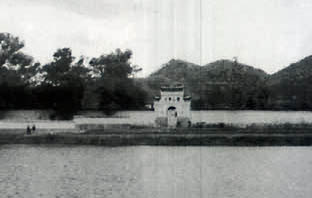
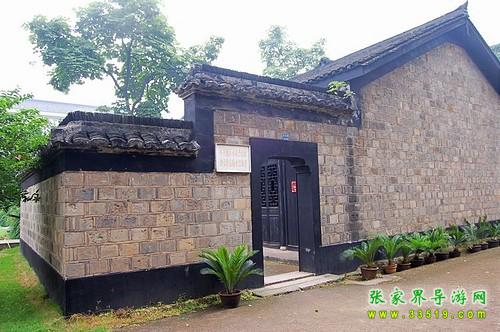
Yunshan Academy is a cultural relic protection unit of Hunan Province. It is located at the foot of Shuiyun Mountain, 45 kilometers west of Ningxiang County seat. In the third year of the Tongzhi reign of Qing (1864 AD), it was initiated by Liu Dian, a native of the county and Zhejiang Provincial Surveillance Commissioner, to facilitate schooling for students in the western part of the county. The site is majestic and imposing, with simple and elegant architecture, covering 7,200 square meters. It has a lecture hall, Wenchang Pavilion, and Hall of Former Teachers, among others; the original buildings totaled 158 rooms. Half a li east of the academy stands the Kuixing Tower, three stories high and five zhang tall. The Wei River flows past the west of the tower, and the Buyun Bridge spans it. Tianma Mountain embraces it on both sides, serving as a natural guard for the academy, while Shuangru Peak and Shuiyun Temple gaze at each other from afar.
The school still preserves the "Stele for Initiating the Construction of Yunshan Academy" written by Liu Dian. The stele is 1.85 meters tall, 0.8 meters wide, and 0.025 meters thick, incised on bluestone. On the front pillars of the school's main building are four large characters "Yunshan Wanziao" inscribed by Xie Juezai. Around the school are trees such as the "golden trees" planted by Wang Lingbo and Xie Juezai. With green mountains and clear waters, the scenery is beautiful. After the Qing government abolished the imperial examination system, Yunshan Academy was converted into a higher primary school, with the democratic revolutionary elder Wen Jingyou appointed as its head. The school attached a half-day study class, pioneering amateur education. After the spring of 1909, the "Four Bearded Men of Ningxiang"—He Shuheng, Jiang Mengzhou, Xie Juezai, and Wang Lingbo—successively taught or served as principals here. At the same time, Ningxiang peasant movement pioneer Mei Yecheng, progressive figures Yu Difang, Ouyang Jian, Wang Yifan, Xu Baofan, Lin Ruoxu, Xia Yuanbin, and Li Jianong, who heroically died in the revolutionary struggle in Ningxiang in the 1930s, vigorously promoted science, democracy, and labor education at Yunshan School, actively spread Marxism-Leninism, and conducted anti-imperialist and anti-feudal patriotic education. They not only made Yunshan School the center of the New Culture Movement in Ningxiang around the time of the May Fourth Movement, but also made it the cradle of revolution for the people of Ningxiang, training a large number of talented people for China's new-democratic revolutionary movement, such as Gan Siqi, Xiao Shufan, Xie Nanling, Yin Shutao, Yu Dongsheng, Hu Hui, Yu Xiwen, Lin Esheng, Yan Yueqiao, and other outstanding figures, who made tremendous contributions to the revolutionary struggle of the Chinese people.
In July 1917, when Mao Zedong came to Ningxiang to conduct a rural survey, he once stayed at Yunshan. In 1921, after He Shuheng returned to Hunan from attending the First National Congress of the CPC, he came to Ningxiang together with Xie Juezai and gave revolutionary lectures at Yunshan. In the winter of the same year, Wang Lingbo held a county-wide teachers' training institute here to spread revolutionary ideas. After Liberation, Yunshan Academy was listed as a provincial-level cultural relic protection unit, and a highway leads directly to it from the county seat. With the erosion of time, Yunshan Academy had become dilapidated. In 1991, Wang Dingguo, Liu Liqing, and Liu Xuechu, members of the National Committee of the Chinese People's Political Consultative Conference; Liu Mingfu, former deputy director of the State Planning Commission; Chen Yongqing, former director of the Letters and Visits Bureau of the General Office of the CPC Central Committee; Jiang Yaxun, former vice chairman of the Hunan Provincial CPPCC; Zhou Guangzhao, current president of the Chinese Academy of Sciences; Pan Ji and Zhou Zheng, vice chairmen of the Hunan Provincial People's Congress Standing Committee and Hunan Provincial CPPCC respectively; as well as Wang Xiequan, Liu Ximeng, Liu Yunqiong, Liu Zanping, Li Zhao, Li Pinzhen, Jiang Caiping, Yuan Yunxian, Xie Fang, Liao Shiguang, Jiang Guofen, Jiang Dehui, Tao Jibin, Xie Zigu, and others issued a proposal to raise funds to restore Yunshan Academy, which received an enthusiastic response from the people of the whole county and from people at home and abroad.