This attraction introduction is compiled from historical materials in the "Zhangjiajie Tour Guide Network" (33519.com · Scenic Spots section). Ticket prices, opening hours, transportation, and contact information mentioned in the text may be outdated. Please refer to the latest official announcements from the scenic area before traveling; some content consists of historical background/cultural introductions and is for reference only.
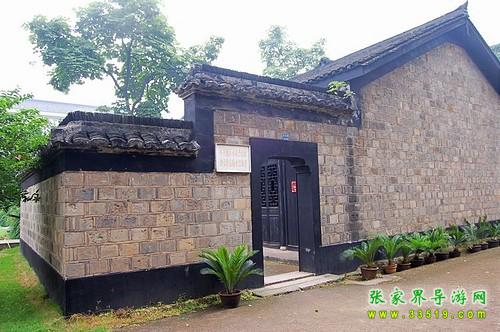
Xie Juezai's Former Residence is a cultural relic protection unit of Ningxiang County. It is located in Nanfuchong, Duizishan, Shatian Township in the western suburbs of Ningxiang County. On April 26, 1883, Xie Juezai was born into a peasant family in Xiaojiachong, Shatian Township, Ningxiang County. Later, as the family became moderately well-off, they moved to settle in Nanfuchong, where he spent his youth. The former residence is an ordinary farmhouse, first built in the 30th year of the Daoguang reign of Qing (1850). It faces west with its back to the east, has a brick-and-wood structure, and covers about 640 square meters. It has two courtyards, is three bays wide, and consists of a central hall, bedrooms, kitchen, and utility rooms. It features double-panel doors, square lattice wooden windows, blue brick and mud walls, a double-pitched gable roof covered with small blue tiles, an eaves corridor, and a central courtyard. There is a threshing ground and granite steps. It faces farmland in front and backs onto a hillside, surrounded by bamboo and pines, with an elegant and serene environment.
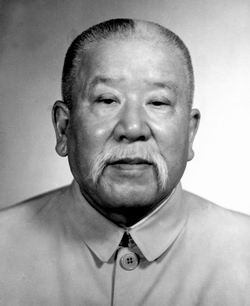
Brief Introduction to Comrade Xie Juezai
Comrade Xie Juezai, honored as one of the "Five Elders of Yan'an," was a veteran proletarian revolutionary and statesman of the Chinese Communist Party, an outstanding social activist, and one of the founders of our country's people's judicial system.
Xie Juezai, originally named Xie Juezhai, courtesy name Huannan, school name Weijian, was born in May 1884 in Ningxiang County, Hunan Province. In 1905, he passed the imperial examination as a xiucai of the late Qing Dynasty. In 1919, he participated in the May Fourth Movement. In 1921, he joined the New People's Study Society. In 1925, he joined the Chinese Communist Party. During the First Great Revolution and the period after its failure, he was mainly engaged in Party propaganda and education work in Hubei, Shanghai, and the Hunan-Hubei-Western Soviet Area, successively serving as editor-in-chief of the Dajiang Daily, Hongqi (Red Flag) Newspaper, and Gongnong Daily. In April 1933, he went to work in the Central Soviet Area, successively serving as Secretary-General and Minister of Internal Affairs of the Central Government of the Chinese Soviet Republic, presiding over and participating in the drafting of the earliest series of laws and regulations of the Chinese red revolutionary regime, including the Labor Law, Land Law, and Marriage Regulations. In October 1934, he joined the Long March.
After the Red Army reached northern Shaanxi, he served as Minister of Internal Affairs and concurrently Secretary-General of the Northwest Office of the Central Government, and later as Minister of Justice and concurrently President of the Higher Court of the Shaanxi-Gansu-Ningxia Border Region. After the July 7th Incident, he went to Lanzhou as representative of the Party Central Committee to the Lanzhou Office. From September of the same year, he served as President of the Higher Court of the Shaanxi-Gansu-Ningxia Border Region Government. In February 1939, he became vice president of the Central Party School of the CPC Central Committee. In 1941, he served as vice chairman of the Shaanxi-Gansu-Ningxia Border Region Assembly. In August 1948, he served as a member of the North China People's Government, and in September as Minister of Justice of the North China People's Government. After the founding of New China, he served as Minister of Internal Affairs of the Central People's Government. In April 1959, he became President of the Supreme People's Court. In 1965, he served as vice chairman of the Fourth National Committee of the Chinese People's Political Consultative Conference. He passed away in Beijing on June 15, 1971.
Throughout his life, Xie Juezai sought no personal gain, coveted no empty fame, was honest and public-spirited, plain and hardworking, and realistic and truthful. For decades he remained consistent, willingly serving as a public servant of the people.
He often told his children: "I am a Communist, and you are the children of Communists; you are not allowed to have any sense of privilege." He stipulated that his children could not use his car casually. During his time working in the Ministry of Internal Affairs, in the spirit of "sharing the central leadership's worries above and relieving the people's hardships below," in addition to personally participating in the formulation of various disaster relief, relief, and pension policies, he also traveled to disaster areas in various places, visiting the poor and asking about their hardships, and solving practical problems concretely. As President of the Supreme People's Court, he not only personally handled cases as a model demonstration, but also went deep into courts across the country, personally reviewing case files, boldly correcting unjust, false, and erroneous cases, and better protecting the legitimate rights and interests of the people.
"Devoting himself to the Party with constant diligence, seeking benefits for the people with even greater zeal"—this was a poem presented to Xie Juezai by people during the Yan'an period when they congratulated him on his birthday, and it is also the most truthful portrayal of Xie Juezai's revolutionary life.