This attraction introduction is compiled from historical materials in the "Zhangjiajie Tour Guide Network" (33519.com · Scenic Spots section). Ticket prices, opening hours, transportation, and contact information mentioned in the text may be outdated. Please refer to the latest official announcements from the scenic area before traveling; some content consists of historical background/cultural introductions and is for reference only.
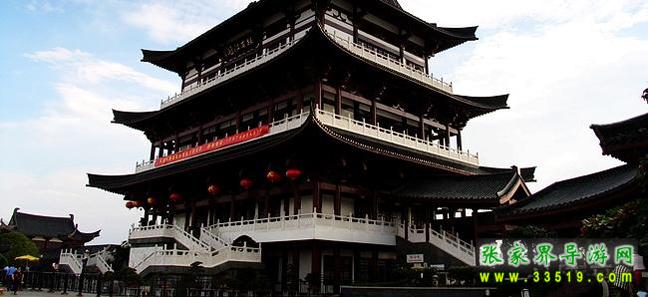
Outside the small west gate of the county seat there is a small hill. In the hill, ancient trees reach the sky, and a hundred birds contend to roost there. In the depths of the green shade there is an ancient temple, first named Xiangshan Lodge, later inhabited by monks, and so called Xiangshan Temple.
In the temple there are three ancient Buddha statues, each more than two zhang tall, covered entirely in gold leaf and dazzling. One Buddha is in the center, resting with eyes closed, while the left and right Buddhas have brows relaxed and eyes open, seeming almost ready to come to life. The hall walls are painted with dragons and tigers, splendid and varied. Since the lodge was built during the Zhenguan period of the Tang Dynasty (627-649), Xiangshan Lodge has been a scenic spot for visitors. In front of the temple there is an ancient well, with water clear as a mirror, warm in winter and cool in summer. In the well are golden carp, in pairs, males chasing females, not avoiding people. The most fascinating things in the temple are a bell hanging on each side, each weighing 1,500 kilograms, cast with cloud-and-thunder patterns and exquisitely crafted. Each strike resounds throughout the whole city. The sound of the bells varies with morning and evening, clear or cloudy, rain or snow: on clear days the bell tone is loud and bright, in rain it is melodious, on cloudy days it is low and deep; struck in the morning the sound is crisp, struck in the evening it is clear. During the Kaiyuan period (713-741), Prime Minister Pei Xiu once stayed at Xiangshan Lodge to study Buddhism, and the poet Dou Chang also came here to enjoy the scenery, leaving behind the poem "Listening to the Cuckoo at Xiangshan Lodge": "In Chu's lingering spring the listening gradually grows rare, the broken-voiced gibbon now again wets the farmer's tears. Clouds bury old trees in the empty mountain, as if a thousand calls flew past in one moment."