This attraction introduction is compiled from historical materials in the "Zhangjiajie Tour Guide Network" (33519.com · Scenic Spots section). Ticket prices, opening hours, transportation, and contact information mentioned in the text may be outdated. Please refer to the latest official announcements from the scenic area before traveling; some content consists of historical background/cultural introductions and is for reference only.
Introduction to Jinggang
In the Tang Dynasty, Li Jing stationed troops here while campaigning against Xiao Xian, and "the common people were grateful to him, hence it was called Jinggang."
In the fourth year of the Xianfeng reign of the Qing Dynasty (1854), the Taiping Army's western expedition entered Hunan and badly defeated Zeng Guofan's Xiang Army.
Because water transport was convenient, merchants flourished, and for a time it was the foremost prosperous market town in the region. In the mid-Republican period, it was one of the three flourishing towns of Hunan Province, along with Jinshi and Hongjiang.
In 1957, the Wei River was diverted, and the Jinggang section of the Wei River was blocked.
Several li outside the ancient town are more than 10 Neolithic sites.
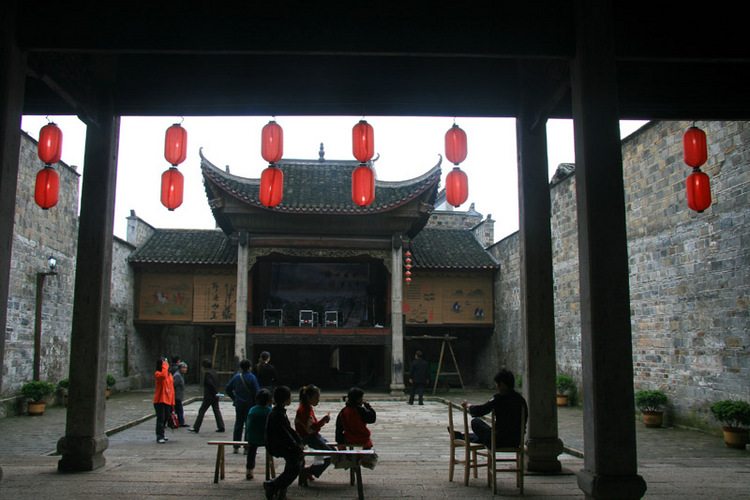
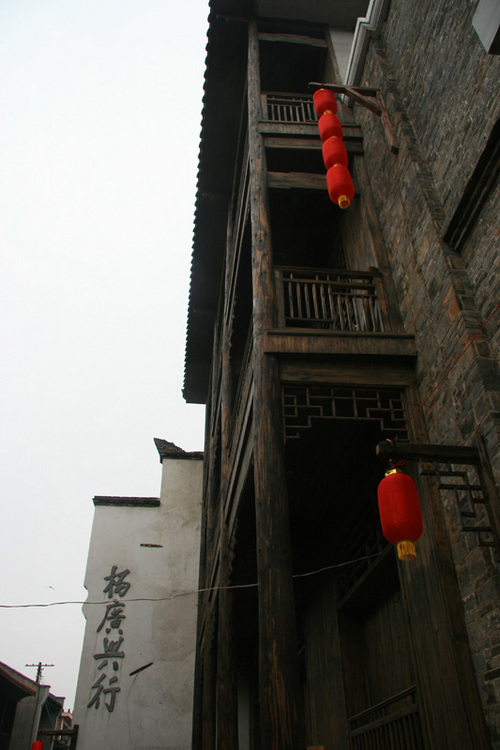
The ancient streets, ancient dwellings, ancient buildings, and the overall layout of the ancient district of the old town are relatively well preserved. The protection scope mainly includes the "Eight Streets, Four Alleys, and Seven Docks." Wooden-structure buildings account for more than one third of all buildings, among which late Qing brick-and-wood structures such as "Hongtai Fang" and "Yuying Tang" are relatively well preserved. The houses originally built along the river were all stilted houses, with the distinctive characteristics of Jiangnan water towns. The theater stage on Baojian Street is connected by granite guardrails, and the stone slabs facing the river are all carved in relief with various patterns such as flowers, birds, and beasts. The town also has several religious buildings, and at one time there were a thousand people bowing in the morning and ten thousand lamps shining at night.
History
Jinggang Town was originally named Lujiang, also known as Weigang, located at the mouth where the Wei River flows into the Xiang River. The Ming Dynasty 'Comprehensive Gazetteer' states: 'Fifty li northwest of Changsha County, flowing from Ningxiang County to the northeast into the Xiang River. During the Tang Dynasty, Li Jing stationed troops here while suppressing Xiao Xian. The people were grateful for his virtue, hence the name Jinggang.'
Jinggang is situated on the west bank of the Xiang River, facing Tongguan to the east, 25 kilometers from the provincial capital Changsha and 10 kilometers from the county seat. It administers 7 administrative villages and 1 community residents' committee, with a total population of about 35,000 and a total area of 53.88 square kilometers. Among these, the ancient town has a population of about 4,000, and the ancient town (located within Lujiang Community with a total area of 3.67 square kilometers) has a core area of 37.63 hectares. It is located in the delta area where the Wei River enters the Xiang River. It was once a natural fine harbor with smooth water transportation and an endless stream of sails. Grain and local products from the lakeside areas of Xiangyin, Yiyang, Ningxiang, and the local region were mostly gathered and distributed here. It was once one of the four major rice markets in Hunan and one of the main distribution ports for Huai salt in the province. Merchants gathered and the market was active, making it the most prosperous market town in the region. In the 24th year of the Guangxu reign of the Qing Dynasty (1898), passenger boats began docking here, and a foreign-style shed was set up to receive and see off travelers. There were over 3,000 Ningxiang 'black boats' traveling between the Wei River and the Xiang River, with about a thousand boats docked on ordinary days. In the late Qing Dynasty and early Republic of China period, there were over 50 grain firms, over 20 grain warehouses and rice shops each, along with a number of other industrial and commercial businesses. In the mid-Republic of China period, it was one of the three prosperous towns in Hunan alongside Jinshi and Hongjiang, earning the title of 'Little Hankou.' In the 22nd year of the Republic of China (1933), it was established as a town directly under Changsha County. In the same year, the Jinggang Public Education Hall of Changsha County was established. In the 24th year of the Republic of China, the Jinggang Branch of the Changsha County Health Center was established. After the great fire of Changsha in the 27th year of the Republic of China, many people flocked to Jinggang to do business, and over 500 industrial and commercial households flourished. In the late Republic of China period, due to warfare, fire, and floods, nearly 200 industrial and commercial households closed down.
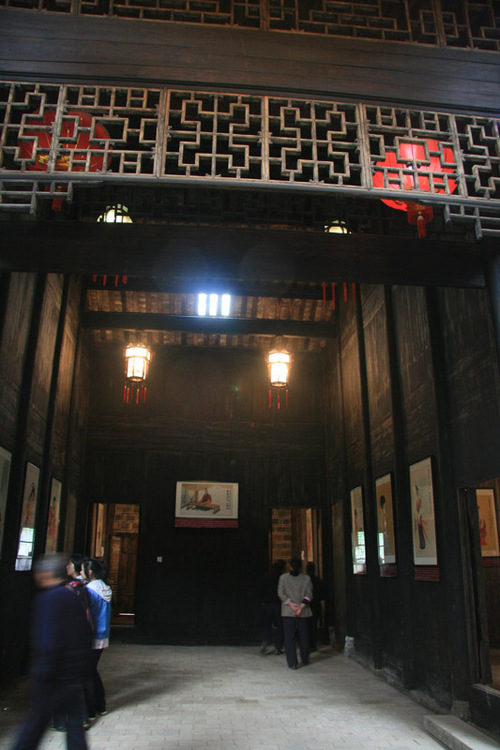
The ancient town currently preserves '8 streets, 4 lanes, and 7 wharves,' namely Baoliang Street, Banbian Street, Baojian Street, Bao'an Street, Shaoxian Road, Xingnong Embankment, Heng Embankment, Nan'an Embankment, Daxiangzi Lane, Tongren Xiangzi Lane, Dangpu Xiangzi Lane, Zhengyi Xiangzi Lane, Dahe Wharf, Yizheng Wharf, Caijia Wharf, Bianhe Wharf, Chuhe Wharf, Tongren Wharf, and Miaowan Wharf. There are currently 1,008 residential buildings with 3,546 rooms, a building area of 12,607 square meters, 1,027 resident households, and a total street length of 2,910 meters. Water and land transportation are well developed, with the Gaoqiao Avenue and Jingge Highway running through the area, providing access to Xiangyin, Yiyang, Changde, Changsha, Zhuzhou, Xiangtan, Yueyang, and other places.
Jinggang Town has a long history and profound cultural heritage. Tuantou Lake, just a few li from the town, has 15 Neolithic sites scattered around it, where large quantities of stone tools and pottery have been unearthed. Clogs, paper umbrellas, and kites were once popular, and folk arts were rich and diverse. Dried tofu and fire-baked fish are still renowned today. Currently, wooden structures account for more than one-third of all buildings in the ancient town. Among them, late Qing Dynasty brick-and-wood structures such as 'Hongtai Fang' and 'Yuying Tang' are relatively well preserved. The buildings originally constructed along the river were all stilted houses, uniquely characteristic of Jiangnan water towns and spectacular to behold. The opera stage on Baojian Street, facing the Bu River to the south, was 'jointly built by the eight wharves of the township in the 10th year of the Republic of China.' The stage has granite railings on its east, west, and south sides, with granite connecting the balustrades. The stone slabs facing the river are carved in relief with various patterns of flowers, birds, and beasts. To the north of the stage is the 'Ningyi Yangsi Temple,' built in 1861. The town also has several religious buildings, where a thousand people bow in the morning and ten thousand lamps shine at night. Well-known ones include the 'Yangsi Pagoda,' 'Guanyin Temple,' and 'Ziyun Palace.' The 'Ziyun Palace' bears an old couplet inscribed on it, which reads: 'The high pavilion overlooks the southern seas, watching the roc fly ninety thousand li, countless clouds and waves rising before the eyes; The layered lakes connect to the left Li, listening to the fishermen's songs of thirty-six bays, the vast wind and moon enter the embrace.'
Jinggang has produced outstanding people and talented individuals. There is Liu Chouxi, a first-phase student of the Whampoa Military Academy, commander of the 10th Army, commander-in-chief of the Anti-Japanese Vanguard, and known as the 'One-Armed General'; Tao Cheng, known as the 'Revolutionary Mother'; Hou Deren, a hero of the 1998 flood control efforts; and Hu Yinglong, one of the province's top ten book collectors.
Jinggang commands the strategic passage from the Xiang River up to Changsha and has always been a contested military location. In modern times, during the Taiping Heavenly Kingdom War, Jinggang became an important battlefield. In late April 1856, the Taiping Army heavily defeated Zeng Guofan, the leader of the Xiang Army, here, and Zeng attempted to drown himself several times. During the War of Resistance Against Japan, the Eighth Route Army's night crossing of the Xiang River also took place not far from here (at Hongjiazhou). In October 1930, the office of the Hunan Provincial Committee of the Chinese Communist Party was relocated to the rice mill (Duifang) on Banbian Street in Jinggang Town, where two sisters, Wang Shaokun (wife of Wang Shoudao) and Wang Shaolan (wife of Guo Lisan), lived and worked at the office.
Jinggang has a long history, and its folk culture has deep roots. The ancient town's architecture preserves the architectural style of the Qing Dynasty while highlighting the architectural characteristics of Jiangnan water towns, which is of great significance for the study of Qing Dynasty architecture and traditional Jiangnan water town architecture. At the same time, Jinggang has historically been both a contested military location and a prosperous commercial port, and is also an ancient town with many cultural landscapes, harboring tremendous tourism resources and great development value.
Cultural Celebrities
Li Jing A military strategist of the early Tang Dynasty. After Emperor Gaozu Li Yuan ascended the throne, in order to eliminate future threats and unify the country, he dispatched General Li Jing to suppress the rebel Xiao Xian. Li Jing led his troops to swear an oath fifty li north of Tongguan, crossed the Xiang River, and set up camp at Lujiang (present-day Jinggang), defeating Xiao Xian and causing him to surrender to the Tang. The people of Lujiang, who had suffered greatly from Xiao Xian's harassment and unrest during his rule, were in sharp contrast to Li Jing's troops, who maintained strict military discipline, did not harm the people, and loved the people as their own children, earning deep support from the populace. After Li Jing conquered Xiao Xian, the people took the 'Jing' character from Li Jing's name and renamed Lujiang as Jinggang. Thus, Jinggang got its name.
Zeng Guofan An important and well-known modern figure. In the famous 'Battle of Jinggang,' the Xiang Army led by Zeng Guofan was defeated by the Taiping Army, and Zeng attempted suicide several times but was rescued by his subordinates.
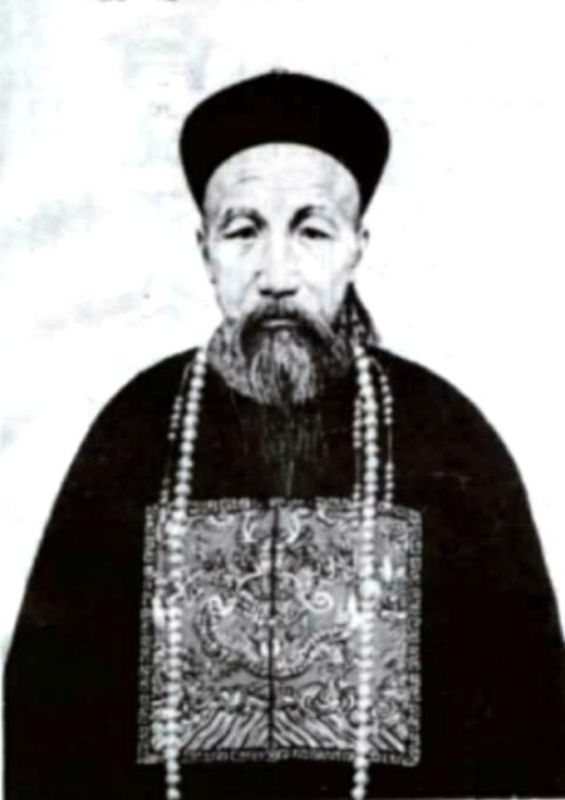
Liu Chouxi Originally named Zirong, also known as Zhirong, affectionately called the 'One-Armed General.' He was born on March 28, 1897, in a farmer's family at the Zhuli Ba House in Shaweizi, Jinggang District, Wangcheng County, Hunan Province. In February 1925, he joined the Eastern Expedition with the army to suppress the rebel Chen Jiongming. On March 12, his First Training Regiment and the main force of the rebel Lin Hu's troops engaged in a fierce battle in the mountains northwest of Mianhu. While leading his company in a counterattack, his left hand was hit by a stray bullet. After the battle, he was transferred to Guangzhou Dongshan Bo'ai Hospital for treatment. Due to ruptured veins and ulcerated blood vessels, his left arm was amputated. In early 1929, he went to study at the Soviet Military Academy in Moscow. In March 1933, Liu Chouxi was ordered to go to the Minzhegan Military Region, serving as commander of the military region and commander of the Red 10th Army. The main force of the Red 10th Army Corps was surrounded by 14 regiments of Nationalist troops at Huaiyu Mountain. During the battle, Liu Chouxi's right hand was also wounded by gunfire. He and Fang Zhimin were subsequently captured. In the early morning of August 6, 1935, he was taken to the execution ground at Shaziwo, Baihuazhou, Nanchang City. Dragging heavy iron shackles, he held his head high and, together with his fallen comrades, shouted: 'Long live the Chinese Soviet!' 'Long live the Red Army!' 'Long live the Chinese Communist Party!' and died heroically at the age of 38.
Tao Cheng Female, originally named Liu Taoying, hailed by the people as the 'Revolutionary Mother.' She was born in the third lunar month of the 19th year of the Guangxu reign of the Qing Dynasty (1893) in Jinggang, Xinkangdu, Changsha County (present-day Jinggang Township, Wangcheng County). Orphaned at a young age and from a poor family, she was fostered by her uncle in a neighbor's (godmother's) home. At 13, she learned Xiang embroidery, and at 18, she married Ouyang Meisheng, living on Sanxing Street in the provincial capital Changsha. Ouyang Meisheng joined the Chinese Communist Party in the 15th year of the Republic of China (1926) and served as secretary-general of the Hunan Provincial General Trade Union. After the 'Mari Incident,' he moved to Wuhan and was one of the leaders of the CCP Hanyang County Committee. Liu Taoying brought her children along with Meisheng to do office guard and confidential work. In February of the 17th year of the Republic of China, Meisheng sacrificed his life for the revolution. The following year, Liu Taoying took her children to Shanghai, working undercover as a 'housewife' at the Shanghai Federation of Trade Unions, the Secretariat of the Communist Youth League Central Committee, and the Central International Affairs Group, and changed her name to Tao Cheng. In the 20th year of the Republic of China, her eldest son Li'an was brutally killed for the revolution, his blood staining the banks of the Huangpu River. Tao endured her grief and strengthened her resolve. In the summer of the 27th year of the Republic of China, she took her two children and traveled to the Eighth Route Army Office in Wuhan, requesting assignments and firmly asking the organization to send her two children to Yan'an, which was approved. That autumn, she was assigned to work at the Eighth Route Army Office in Chongqing, and later transferred to the Fifth Wartime Children's Care Center in Bishan, Sichuan, responsible for raising and educating refugee children. In June of the 32nd year of the Republic of China, Tao Cheng arrived in Yan'an and learned that her youngest son, Zhihe, had already died heroically in the War of Resistance Against Japan. With the nation in crisis and having lost loved ones, she turned grief into strength, actively threw herself into the Yan'an Great Production Movement, and persisted in learning culture. She later joined the Huai'an Poetry Society to practice poetry and prose. In the 37th year of the Republic of China, she joined the Chinese Communist Party. After the founding of the People's Republic of China, Tao Cheng successively served as confidential secretary of the Government Administration Council, the Ministry of Internal Affairs, and the Southwest Branch of the Supreme People's Court. In 1956, she wrote the book 'My Family,' which was deeply loved by young people and sold over 6 million copies. It was later adapted into the film 'Revolutionary Family.' During the 'Cultural Revolution,' Tao Cheng suffered persecution by the counter-revolutionary cliques of Lin Biao and Jiang Qing and was imprisoned for over five years. After the Third Plenary Session of the Eleventh Central Committee of the Party, she compiled her oral revolutionary memoirs over the years into 'Blessings to the Younger Generation' and published it, which was included by the Central Committee of the Communist Youth League in the recommended reading list for the 'National Youth Reading Activity for the Revitalization of China.' Tao Cheng devoted her entire life to the revolutionary cause and passed away from illness in Changsha on July 11, 1986.
Hou Deyun A native of Fusheng Village, Jinggang Town. During the 1998 flood control battle, he sacrificed his life due to overwork. On September 3, when Jiang Zemin, General Secretary of the Central Committee of the Chinese Communist Party, inspected Dongting Lake and learned of Hou Deyun's exemplary deeds in flood control and emergency rescue, he gave high praise. He was posthumously approved as a revolutionary martyr by the Hunan Provincial People's Government.
Hu Yinglong Hu Yinglong, a native of Fusheng Village, Jinggang Town, founded a family library in 1984, which has now developed into the first farmers' library in rural Hunan — the Yinglong Library. The Yinglong Library has a collection of 50,000 books, including 2,000 periodicals personally processed and organized by Hu Yinglong, 780 volumes of newspaper clippings, and 50 hand-copied books, forming a uniquely characteristic collection system. It has 870 registered readers and receives an average of 18,000 visits per year. The Yinglong Library mainly serves farmers, not only enlivening their leisure life but also playing a good role in guiding farmers to master scientific and technological knowledge to become wealthy and achieve moderate prosperity, and in guiding young people to develop good reading habits and moral character. It has successively won 23 awards at the provincial, municipal, and county levels, and has been reported by news media such as 'People's Daily,' 'Guangming Daily,' and CCTV. Provincial and municipal leaders such as Wen Xuande, Liu Yu'e, and Tan Zhongchi have successively visited the Yinglong Library for inspections. It was rated as one of the 'Top Ten Book Collectors in the Province.'
Others: Li Hesheng, a hero of the 1911 Revolution; Ren Weigang, a student leader of the 20th century; Zhao Xiangzao, a peasant movement leader; Deng Ruosheng, a good cadre in the Lei Feng style; Ren Yulong, a patriotic overseas Chinese; and Chen Zizhan, a literary giant, among others.
Attraction Introductions
[Hongtai Fang] [Ningxiang Guild Hall] [Zeng Guofan Cultural Park] [Yangsi Temple] [Ziyun River Pavilion] [Tao Cheng and Liu Chouxi Memorial Hall] [Guanyin Temple] [Eight Scenes of Lujiang] [Riverside Opera Stage] [Former Site of the Hunan Provincial Committee of the Chinese Communist Party] [Yuying Tang] [88 Martyrs' Tomb]
Hongtai Fang
Hongtai Fang is located at the entrance of Baojian Street in Jinggang Ancient Town. Built in the 10th year of the Yongzheng reign of the Qing Dynasty, it was the last Qing Dynasty brothel in Changsha, with a history of over 300 years. The original building fortunately survived to this day. Although dilapidated, its scale is still evident. Standing inside, one can almost smell the rouge and powder of those days. It has now been reinforced and restored according to the original building's scale and layout. The restored Hongtai Fang maintains its original architectural style and general layout — a brick-and-wood structure with three sections and three bays, carved wooden floors, exquisite and unique. The luxurious decorations recreate the romantic atmosphere of those years. Currently, 41 portraits of famous courtesans from various dynasties are displayed inside, and it is open to the public as a museum of brothel culture.
Having weathered over 300 years of trials and tribulations, Hongtai Fang witnessed the history of romance in the Qing Dynasty, the physical and mental devastation inflicted on women by feudal society, and the past prosperity of Jinggang Ancient Town. At the same time, it has also feebly borne the town's decline and desolation. The rickety wooden staircase creaks and groans, conveying the confessions of that era. We cannot replicate history, nor can we erase it. The only thing we can do is bravely face history squarely. Therefore, in this old place that carries history and buries stories, we have restored Hongtai Fang to its original appearance and converted it into a museum of brothel history and culture, still using its name — Hongtai Fang.
As a museum of brothel history and culture, Hongtai Fang displays thousands of years of brothel culture in China, comprehensively narrating the origin, development, and demise of brothel history through pictures, text, carvings, and physical objects. These historical traces are hard to speak of, but Hongtai Fang, as a participant, frankly reveals its past to the world, demonstrating a calm, composed, strong, and brave historical attitude. Hongtai Fang uses the many touching stories of famous ancient courtesans to praise the strength and greatness of women: the number one courtesan Su Xiaoxiao, Li Shishi who swallowed a hairpin to end her life, Liang Hongyu who beat drums to resist the Jin, Du Shiniang who angrily sank her treasure chest, the nation-toppling beauty Chen Yuanyuan, the famous Wuhu flower Pan Yuliang, the talented and beautiful Xiao Fengxian... History is gone forever, and people have gained new insights into this brothel site. Hongtai Fang is no longer a bewitching 'house of ill repute,' having discarded all filth and dross. What it brings to people is no longer the vulgar and morbid extravagance of a life of luxury, but the splendor, elegance, openness, and uprightness radiated by human rationality. Listening to the qin and untying the jade pendant, a pillow of golden millet — the romantic affairs of those bygone days have been washed away by wind and rain, leaving only beautiful tales passed down from generation to generation.
Ningxiang Guild Hall
Ningxiang Guild Hall, also known as Bayin Tang or Bayuan Tang, is located on Baojian Street in the ancient town. It was jointly donated and built by the eight wharves of Ningyi in the 11th year of the Xianfeng reign of the Qing Dynasty (1861 AD), serving as the office and station for Ningxiang dock workers at the time. The guild hall is about 4 meters high with a building area of 1,200 square meters. In the center is a wooden opera stage of over 20 square meters. The main hall is spacious and can accommodate hundreds of people for gatherings. There are two square granite columns in the hall, with column bases slightly wider than the column bodies, and relief carvings on all four sides with relatively clear outlines. Later generations built rooms between the four stone columns in the central hall, dividing the entire guild hall into front-stage and back-stage sections. Behind the stone columns, two wooden columns still support the roof. Today, Bayin Tang has been basically restored and improved according to its original layout. Inside, there is a Jinggang Old Photos Museum, displaying old photographs from every era of Jinggang.
Zeng Guofan Cultural Park
In late April of the 4th year of the Xianfeng reign of the Qing Dynasty (1854), Taiping Army leaders Shi Xiangzhen and Lin Shaozhang led their troops south from Yuezhou (present-day Yueyang), once again occupying Jinggang, building artillery platforms, and stationing troops to consolidate their position, in an attempt to attack Changsha. Zeng Guofan, then the Hunan militia minister and commander of the Xiang Army, sent troops south to reinforce Xiangtan while personally leading his forces directly into Jinggang, intending to cut off Lin Shaozhang's retreat and force him to withdraw from Xiangtan. On April 29 of that year, Zhang Bingnan, leader of the Jinggang militia, led local braves to assist the Xiang Army's land forces in battle but was unfortunately shot and killed, and the braves and land forces successively collapsed and retreated. The Xiang Army's naval forces were also hit by Taiping artillery and were tragically annihilated at the Hongjiazhou area. Zeng Guofan, overwhelmed with shame and anger, threw himself into the water but was rescued by his subordinates. This was the first time the great Neo-Confucian scholar Zeng Guofan attempted to drown himself. The Jinggang naval battle thus became a turning point in Zeng Guofan's life. The Zeng Guofan Cultural Park is built at the junction of the old Wei River and the Xiang River, displaying books, manuscripts, and artifacts related to Zeng and the Xiang Army.
Yangsi Temple
Yangsi Temple is located on the banks of the Wei River, at the head of Baoliang Street. Built in the seventh year of the Yongzheng reign, it is a temple dedicated to General Yangsi, a peasant uprising leader of the Song Dynasty named Yang Yao. After Yang Yao died a martyr, he was revered as a water guardian deity by boatmen in the Dongting Lake area and along the Xiang, Zi, Yuan, and Li river basins, who called him the 'Peaceful Waves Prince.'
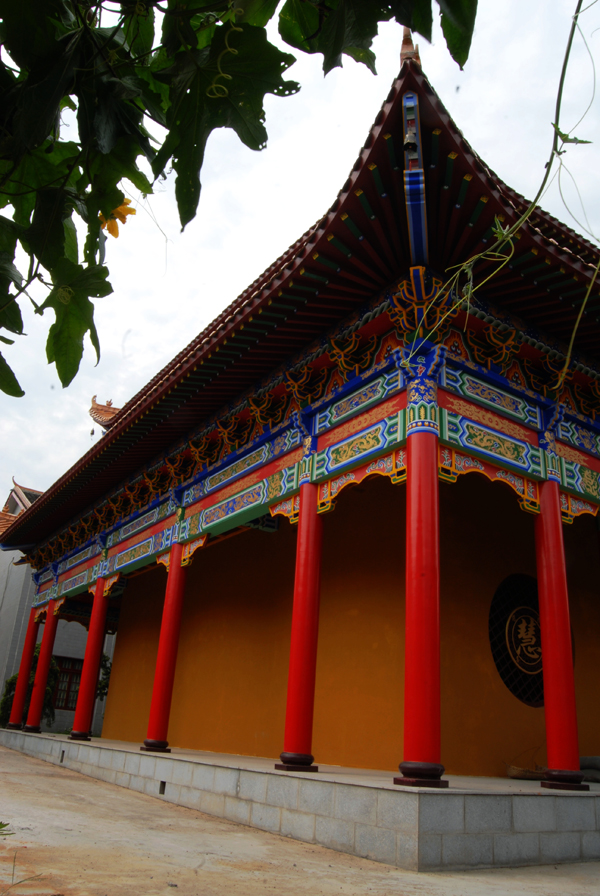
Yangsi Temple is adjacent to Guanyin Temple, with connecting corridors between them. After being demolished for the construction of the Xiangjiang Dam, only the inner hall remains. The inner hall is a single brick-and-wood structure, with the Three Bodies Buddha enshrined in the center, flanked by twenty-four ceramic statues of Heavenly Bodhisattvas. To expand the ancient temple's scale, a new hall was added in 2003 on the foundation of Yangsi Temple, enshrining Lord Guan and General Yangsi in the center, with a large alloy bell to the side bearing worshippers' prayers. This temple is the only well-preserved temple in Jinggang Town. Every day many devotees come to worship, and many tourists visit and pay homage, keeping the incense burning briskly. On the sixth day of the sixth lunar month and the nineteenth day of the ninth lunar month, Guanyin's birthday, tens of thousands come to pay respects. People describe the grand occasion as: 'A thousand bow in the morning, ten thousand lanterns at night.'
Guanyin Temple
Guanyin Temple is located on the banks of the Wei River. It was first built in the sixth year of the Yongzheng reign of the Qing Dynasty (1728 AD), constructed by devotees such as Hou Junlong who assisted monks in raising funds. Later, eminent monks led their disciples Shangen and Shanyin to raise funds for expanding the rear hall. Due to historical changes, most of the temple's buildings were destroyed, leaving only the Mahavira Hall. After several restorations, the temple has regained its original appearance, with brisk incense offerings.
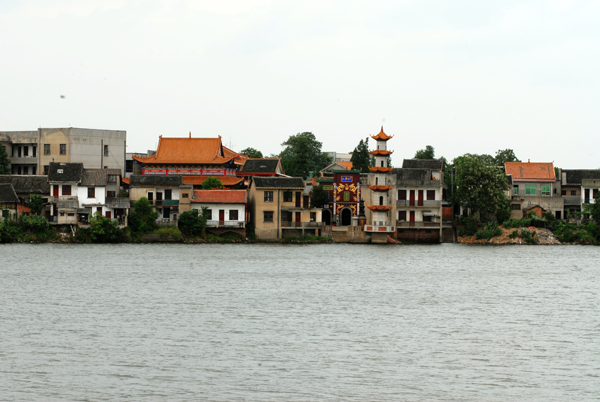
The mountain gate stands towering, with red walls and glazed tiles, and upturned eaves like flying. Above the main entrance are three gilded characters reading 'Guanyin Temple,' with lifelike ceramic flying apsaras. On each side is a round gate bearing Buddhist aphorisms. Flanking the main entrance is a couplet composed by Abbot Shi Zongyun: 'See through and let go, observe freely; be compassionate and joyful, see the Tathagata.' Above the side gate reads 'Compassionate Boat Ferries All,' with the couplet: 'If you sincerely burn incense, why travel far to Mount Putuo; if you truly seek the Way, this place is the Western Paradise.' Guanyin Temple has three successive halls. The front is the mountain gate; entering it brings you to the Mahavira Hall, with a Guanyin statue in front and two small halls behind. The main hall has two levels: the first enshrines Maitreya Buddha of the West, and the second has a sutra lecture hall where sermons are often given on Guanyin's birthday and other religious festivals. By the Wei River in front of the temple stands a pagoda named Fuxing Pagoda, first built during the Yongzheng reign of the Qing Dynasty. The pagoda is 20 meters tall with a base width of 3.2 meters, made of granite, with five stories and six faces, topped with a gourd-shaped ornament. The original pagoda was destroyed during the Cultural Revolution; the current Fuxing Pagoda was rebuilt in 1986 following the style of the ancient temple and Guanyin Temple. In front is an incense burner for devotees to burn incense and pay respects. Guanyin Temple is connected to Yangsi Temple, with four masters and six lay practitioners in total, and numerous lay believers. Worshippers come in an endless stream daily, keeping the incense brisk.
Eight Scenes of Lujiang
Jinggang Ancient Town is richly endowed, thriving because of water, with beautiful scenery and profound culture. The Eight Scenes of Lujiang are like eight pearls inlaid in the ancient town, shining brilliantly. The eight scenes—'Listening to Orioles in Willow Waves,' 'Stone Pier Summer Cool,' 'Tower Mirroring Xiaoxiang,' 'Seven Stars Proud of the Moon,' 'Bagua Conveying Spirit,' 'Fan Welcoming Guests,' 'Lone Tower Standing Like a Crane,' and 'Pear Garden Playing in Water'—added refinement and elegance to the prosperous 'Little Hankou.'
Time flows on, vicissitudes age all things, and the Eight Scenes of Lujiang gradually faded along with the town's decline, their beauty slipping from the townspeople's sight. Yet memories remain, and traces still exist: on the banks of the Xiang River where waves sound as before, ancient willows still watching over the blue water and sky hold the genetic code of 'Listening to Orioles in Willow Waves' and the romantic stories amid oriole songs. The pumpkin-shaped stone piers scattered in the town's alleys, courtyards, and ruins still emit the gentle breezes of past summer evenings, softly telling of the wonderful scene of 'Stone Pier Summer Cool.' The tower by the Xiang River that once reflected dotting sails and the passing river, though its carved beams and painted rafters have become void and traces hard to find, has been revived as the 'Wangjiang Tower' trademark on the famous Jinggang cloth shoes, allowing later generations to glimpse the refinement of 'Tower Mirroring Xiaoxiang.' The two trees—the 'Seven Stars Proud of the Moon' sandalwood and the 'Bagua Conveying Spirit' tree—though their wondrous branches and crowns have ascended with age, their gnarled roots still slumber beneath the broken walls of the town's Catholic church and the earthen mounds of Chahua Temple, dreaming of former lushness and legendary experiences. The Fan Dock of 'Fan Welcoming Guests,' the single-legged stilted tower of 'Lone Tower Standing Like a Crane,' and the riverside theater of 'Pear Garden Playing in Water'—from the stone piers, pillars, slabs, and exquisite stone carvings remaining at their original sites, townspeople can still evoke from deep memory their former enchantment and sacredness amid bustling prosperity.
The Eight Scenes of Lujiang in Jinggang Ancient Town are both natural and man-made, both physical and cultural, which distinguishes them from the Eight Scenes of Gushan and Wushan, which feature only natural strange rocks, and from the Eight Scenes of Heimifeng, which are based on temples and myths. Among the Eight Scenes of Lujiang, apart from 'Listening to Orioles in Willow Waves,' 'Seven Stars Proud of the Moon,' and 'Bagua Conveying Spirit,' which combine nature with myth and legend, the rest are all man-made, blending practicality with ornamental value. Moreover, all Eight Scenes of Lujiang appeared amid bustling prosperity—crowds like ants, streets like weaving, masts like forests. Yet they all maintained a calm, unruffled, refined demeanor, silently conveying the town's profound cultural atmosphere over centuries, adding cultural content and spiritual substance to the once wealth-flowing, logistics-flooded 'Little Hankou.'
The 'Pear Garden Playing in Water' of the Eight Scenes of Lujiang—the Riverside Theater
The Riverside Theater was built in the tenth year of the Republic of China, on the banks of the Wei River flowing into Jinggang Ancient Town. To one side of the theater was the old Wei River dock, mainly used for mooring Ningxiang black boats. The stage surface is paved with granite, with granite railings on all three riverside sides, and 'pumpkin stone pillars' spaced every five steps in neat order. Between the railing pillars are granite slabs, with various patterns of flowers, birds, and beasts carved on the water-facing side, lifelike and exquisitely crafted. The clanging gongs and drums, melodious strings, and pleasing arias from the stage seem to still linger among the stone pillars today.
The Riverside Theater was most closely associated with the Ningxiang black boats. Speaking of Ningxiang black boats, the town's elders have endless stories to tell. The black boat is a specialized vessel for navigating the shallow waters of the Lujiang. The boat is not wide, about six chi, but reaches seven to eight zhang in length; it has a canopy, much like the black-canopied boats of the Jiangsu-Zhejiang region described in Lu Xun's 'Hometown,' and also like the small boats on the You River in western Hunan in Shen Congwen's writings. The boat has a stove and pots, and also a couple—but an old husband and young wife, with the boatman often twenty or even thirty years older than his wife. The boatman's legitimate wife stayed in the Ningxiang hometown raising children and managing the household. The wife on the boat was a temporary wife, a concubine. At that time, at least a hundred Ningxiang black boats moored daily at the Wei River dock. The black boats unloaded local specialties brought from Ningxiang, then loaded up with Jinggang rice and goods from Changsha, Xiangtan, and various counties of the Dongting Lake area for the return trip. Black boats could not enter the Xiang River and only served as transfer vessels, yet they bore the crucial task of sustaining Ningxiang's logistics lifeline. Moreover, in an era when only water transport existed, Ningxiang could only conduct foreign trade through the single Wei River. With the black boats so pivotal, how could Ningxiang people not value them? The Riverside Theater was built by the Bayin Hall in Jinggang Town specifically so that black boat captains and their young wives could watch opera while moored for several days waiting for cargo to be unloaded and loaded.
The Riverside Theater performed opera for the black boat crews almost every day. They performed the Xiang opera they loved most, and always excerpted scenes rather than full plays, because full plays often took ten days to half a month to perform, and the black boats would have to return before finishing. Excerpted scenes were short, best suited to the black boats' mooring time. Most performed were 'Three Kingdoms operas': 'The Empty City Stratagem,' 'Mount Dingjun,' 'Defeat at Maicheng,' 'Three Times Angering Zhou Yu,' and also 'Yellow Crane Tower,' 'Picking Plums and Peaches'... too many to count. The opera troupes were invited from various places by the Bayin Hall Ningxiang Guild, performing free of charge. The guild paid the expenses of hosting the troupes, inevitably treating them to the 'Eight Great Bowls' at famous restaurants like Yihua Tower, Yuehua Tower, and Qizhen Pavilion, with late-night snacks after performances featuring Jinggang's specialty foods. The troupes naturally performed with even more vigor. The black boat captains not only loved watching opera but also knew how to enjoy themselves. They would row their boats directly facing the Riverside Theater, sitting shoulder to shoulder with their young wives at the bow, watching with relish while savoring Jinggang rice wine and eating dried tofu and braised dishes bought from Jinggang Street, swaying their heads and smacking their lips, so happy they forgot to go home. Many townspeople also came to watch the free opera, often climbing onto the black boats to watch together with the boat owners and their wives. The boat owners were warm and generous, offering their seats, chatting with locals while watching, and thus becoming more familiar with the ancient town.
As one of the Eight Scenes of Lujiang, the Riverside Theater naturally needed an elegant name, so the town's scholars put their minds to work again, but countless names were proposed and none satisfied. Naming the Riverside Theater elegantly was indeed somewhat difficult. To this end, local gentry posted 'Name Solicitation Notices' everywhere: whoever could give the Riverside Theater a satisfactory elegant name would be rewarded with ten silver dollars. Immediately, applicants came in droves. In the end, it was an actor playing the young male role in a Yiyang troupe performing at the Riverside Theater who won those ten silver dollars. This young male role actor not only performed exquisitely but was also full of poetry and learning. It was said he was born into a scholarly family and had even passed the xiucai examination, yet he was infatuated with opera and willingly lived the wandering life of an itinerant performer. His proposed name 'Pear Garden Playing in Water' was recognized and rewarded by the townspeople, and he even composed a poem to express his feelings through the scenery, which reads:
The theater floats gently on the water, watching past and present from the black boats.
The people of Lujiang Town remain as of old, while the grass in the Wei River yearns to be new.
Feigned drama played truly is still drama; false sentiment done sincerely is hard to bear.
Pear Garden disciples are bold and spirited, sweat-soaked after singing Xiang tunes.
Former Site of the CPC Hunan Provincial Committee
On July 27, 1930, the organ of the CPC Hunan Provincial Committee moved from Yiyang to the home of Provincial Committee member Zhou Bingwen in Zhaoxia Village, Yangqiao, Changsha County (now part of Wangcheng). Provincial Committee Secretary Ning Diqing and Provincial Committee member Wang Shoudao all lived here. Just after Mid-Autumn Festival, the provincial committee organ moved to Guo Zhongfu's home in Machangping, Tongguan. Soon after, the provincial committee organ moved again to the rice mill (duifang) on Banbian Street in Jinggang, across the river from Tongguan. Two sisters, Wang Shaokun (Wang Shoudao's wife) and Wang Shaolan (Guo Lisan's wife), moved into the organ. At the end of November, the provincial committee organ moved back to Yiyang. During the transfer, Wang Shaolan and Wang Shaokun were arrested and sacrificed.
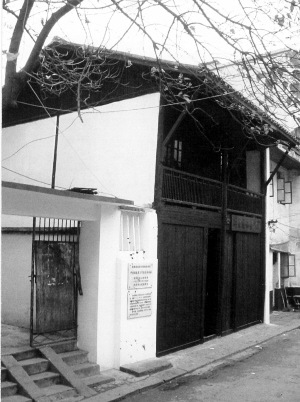
Yuyin Hall
Yuyin Hall is located on Shaoxian Road in Jinggang Ancient Town. It was built by a charitable association in the late Qing Dynasty to rescue and raise suffering infants and young children. Its architectural layout is basically well preserved.
The 88-Person Tomb
In the Battle of Jinggang, the Taiping Army won a great victory with only 88 soldiers killed. They were buried south of the south bank embankment of Jinggang Ancient Town. Because the tomb holds 88 people, it is called the 88-Person Tomb. The tombstone, ornamental columns, and other structures still exist.
Jinggang Cuisine
Rice Wine
Jinggang is located within Dazhong Yuan, belonging to the lake region, with abundant water sources. It is a famous land of fish and rice with high grain yields, so people used surplus grain to open their own distilleries and brew white liquor. The 40-to-50-proof rice wine is sweet, mellow, and fragrant, with a pure taste.
Sweet Potato Starch Noodles
Made from sweet potatoes as the raw material, processed through crushing, settling, rinsing, steaming, cutting, and sun-drying. Easy to cook and delicious, they have become a new favorite on people's dining tables.
Fire-Baked Fish
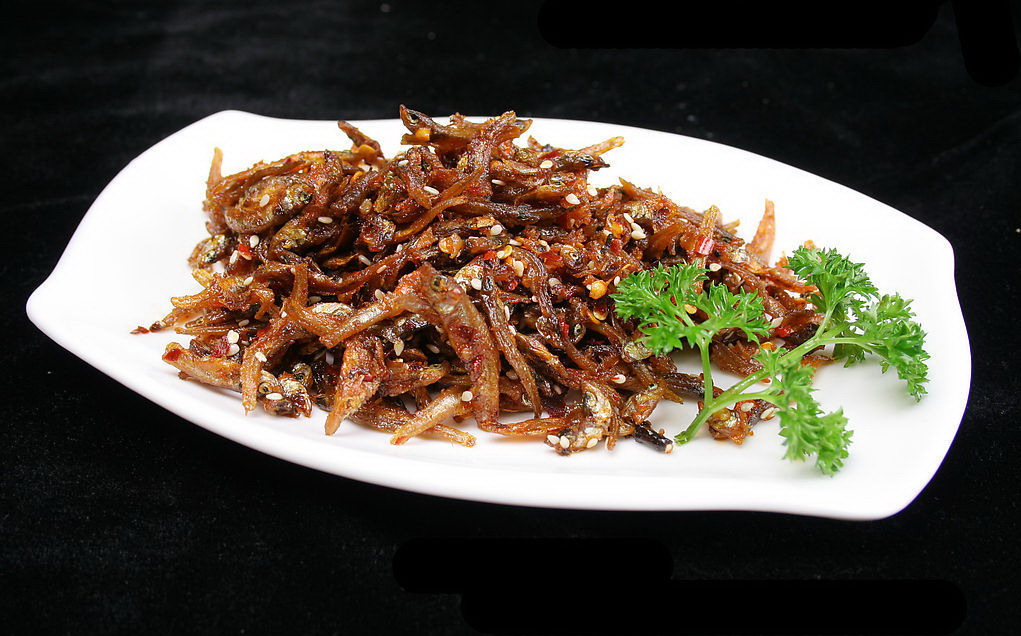
The raw materials are small fish and shrimp, with 'green-skin tender' being the best, meaty and delicious. The fish and shrimp are cleaned immediately after being caught while fresh, drained of water, and evenly spread in a hot wok (brushed with a layer of oil to prevent sticking). After about half an hour, the fish and shrimp are already baked dry, golden-brown on one side, emitting a smoky fragrance. Then the innards are removed, and they can be stir-fried with fermented black beans and chili, or with finely cut green peppers and green garlic—all equally delicious.
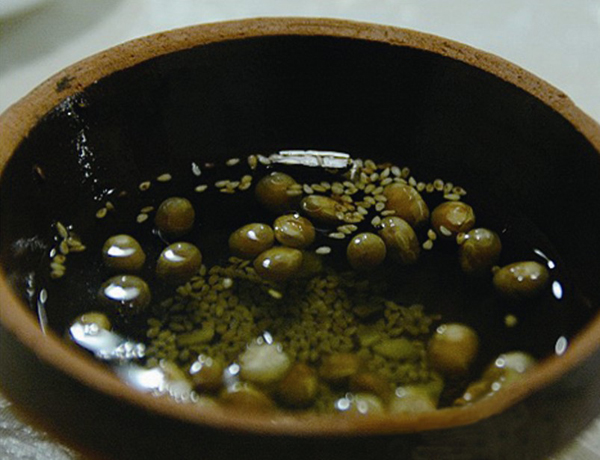
Ginger, Salt, Sesame, and Bean Tea
Drinking ginger, salt, sesame, and bean tea has long been a local custom in Jinggang. Pounded ginger is mixed with a small amount of salt and roasted sesame seeds, soybeans, or black beans, all poured into a tea pot, then the pot is shaken to mix and poured into cups to serve guests. Fragrant and crisp, its taste is no less than 'Western Hunan Pounded Tea.'
Jinggang Eight Great Bowls
If Jinggang's cuisine is famous far and wide and universally praised, then the Eight Great Bowls are the cream of Jinggang's food and a traditional brand the townspeople are proud of. Formerly, dozens of famous restaurants on Jinggang Street all featured the Eight Great Bowls as their signature dishes, and each restaurant's chefs diligently studied and refined their skills, treating the preparation of high-quality Eight Great Bowls as their special expertise. In the once-prosperous 'Little Hankou' of Jinggang, boatmen coming ashore, merchants bringing goods, and wanderers drawn by reputation would first enter restaurants to eat the Eight Great Bowls, satisfying their cravings and enjoying their fill—so much so that for the sake of the Eight Great Bowls, 'When the boat reaches Jinggang Port, even with a tailwind it won't leave.' And for weddings and funerals on Jinggang Street, no banquet was complete without the Eight Great Bowls.
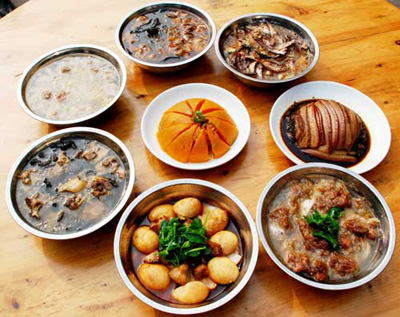
The Eight Great Bowls dominated Jinggang's culinary scene because every dish had strict ingredient selection, careful seasoning, fine preparation, and proper cooking techniques. Moreover, with its long history and generations of transmission, it has been tempered through countless refinements, discarding the coarse and selecting the fine, achieving the perfect state of 'add a fraction and it's too long, subtract a fraction and it's too short.' Also, because Jinggang once occupied the superior position of 'Little Hankou,' with thousands of boats from the three Xiang and four rivers mooring daily, they brought not only wealth but also numerous Hunan cuisine cooking methods and various Hunan tastes. Jinggang chefs, possessing the spirit and courage of 'taking what is useful,' broadly absorbed the strengths of various Hunan cuisines and harmonized diverse palates. Through the blending of local Jinggang dishes with Hunan cuisine, they gradually evolved into the classic Hunan cuisine Eight Great Bowls, complete with fresh, fragrant, sweet, and spicy flavors.
Jinggang Dried Tofu
Jinggang dried tofu is extremely famous. During the Ming and Qing dynasties, Jinggang dried tofu was sold to Changsha, Xiangtan, Ningxiang, and many places in the Dongting Lake area, and those places all had shops specializing in Jinggang dried tofu, often unable to meet demand. At that time, Jinggang had more than ten workshops making dried tofu by hand, the most famous being Qin Yutai, whose 'Qintai Ganzi' was renowned far and wide. By the Republican period, workshops such as Tan Xingtai, Wu Wangshun, Li Wangshun, and Huitai joined the ranks of premium dried tofu makers, bringing Jinggang dried tofu production to its peak.
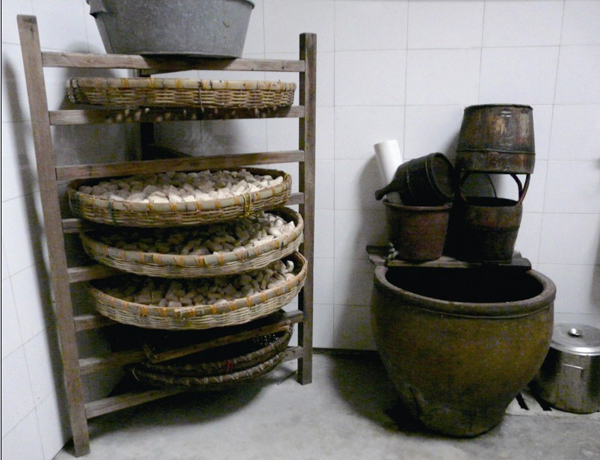
The fame of Jinggang dried tofu was built on quality, unlike certain "famous brands" and "celebrities" today, which are hyped and boasted into prominence. Jinggang dried tofu is not only meticulously crafted, but its production process is also highly complex, consisting of seven steps: selecting beans—grinding beans—making pulp—wrapping—pressing—cooking in the brine pot. Bean selection: the quality requirements for beans were extremely strict. At the time, every workshop imported soybeans from Jingzhou, Hubei, because Jingzhou soybeans were of the finest quality, and the soy milk ground from them was the most delicate, smooth, and white. Only beans harvested in the same year were used; beans from the previous year were rejected by the workshops because their insufficient moisture and lack of freshness affected quality. The purchased beans also had to be screened; shriveled beans, half beans, and beans of impure color were all screened out and set aside separately. Only plump beans with bright luster could enter the bean-grinding process. For grinding beans, the beans first had to be soaked for three to four hours. In the old days, stone hand mills and waist mills were used, and the beans had to be ground repeatedly two to three times until they were extremely fine. Only then did pulp making begin. For pulp making, the soy milk first had to be boiled, poured into a large wooden barrel, and mixed with gypsum powder to make it coagulate. There is an old trade saying in Jinggang: "You're no old hand at slaughtering pigs or making tofu," which shows how demanding the technical skill of pulp making was. Achieving pulp of moderate "oldness" and "tenderness" was no easy task; pulp that was "too old" or "too tender" would directly affect the quality of the dried tofu. Then came wrapping: the already coagulated soy milk was wrapped piece by piece in gauze and hung up to drain off the water. It had to be wrapped twice, and after wrapping it was also placed in molds and pressed into firm white dried tofu. In the old days, it was only wrapped, not pressed; wrapping and pressing together came later, and this method raised the quality of Jinggang dried tofu to an even higher level. The final step was cooking in the brine pot, which is the essence of the dried tofu-making craft, and where quality was determined once and for all. For this, fine workshops all had secrecy rules: passing it on only to sons and daughters-in-law and not to daughters was one such rule. The "brine pot" and ingredients were basically the same: cinnamon bark, star anise, brown sugar, salt, and maltose boiled with water into a liquid. The key, however, was the proportion of ingredients, and that was precisely what fine dried tofu workshops kept secret. If one ingredient was one liang more or one liang less, the difference in quality would immediately show.
Jinggang dried tofu is fine and tender yet compact, bright in color and rich in aroma, slightly salty with a hint of sweetness and a pure flavor, incomparable to ordinary soybean products. After eating it, fragrance lingers between the teeth and cheeks, with an endless aftertaste. Jinggang dried tofu can be eaten raw, and is especially good with liquor; cooked into dishes, it is best eaten as a prepared dish. Among Jinggang's specialty dishes, there are several dried tofu dishes, among which dried tofu simmered with twice-cooked pork, dried tofu stir-fried with chive flowers, and dried tofu stir-fried with celery often appear prominently at banquets large and small, and are deeply loved by diners.
Dried tofu simmered with twice-cooked pork: boil half-lean, half-fat pork until cooked and tender, cool it, then cut it into pieces; cut the dried tofu into pieces as well, put them together into an earthenware pot, add water, dried red chili peppers, garlic cloves, salt, and soy sauce, and cover with a lid. Simmer over low heat until cooked. Because the savory flavor of the meat seeps into the dried tofu during slow simmering, the dried tofu takes on the meat's savoriness while the meat takes on the fragrance of the dried tofu, achieving the effect of a perfect pairing of two delicacies. It is also a home-style dish that the people of the ancient town never tire of eating.
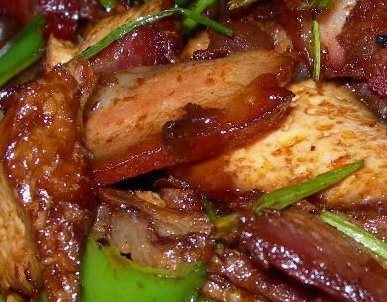
Dried tofu stir-fried with chive flowers and dried tofu stir-fried with celery. Cut the dried tofu into shreds, remove the leaves and stems of the chives and keep only the "white heads," and cut red chili peppers into shreds. Put rapeseed oil into the wok, heat it until red-hot, then pour in the dried tofu shreds, the "white heads," and the red chili shreds all together, stir-fry until cooked, add salt, and plate. This dish takes the deep red of the dried tofu and its inner white as the main color tones, with the pale purple of the "white heads" and the bright red of the chili shreds setting each other off, making it a highly visually appealing dish. Dried tofu stir-fried with celery is also made by cutting the dried tofu into shreds, removing the leaves of the celery and keeping the stems, and pulling them into strips. Heat rapeseed oil in the wok until red-hot, pour in the dried tofu and celery together, stir-fry, add salt, and plate. Its alternating white and green colors are likewise pleasing to the eye. The above two dried tofu dishes are often served as the "closing dish" of Jinggang's Eight Great Bowls banquet and appear astonishingly on the table, once again rousing the diners' already weary appetites.
Because Jinggang dried tofu was made in handicraft workshops, it could not form large-scale production, and because the key production techniques were secretive and closed off, it was subject to a double limitation, and thus could not bring economic benefits to the declining ancient town. In an era of unlimited business opportunities, Jinggang dried tofu could only leave people knowing its name but not its taste. What is more, the excellence of Jinggang dried tofu also depended on the "reed-flower water" found only in Jinggang, and "when the orange grows south of the Huai River it is an orange; when it grows north of the Huai River it is a trifoliate orange." Could it be transplanted? Perhaps "a setback may turn out to be a blessing in disguise." Precisely because of its limitations and inability to be transplanted, Jinggang dried tofu became a uniquely local gourmet delicacy and added luster to an ancient town!
Glutinous Rice Sweet Wine
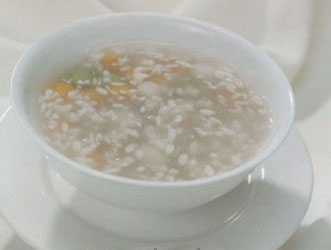
Crush the sweet wine starter and mix it into the cooked rice, pack the rice firmly, and keep it at a moderate temperature. After 24 hours, its fragrance spreads in all directions. It can be eaten raw, or dates, lychees, longan, and the like can be added to make sweet wine with beaten egg or sweet wine with boiled egg. The flavor is fragrant, mellow, and sweet. Local women are accustomed to treating guests with sweet wine during festivals to show their warm hospitality.
Glutinous Rice Zongzi
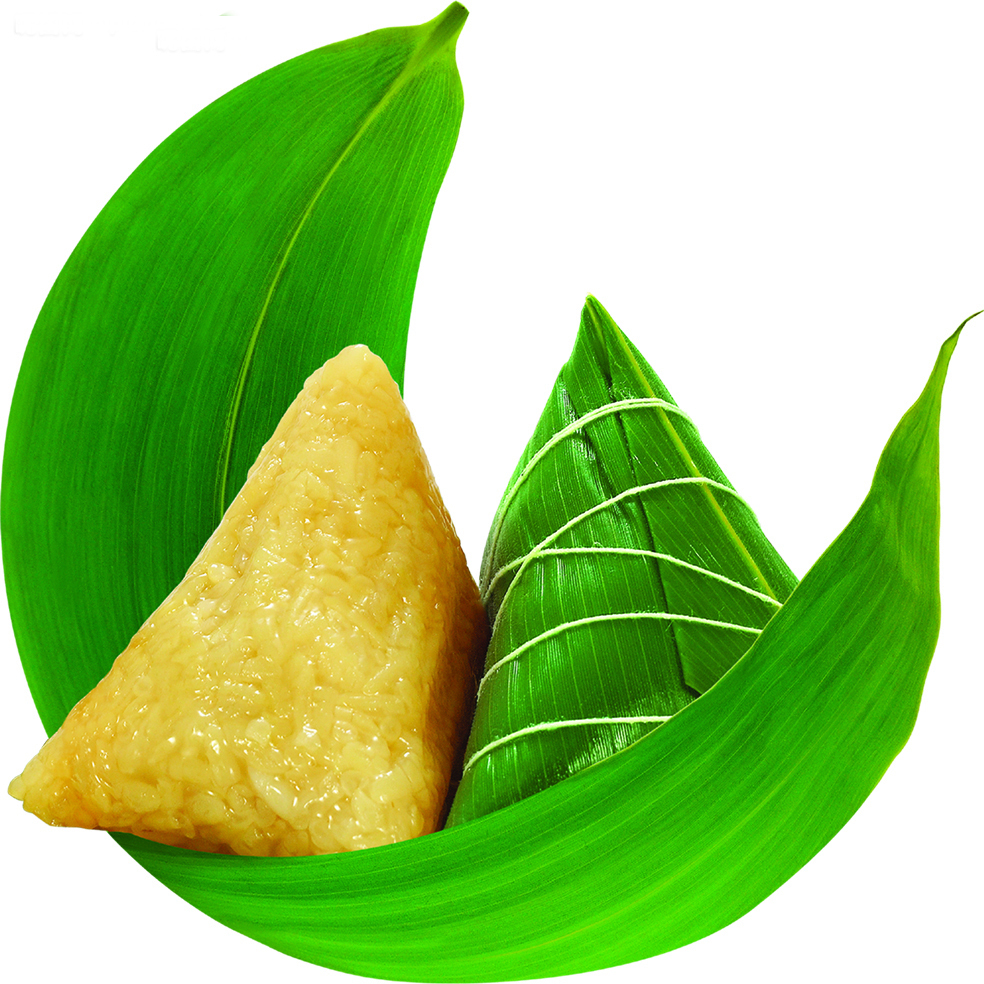
A folk-flavor snack with carefully chosen ingredients. Use 1,000 grams of glutinous rice, 3 grams of pure alkali, 500 grams of fresh smartweed leaves, and an appropriate amount of white sugar. Wash the glutinous rice clean, soak it briefly, then take it out and stir it. Boil the fresh smartweed leaves in boiling water for ten minutes, trim off the stems, match large and small leaves together and stack them into a cross shape, tie them into bundles with string, and soak them in clean water for four to five hours to remove the astringent taste. Then fold the smartweed leaves into a triangular funnel shape, pour in the glutinous rice, wrap them into water-caltrop shapes, tie them tightly with fine hemp string, and put them into a pot to cook for about two hours. After they are thoroughly cooked, mix with white sugar and eat; the taste is fragrant and delicious. Nowadays there are also many varieties with added mung beans, red beans, lotus seeds, ham, and more.
Handmade Noodles
Jinggang handmade noodles originated from northern refugees who fled famine to this place. The people of Jinggang combined noodle-making methods with the local rice noodle soup preparation methods, thus forming Jinggang handmade noodles, which have both the chewiness of northern wheat foods and the fresh deliciousness of rice noodle soup.
Xiang Noodles
Also known as "southern noodles," named for their place of origin in Hunan. The west bank of the Xiang River in Wangcheng County is the main production area, so people also call them "western noodles." Wangcheng County has a history of making Xiang noodles for more than 400 years. They enjoy equal fame with Shandong's Longkou noodles and Beijing's Qinghe noodles, and sell well in domestic and international markets. Xiang noodles are made from broad beans, Sichuan beans, mung beans, rice beans, red beans, green beans, and other raw materials, with broad beans as the main ingredient. No matter which kind of bean is used, a small amount of mung beans must be used as thickening starch to make high-quality vermicelli. Its production process goes through soaking, grinding, washing, drying over heat, and sun-drying. Xiang noodles are rich in nutrition, easy to cook, and delicious in taste, both soft and refreshing, and are a famous dish loved by people. At festivals and celebrations, Xiang noodles are often served at banquets. The Xiang noodles produced now have uniform fine strands, are white and translucent, strong in tensile strength, resistant to cooking, carefully packaged, and convenient to carry, and are very popular in sales.
Folk Art
[Clam Dance] [Tan Ci] [Festive Lanterns] [Local Flower Drum] [Kites] [Palace Lanterns] [Decorative Lanterns] [Flower Drum Ballads] [Yu Gu]
[Flower Drum Opera] [Paper Cutting] [Dragon Dance] [Arhat Dance] [Handmade Scales] [Round Woodwork] [Blacksmithing] [Xiang Embroidery] [Tongguan Kiln]
[Clogs] [Paper Umbrellas] [Shadow Puppetry] [Lion Dance] [Bamboo Horse Lanterns] [Palm Weaving] [Revolving Lanterns]
Clam Dance
The clam shell uses a bamboo frame, covered with cloth or paper, painted on the outside with clam patterns, edged with red and green silk, and pasted inside with broken mercury mirror pieces. It is performed by one female role and one clown role. The female role plays the Clam Spirit, carrying the clam shell on her back and performing movements such as "pulling the four corners," "opening the clam," "playing in the water," "fixing her appearance," "looking in the mirror," and "teasing the old man," which are subtle and amusing, lively and cute. The clown plays a fisherman, holding a casting net and performing movements such as "treading water," "peeking at the clam," and "teasing the clam," which are humorous and witty. It often makes people roar with laughter. The accompaniment is mainly string music, with bamboo flute added, elegant and pleasant to the ear.
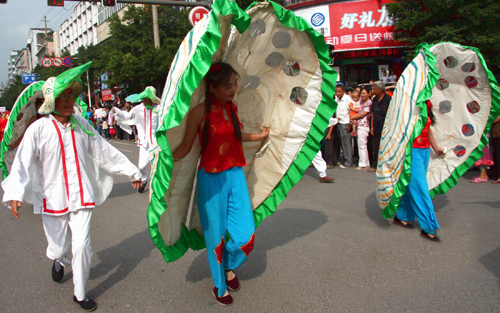
Tan Ci
Accompanied by the yueqin, the performer plays and sings at the same time, alternating singing and narration; there are also performances with only singing and no speaking. In the past it was performed by one person, and now there are also group performances. The content was originally traditional repertoire with strong storytelling, often in serialized volumes. After the founding of New China, there were new pieces coordinated with central propaganda work. Newly composed tan ci such as "Guo Liang" circulated widely. Peng Yankun, a blind man who lived for generations in Xianing Township, was a famous tan ci storytelling artist in Hunan and vice chairman of the Provincial Quyi Artists Association.
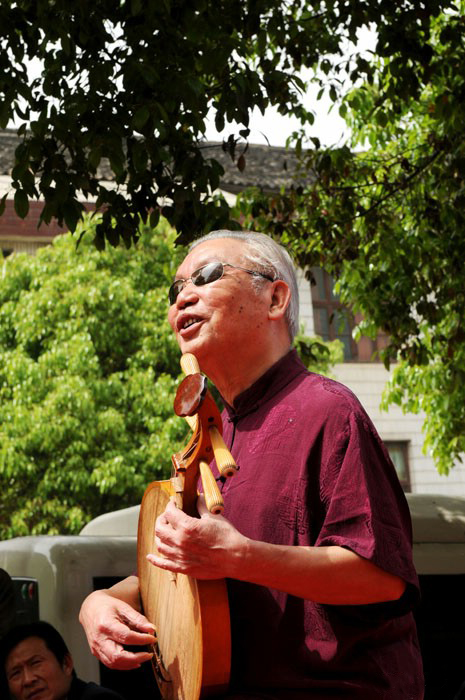
Festive Lanterns
Festive lanterns are a folk handicraft commonly popular in Wangcheng. They are hung at doorways and in halls during festivals and celebrations to heighten the atmosphere. It is said they began in the Western Han Dynasty, and in later dynasties there were lantern-making crafts in every era. Folk artisans used locally produced bamboo, wood, and other materials to make various colored decorative lanterns, decorated with colored painting or embroidery, with exquisite structure, simple elegance, and beautiful appearance.
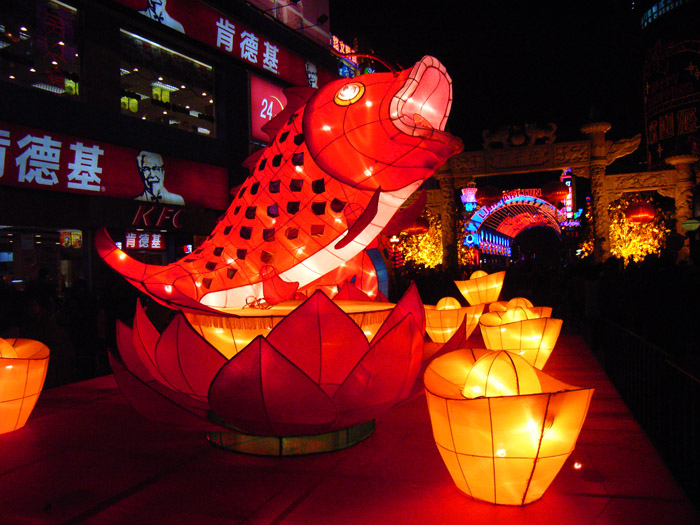
Local Flower Drum
Performed by one female role and one clown role, using a handkerchief and a folding fan as props. The female role's performance is subtle and delicate, with graceful and light movements, characterized by conveying emotion through the eyes (glancing eyes). The clown's performance is lively and clever, playful and amusing, with bold movements. The local flower drum pieces circulated in the area include "Washing the Heart of the Cabbage," "Copper Coin Song," and "Song of Watching for My Lover."
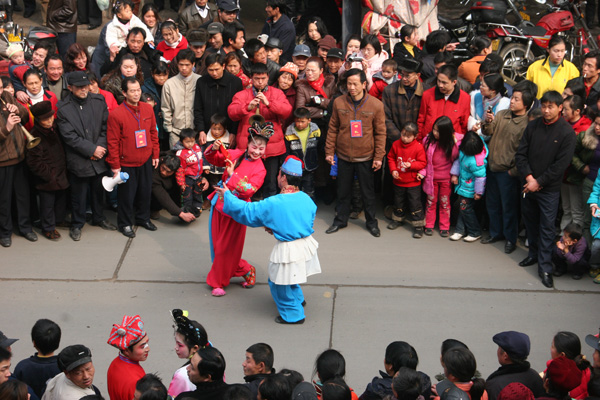
Kites
Kites originated in the Warring States period. By the Song Dynasty, kites had already developed greatly, and by the Qing Dynasty, the custom of flying kites was even more flourishing. The kite-making industry in Jinggang rose in the Qing Dynasty. The skills of kites can be summarized as tying, pasting, painting, and flying, that is, tying the frame, pasting the paper surface, painting colors, and flying the kite. Jinggang kite frames were mainly made from various bamboo materials, supplemented by reeds, sorghum stalks, and the like. The bamboo was torn apart along its natural grain, bent at a certain temperature, cooled and set, and then bound. The covering of Jinggang kites was mainly paper and silk. Before pasting the paper, glue was applied evenly and the surface was pasted flat and smooth. Besides common patterns such as eagles, swallows, butterflies, and dragonflies, many patterns with profound meanings also appeared on the kites, such as bats symbolizing happiness, peaches symbolizing longevity, and peonies symbolizing wealth and honor. Although only four colors—red, yellow, green, and black—were used, the painted kites were dazzling and colorful. Jinggang kites are exquisite, delicate, and beautiful, with sturdy structures, and can fly far and high.
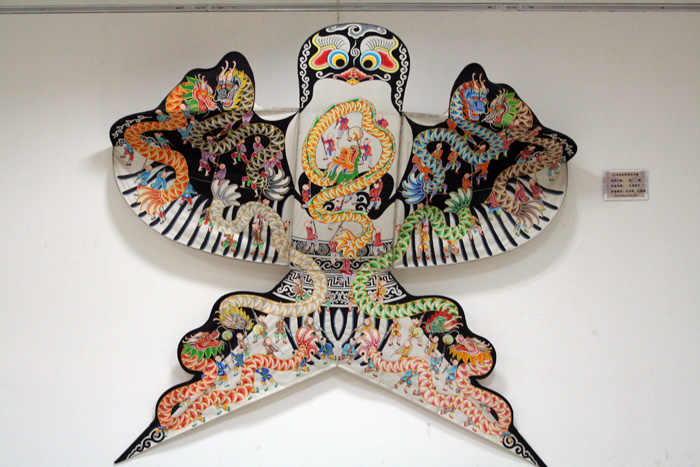
Palace Lanterns
A special handmade product. It uses carved bamboo, carved wood, carved lacquer, openwork, and other frames, inlaid with silk gauze, glass, or horn pieces, and decorated with fine colored painting or inlaid with jade and jewelry. Nowadays, new materials such as aluminum alloy and other metals, organic glass, celluloid, and plastics are used. Palace lanterns are a luxurious artistic lighting decoration.
Decorative Lanterns
Decorative lanterns are the general term for various folk artistic lanterns. Those popular in Wangcheng County include various geometric shapes and abstract animal shapes and other symbolic auspicious decorative lanterns, generally used for folk festivals.
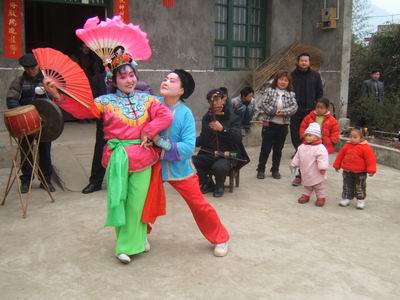
Flower Drum Ballads
A storytelling and singing art developed in the 1950s, sung to flower drum opera tunes, narrating stories and portraying characters, with repertoire mainly consisting of modern content. The performance form is costumed singing, with no fixed number of performers, and it is mostly used for propaganda performances.
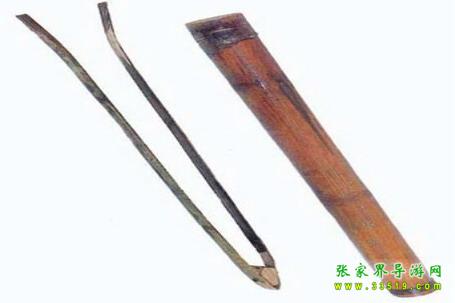
Yu Gu
One person holds a yu gu tube and bamboo clappers, striking the drum and clappers while singing, sometimes adding a small cymbal. The libretto consists of rhymed sung lyrics and prose spoken narration. The repertoire is mostly historical stories. In the old society it was a means for performers to sing from door to door begging for alms; in the new society there are pieces singing of new people and new deeds, used for propaganda.
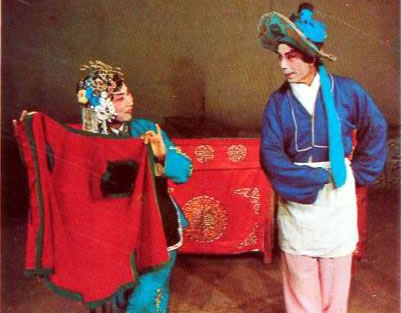
Flower Drum Opera
The most widely circulated local opera genre in the Changsha area, originating from folk song and dance—local flower drum. It uses the Changsha dialect as its unified stage language and has distinct local characteristics and a rich flavor of life. Its tunes are diverse, humorous, and plain. The dramatic lines adopt the spoken language and two-part allegorical sayings of the masses, vivid, bright, and humorous. The facial expressions and movements are lively and free, close to life, not constrained by fixed conventions, and include some unique dance postures. The Wangcheng County Flower Drum Opera Troupe was established in 1949. Over more than 40 years of ups and downs, it performed more than 250 traditional plays and more than 120 modern plays. In the 1970s and 1980s, "Chuncao Enters the Hall" and "Tears Sprinkled at the Place of Mutual Longing" caused a sensation in Hunan, setting an unprecedented record on the Changsha opera stage. In recent years, although hit by the downturn in flower drum opera, the Wangcheng County Flower Drum Opera Troupe still maintained a certain strength and did its utmost to preserve traditional repertoire for audiences. Most townships and villages throughout the county have some percussion instruments and string instruments such as the datong. Many amateur flower drum opera enthusiasts, on occasions of celebrations, funerals, or housewarmings, invite these people together and sing "local flower drum," which the masses love to see and hear.
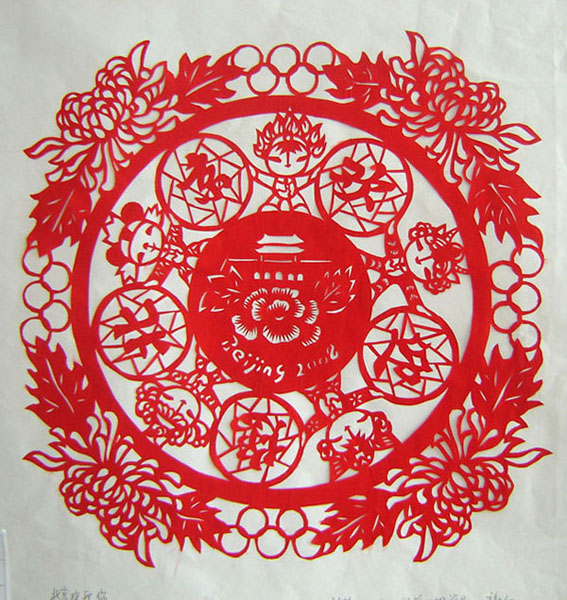
Paper Cutting
Paper cutting is a folk art, and Changsha's Wangcheng is one of Hunan's important production areas. On festivals and happy occasions such as weddings and birthdays, women cut colored paper into works such as "A Hundred Birds Paying Homage to the Phoenix," "Magpies on a Branch," "Chart of Fortune and Longevity," and auspicious wishes for good fortune and a prosperous life, and paste them on doors and windows to add a joyful atmosphere. Wangcheng's paper-cutting expressive techniques are bold and simple in style, clean and free, mostly taking birds and animals as themes, full of rustic flavor, and often done without drafts, cut freely by hand. Another finer and more complex type first has a draft, combines cutting and carving, emphasizes richness and beauty, pays attention to composition, and is known for its decorative style. The figure paper cuttings here are strongly influenced by shadow puppetry, with a strong sense of movement and rich flavor of life. Shutang and Youren in Wangcheng County are famous "homes of paper cutting," with more than 200 old folk artisans, 3 members of the Chinese Paper Cutting Society, and 24 members of the Hunan Paper Cutting Research Association.
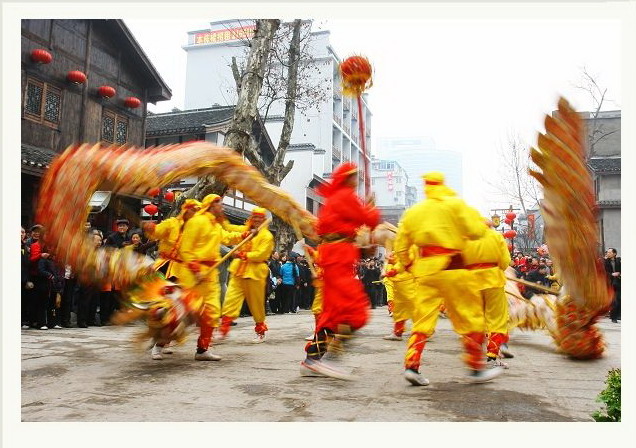
Dragon Dance
Dragon dance is a traditional cultural activity participated in by groups during the Spring Festival in the area, and frame dragons are widely popular. Generally, the lanterns go out on the fifth day of the first lunar month and are collected on the fifteenth. Dragon dance has routines such as twisting silk, arranging patterns, and forming characters. Pattern arrangements include "Zhuge Liang Pushes the Cart" and "The Grand Duke Fishes," drawn from historical allusions; auspicious meanings such as "Peace Under Heaven," "The Qilin Brings a Child," "The Crouching Tiger Leaves the Mountain," and "The Golden Monkey Jumps Through the Ring"; and reflections of life customs such as "Embroidered Butterfly," "Ancient Copper Coin," "Flower Basket," "Big Windmill," "Small Windmill," and "Tea Tray." Character formations include "Long Live the Communist Party," "Stability and Unity," and "One Child Is Best." During the dragon dance, instruments such as large gongs, large drums, large cymbals, large trumpets, and the "gong and drum shed" are played, and firecrackers are set off, making it magnificent, like a dragon emerging from the sea, stirring people's hearts.
Arhat Dance
Arhat masks are made by pasting paper, with the facial features painted on, the corners of the mouth slightly upturned, and a charming smile. Several people wearing monk robes, arhat masks, and holding palm-leaf fans sway with the music, with no fixed routine, yet with a distinctive charm.
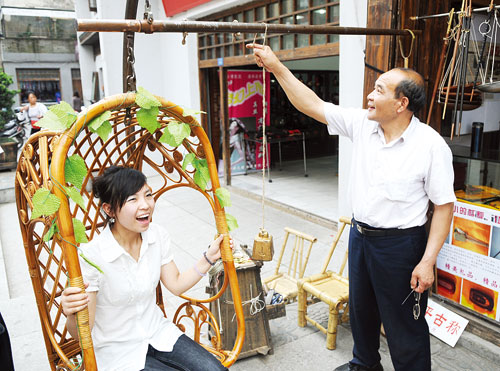
Handmade Scales
The old-style steelyard scale had 150 steps, of which more than a dozen are still retained today, mainly including planing, drilling, cutting, and polishing. Making a steelyard scale requires both woodworking skills and knowledge of mathematics and physics, and even more so a steady hand and a steady mind.
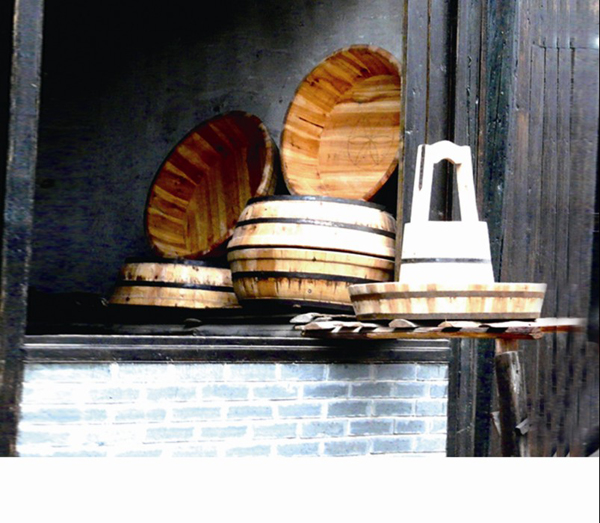
Round Woodwork
"Basins and buckets that do not leak a drop" refers precisely to Jinggang's round woodwork craft. As early as the Ming and Qing dynasties, Jinggang's round woodwork industry was already very developed. At its peak, there were more than 600 workers, and by the Republic of China period, Jinggang had 19 famous round woodwork shops. Round woodwork products used high-quality Chinese fir as raw material, and the production tools included saws, axes, curved knives, paring knives, and seven or eight kinds of planes. Products included carrying buckets, foot basins, washbasins, rice basins, rice-washing basins, bathtubs, chamber pots, and more.
Blacksmithing
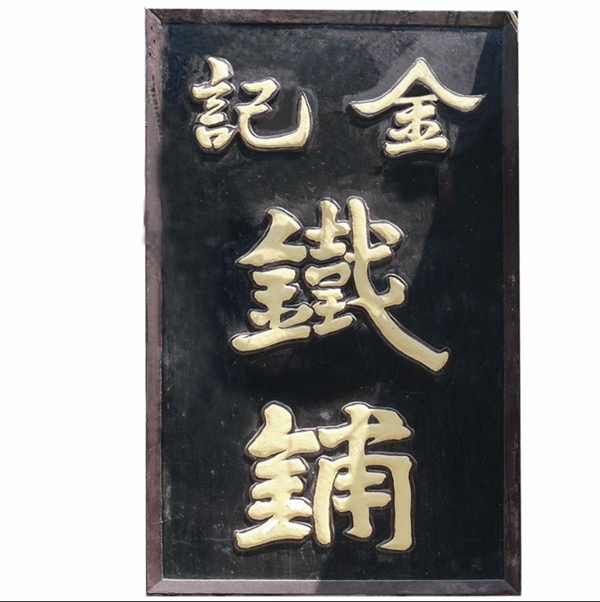
During the Yongzheng reign of the Qing Dynasty, the blacksmithing trade in Jinggang was already highly developed. At that time, over 3,000 boats moored and passed along the Wei River every day, creating a great demand for ironware. Therefore, besides forging farm tools and household iron goods, the iron shops mostly cast iron anchors, iron chains, and numerous other parts for the boats on the Wei River.
Xiang Embroidery
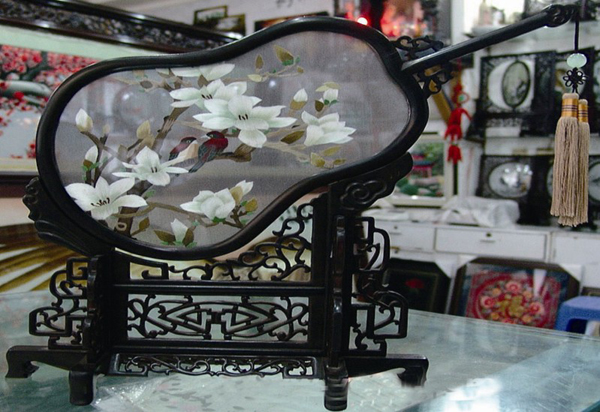
A traditional handicraft of Hunan. It is especially prevalent and enduring in the rural areas of Wangcheng. Xiang embroidery features graceful compositions, exquisite needlework, brilliant colors, and a bold style, and is celebrated together with Su embroidery, Yue embroidery, and Shu embroidery as one of China's Four Great Embroideries. It has the reputation of being a "superb embroidery." Xiang embroidery originated from folk embroidery in Hunan and has a history of over 2,000 years. In a Chu tomb excavated in Changsha in 1958 dating to before the 5th century BC, fine dragon-and-phoenix embroidered items were found. In the Western Han tomb over 2,100 years old unearthed at Mawangdui in 1972, there were even more embroidered garments and materials among the burial goods. Around 1898, many outstanding painters participated in reforming Xiang embroidery techniques, bringing it into a new stage of development. Xiang embroidery is a fine handicraft made by embroidering silk threads onto satin and other high-grade materials. Like other embroidery crafts, it shares the common features of being based on painting and using various stitches and colored threads to depict images, yet it also has its own distinctive characteristics: it emphasizes the use of generalized, realistic techniques, highlights the optical properties of the embroidery threads, grasps the essence, and depicts the external form and inner quality of objects with meticulous detail, creating an artistic effect that is rich in atmosphere when viewed from afar and spellbinding when examined up close. The designs for Xiang embroidery are based on Chinese painting, "using the needle as a brush and the thread as color." In terms of stitching, the mixed stitch is primary, and it has now developed to more than seventy kinds of stitches to express the characteristics of different objects and different natural textures. In terms of embroidery threads, rich and varied colors are used, with great emphasis on gradation of color and natural changes of light and shade. An outstanding piece of Xiang embroidery can integrate China's traditional painting, embroidery, poetry, calligraphy, and seal-carving arts into one, making poetic sentiment and pictorial charm overflow between the stitches. Its lofty artistic realm truly achieves the wonder of embroidered birds seeming to speak and embroidered flowers seeming to give off fragrance. The famous signature products of Xiang embroidery—lions and tigers—enjoy high prestige internationally and are regarded as art treasures. The tigers embroidered with Xiang embroidery's unique fur needle technique have body hair that appears to grow from the roots, like living fur, with a strong sense of texture, and the muscles and bones beneath the fur appear powerful and vigorous. Combined with "glaring" eyes, the rough and awe-inspiring majesty of the fierce tiger is depicted to the fullest, so it is no wonder that such embroidered works are called "superb craftsmanship" abroad. In recent years, artists at the Hunan Xiang Embroidery Research Institute have pursued art assiduously and created the even more difficult "double-sided different-color embroidery." On a single piece of transparent embroidery material, it is embroidered in one go into a work that is identical on both sides, or same in form but different in color on both sides, or even different in both form and color on both sides. The depiction of figures' expressions is meticulous, and the embroidered surface shows no trace of stitches; when the frame is turned, it is like a three-dimensional sculpture. It caused a sensation in international exhibitions and was praised as "magical art." Xiang embroidery products fall into two major categories: daily-use items and ornamental items. Examples include the imposing large central hangings and large hanging screens for display in grand living rooms, the small narrow vertical screens hung in smaller living rooms, the exquisite small table screens placed on writing desks, the gorgeous chair cushions and back cushions laid on sofas, the elegant bedspreads and quilt covers used on beds, embroidered formal dresses worn by women, mirror covers and shawls for dressing, handbags for going out, embroidered pajamas, morning gowns, children's cloaks, and so on. Xiang embroidery designs include flowers and birds, animals, figures, landscapes, insects and fish, calligraphy, portraits, and more. Whether fine brushwork painting, painting combining fine brushwork with freehand brushwork, printmaking, watercolor, oil painting, or photographs, all can be embroidered.
Tongguan Kiln
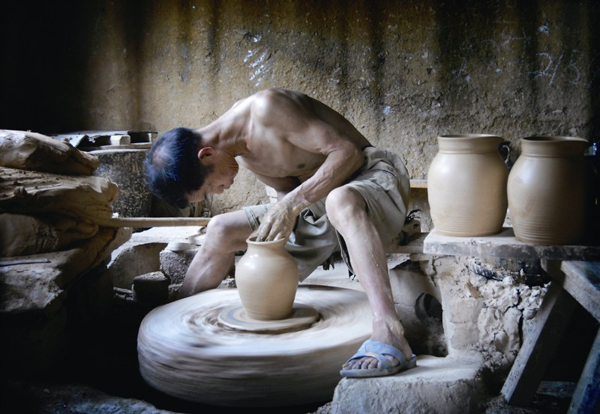
Tongguan Town in Wangcheng County is one of the nation's famous "Five Great Pottery Capitals." Within a radius of ten li, kilns stand in great numbers and pottery is everywhere, earning it the title "Pottery Capital of Ten Li." Tongguan Kiln pioneered the underglaze color technique, with exquisite craftsmanship, making it a splendid and remarkable flower in the garden of Chinese art. Tongguan and Jinggang face each other across the Xiang River. Since ancient times, the pottery fired at Tongguan Kiln has been distributed and sold far and wide through Jinggang. Over time, Jinggang became an important window for the concentrated display and promotion of Tongguan Kiln. The "Chinese Folk Art Workshop" in Jinggang Ancient Town has introduced Tongguan Kiln art, opening up a new base for people to learn about and carry forward ceramic art.
Clogs
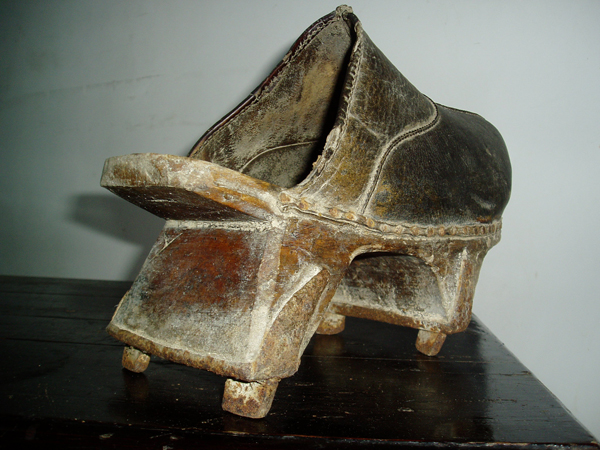
In the 16th year of the Republic of China (1927), Cao Shoulin opened the Cao Hongtai clog shop in Jinggang, the first clog shop in the town. In a general survey and registration in 1953, more than ten clog businesses had developed in the town. Jinggang clogs used white-flower wood and paulownia wood for the soles, with straps woven from cloth, hemp, leather, or palm fiber crossed or nailed flat on top. They were ventilated, breathable, and comfortable for the feet, and were extremely popular during the Republic of China period. Later, because rubber shoes and overshoes dominated the market, the products did not sell well, and production stopped in 1964.
Paper Umbrellas
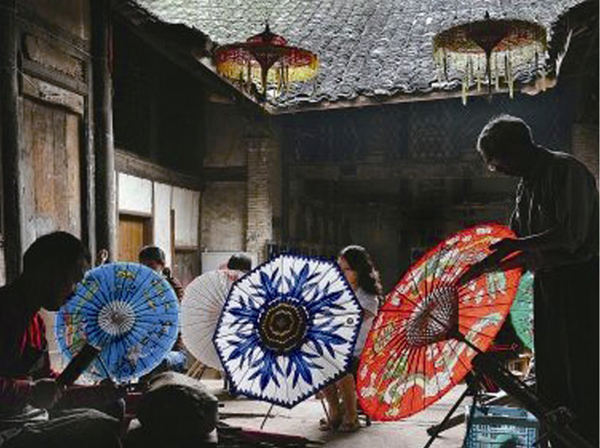
In the 26th year of the Guangxu reign of the Qing Dynasty (1900), after learning the trade at the Liang Hongmao Tang umbrella shop on Beizheng Street in Changsha, Liang Jingting of Jinggang returned home and opened under the sign Liang Hongfa Umbrella Shop, mainly producing old-style bright-oil and black-oil paper umbrellas and specially made large umbrellas for duck sheds. The raw materials were leather paper, nan bamboo, gauze, hair rope, tung oil, persimmon water, pigments, ox horn, and wood. The shop was particular about materials and fine in workmanship, and its products were durable. At the time, among the people there was the praise that "Xiangtan has clogs, Jinggang has oil umbrellas."
Shadow Puppetry
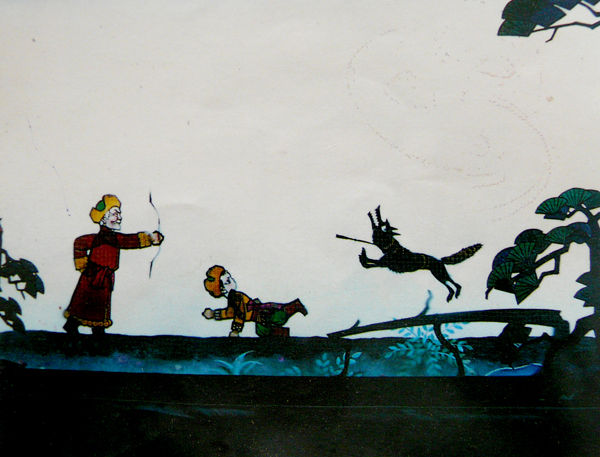
Shadow puppetry is also called lantern-shadow theater or shadow theater. It is performed with figures made from specially prepared transparent ox hide or donkey hide—now changed to leather paper backed with shell—carved and painted, which are manipulated behind a screen illuminated by light to make various movements and perform dramatic plots and stories, accompanied by music, singing, and spoken parts. It is a folk art. This theater form began in the Han Dynasty and flourished in the Song Dynasty. It uses the vocal styles of Xiang opera and flower-drum opera and was quite popular in Changsha and other places. Changsha shadow puppetry is known for its vivid modeling, exquisite production, and meticulous manipulation. Its repertoire includes historical plays, mythological plays, and modern plays. Among them, fable plays and children's plays are even more wonderful, such as "The Turtle and the Crane," "Two Friends," "Picking Mushrooms," "The Crow and the Fox," and "Nezha Stirs Up the Sea." Chengguan Town in Wangcheng County is known as the "Home of Shadow Puppetry," and it was very popular in the Jinggang area.
Lion Dance
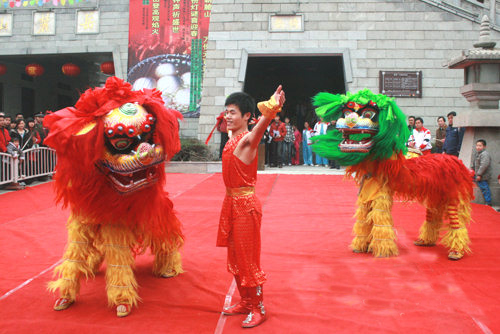
There are two kinds: cloth lions and fur lions. When dancing, it is further divided into civil lions and martial lions. The civil lion depicts the gentle and tame demeanor of the lion, with humorous and delicate movements; the martial lion shows the lion's ferocity, with vigorous movements. The routines of lion dance include "Vine Entwines Tree," "Dark Clouds Cover Snow," "Ox Longs for the Pool," "Loach Bounces in the Pot," and "Qilin Brings a Child." It is accompanied by percussion and wind music, creating a warm and solemn atmosphere. During the lion dance, there are also lion-praising singers who sing along; the lyrics reflect working life, offer congratulations for good fortune, and introduce legends and stories, while the dancers perform according to the content and rhythm of the lyrics.
Bamboo Horse Lantern
The bamboo horse uses bamboo strips as a frame and is pasted with colored paper into a square or round lantern, divided into front and rear sections. When dancing, it is tied to the waist of a female dancer to simulate riding a horse, performing movements such as slow walking, galloping, and jumping. It is accompanied by "little soldiers" music, creating a relaxed and lively atmosphere. Among the performances, the lame-horse act often makes people laugh.
Palm Leaf Weaving
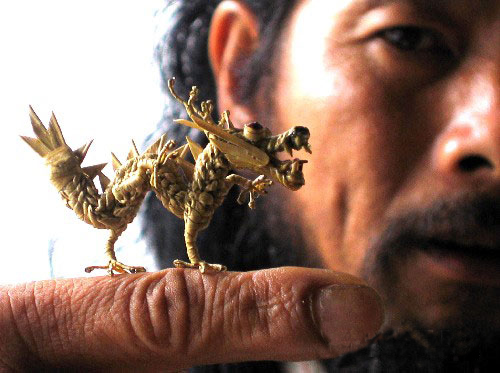
A traditional handicraft of the Changsha area, it consists of various animals woven from palm leaves, with many types such as birds, insects, fish, shrimp, cranes, and snakes, all vivid and lifelike. It was once exhibited at the Leipzig World Expo in Germany, where people marveled at it as "incredible," and the French Art Museum specially purchased pieces for its collection. The palm is an evergreen tree, planted on both banks of the Xiang River in Wangcheng County. Artisans collect palm leaves and weave them into various small animals, making it "a wonder of Jiangnan."
Running Horse Lantern
A folk paper-binding art, it uses bamboo strips as a frame and colored paper to paste into a square or round lantern. Figures of people and horses are cut from paper and pasted onto a paper wheel, which is installed in the middle of the lantern. Using the heat of the lamp, the paper wheel is driven to rotate, so that the people and horses appear to move.
Temple Fair Snacks
1. Triangular Cake
In the old days, the snack triangular cake on the streets of Jinggang was loved not only by the elderly but also by women and children, and even by young and middle-aged people. Nowadays, among the older people on the streets of Jinggang, as soon as they mention the triangular cake they once ate, its beautiful appearance and wonderful taste come back to memory. The triangular cake is triangular, about half an inch thick, golden on the bottom and rice-yellow on top—colors that tempt the appetite. (The decorative tones in some high-class restaurants today use golden and rice-yellow to please diners.) The triangular cake is soft, crisp and tender, slightly sweet, refreshing, and leaves a pleasant aftertaste, and it also has the inviting light fragrance of rice crust. The triangular cake is a specialty snack unique to Jinggang and hard to find elsewhere. In recent years, no one on the streets of Jinggang makes triangular cakes anymore, and it has become a delicacy that exists only in the memories of the ancient town's people.
The main material for making triangular cake is japonica rice. First, the japonica rice must be soaked in clean water overnight. It is then scooped out and drained, mixed with an appropriate amount of cooked rice and an appropriate amount of soaked soybeans. It is wet-ground, at least three times, into an extremely fine wet powder. If the powder is not ground fine enough, the finished cake will not be soft and will taste coarse and gritty on the teeth. Next, the wet powder is kneaded into a dough and placed in a ceramic vat to ferment. The length of fermentation depends on the outside temperature. After successful fermentation, a small amount of alkali and golden-yellow food coloring are added, and kneading continues until the wet dough becomes sticky.
Making triangular cake requires a special mold: a square aluminum box with long strips at the four diagonals inside, fused with the aluminum plate to form four triangular spaces. First, some tea oil is wiped inside the mold to prevent the cake from sticking, then the wet powder is put into the mold, patted flat, and the lid is closed. Then it is placed over charcoal fire to bake slowly. After two or three minutes, the lid is opened. To test whether it is done, a special knife-shaped iron piece is inserted into the cake; if it can be inserted easily, it is cooked. The iron piece can also serve to cut the triangular cake out of the mold.
The making of triangular cake is entirely handmade, time-consuming and labor-intensive, and the price is not high—this is probably the main reason no one makes it anymore. The now eighty-one-year-old Hu Yousong, former head chef of the Fusheng Lou restaurant, was quite famous for making snacks in his day. In the 1980s, a restaurant in Changsha opened by a Jinggang native offered him a high salary to make triangular cakes exclusively, but he refused because he found the making too troublesome. Still, the old chef took his triangular cake mold, which had seen many years, to that restaurant for a one-time demonstration. When triangular cakes were served as dessert one after another, hundreds of diners instantly became gluttons.
2. Oil Dumpling
The oil dumpling belongs to the "fried goods" of Jinggang snacks, because it is fried in oil. Called a dumpling, it should be round, but no—the oil dumpling is kidney-shaped. It is said that in the past Jinggang oil dumplings really were round, but because they were eaten hot, when a round dumpling was put into the mouth, those too impatient often burned their mouths. Being round and slippery, it was also hard to hold, and with one careless move it would fall to the ground. So it was redesigned into a kidney shape, which is not only easier to hold but also much more convenient to put into the mouth; by biting from the pointed end little by little, it is rarely hot enough to burn the mouth.
Making oil dumplings mainly uses glutinous rice, with some japonica rice added. The proportion must be appropriate, and the principle is that the japonica rice must be less than the glutinous rice; the exact amount depends entirely on experience. If there is too much glutinous rice, the fried oil dumpling will be soft and mushy, impossible to hold, and cloying; if too much japonica rice is added, it will be hard like a fried dough twist and rough on the teeth. The mixed rice must be soaked in cold water for a day and a night, then wet-ground into powder, put into a cloth bag, and pressed with a stone to remove the water. Then it is kneaded until sticky, made into kidney-shaped semi-finished pieces one by one, and placed on the board for later use.
Frying in the oil pot requires the most skill and even more experience. Frying oil dumplings is different from frying dough sticks; using only rapeseed oil will not produce the right result. Brown sugar must be mixed into the rapeseed oil. First the brown sugar is boiled in the pot until thin, then the rapeseed oil is poured in, and then the semi-finished pieces are put into the pot; only then is the fire increased underneath. During the heating process, the brown sugar sticks to the oil dumplings, and when the oil comes to a rolling boil, the brown sugar separates from the oil and almost entirely adheres to the oil dumplings. At this point the oil dumplings also float up, and they are ready to be scooped out.
The kidney-shaped oil dumpling is golden with a hint of red, glossy and pleasing to the eye. It tastes soft and refreshing; although it is a fried glutinous rice food, it is oily without being cloying, and sweet. Those who like it can eat several in one go, but it must be eaten hot, because once cooled the oil dumpling becomes hard and loses its softness. However, that is no problem: if it is placed on top of rice when cooking or steamed in a steamer to heat it up, it will become soft again, and because some of the oil on the surface is carried away by the steam, it will actually taste even more refreshing than before.
3. Shaobing (Baked Cake)
Shaobing should really be called baked cake, because it is baked rather than roasted over fire. But the people of Jinggang have always called it this way, and by convention it is hard to correct. The making of Jinggang shaobing should have come from the north, and its method is somewhat similar to the making of northerners' home-style pancakes. In fact, the preparation of many Jinggang snacks and dishes bears traces of cooking methods from all directions, which of course is related to the "foreign food culture" brought by the once-developed shipping and prosperous commerce of the "Little Hankou." However, it was not accepted wholesale; rather, through fusion and transformation, it evolved into a "food culture" with unique Jinggang characteristics.
As with northern pancakes, making Jinggang shaobing first requires mixing the dough. Warm water must be used, not cold water, and not boiling water either. Cold water will make the flour form lumps, and boiling water will turn it into scalded dough; only dough mixed with warm water comes out soft. After the dough is mixed, it cannot be baked immediately; it must be allowed to "rest" for a period, which can be long or short depending on the weather.
Northern pancakes use a flat-bottomed pan called a "cheng." The cheng is made of iron, quite heavy and thick; it is not easy to heat up, and once hot it is not easy to cool down, making it most suitable for pancakes. Jinggang baked cakes also have a special vessel—a ceramic vat. In the old days, Tongguan across the river from Jinggang produced special ceramic vats to meet Jinggang's needs. The ceramic vat is also quite heavy and thick, not easy to heat up, and once hot it also retains heat quite well; moreover, it has the advantage that iron cookware lacks—it does not easily scorch or burn. In the past, Jinggang baked cakes used charcoal fire, while northern pancakes used coal fire; charcoal fire can preserve the pure fragrance of the baked cake, while coal fire lacks this.
The processing of the semi-finished Jinggang shaobing is very particular. First, the mixed dough that has already "rested" is spread into a round sheet, coated with a layer of egg yolk, and then filled. The filling is quite rich, including brown sugar, five-spice, rose, chrysanthemum powder, pepper powder, and a little lard. The filling is wrapped up, patted by hand into a sole-shaped cake, and then one by one stuck to the inner wall of the ceramic vat, and the lid is closed. At the lower part of the vat there is a hole for adding charcoal, and a gentle charcoal fire is lit at the bottom. Before long, the baked cakes on the vat wall gradually cook, and the fragrance begins to spread.
Northern pancakes are not filled; after they are cooked, the filling is rolled inside when eaten. Jinggang shaobing, because the filling is wrapped inside, combines fragrance, sweetness, and crisp softness in one. In the past, when customers went to buy shaobing, they could also ask the vendor to add a little sesame oil and vinegar on top to enhance the flavor.
4. Ginger-Salt Cake
Ginger-salt cake was an extremely famous snack in old Jinggang, and it had especially many "fans." The ingredients for ginger-salt cake are cumbersome and the process complex. Nowadays, even Jinggang people who know how to make it no longer do so, and street vendors have also given it up because they find it time-consuming and labor-intensive, with high cost and little profit. Ginger-salt cake is truly delicious: fragrant and sweet, with a slight spiciness and a unique flavor, and a good mouthfeel—chewy and with an aftertaste. Jinggang people who once ate ginger-salt cake, whenever they recall its deliciousness as if to satisfy hunger by picturing a cake, still talk about it with relish, and the corners of their mouths water with longing.
The main material for making ginger-salt cake is also flour, and the ingredients are extremely rich, including: minced ginger, salt, scallions, sesame powder, pepper powder, egg yolk, rose, brown sugar, and more. First, the many ingredients are mixed with the flour, an appropriate amount of warm water is added, and it is stirred repeatedly; after it is uniform, it is kneaded into a dough. Next, a rolling pin is used to press and spread the dough into a whole thin sheet, which is then rolled up layer by layer. While rolling, cornstarch must be constantly sprinkled on the thin sheet to prevent sticking. After it is rolled into a long strip made of hundreds of layers of thin dough, the strip is cut into small sections with a knife, and only then is it ready to bake.
Roasting ginger-salt cake requires a charcoal fire, and it must be a gentle flame. A flat sheet of galvanized iron is used for roasting; segments of the half-finished cake are laid out on the iron sheet and roasted. Because it is roasted in the open, unlike baked sesame cakes which are cooked inside a sealed crock, one must constantly flip the cakes with chopsticks to help them cook through. And because ginger-salt cake is rolled up layer by layer, it is hard to tell whether it is done; often the outer layers have already turned golden and give off a fragrant, hot aroma while the inside is not yet cooked. This calls for experience. A master of roasting ginger-salt cake will often pick one up with his fingers, give it a gentle squeeze, and know at once whether all the cakes on the iron sheet are done or not.
Making such a complex and refined ginger-salt cake, the craft process resembles artistic creation and carries aesthetic value; it can truly be compared to the arts of paper-cutting and embroidery. The rich and wonderful ingredients also bring to mind those dazzling, aristocratic, poetic culinary creations in Dream of the Red Chamber—could its making have originated from the Grand View Garden and the palace kitchens? To call ginger-salt cake a rare and wonderful flower in the garden of the old town's culinary arts is no exaggeration at all.
Five. Handmade Noodles
In the past, Jinggang handmade noodles were also very famous. During the Qianlong reign of the Qing Dynasty, the Yang Yuxing noodle shop in Changsha city, drawn by the reputation of Jinggang's handmade noodles, made a special trip to Jinggang to seek a master and learn the craft of making handmade noodles. Only after returning did its noodle shop begin to flourish, and it went on to become a famous establishment that prospered without decline.
Like other noodle dishes in Jinggang, their origins all come from the north. Legend has it that in the Hongwu reign of the Ming Dynasty, Henan Province in the north suffered a severe drought, and the people left their homes one after another to flee famine. Among them, a man from Henan crossed the Yangtze River, entered Dongting Lake, traveled up the Xiang River, and arrived at Jinggang, which was already quite prosperous at the time. The man from Henan had originally run a noodle shop back home, so he rented a small room on the street of Jinggang and started a business making sliced noodles and pulled noodles. Jinggang breakfast had always consisted only of rice noodles, so noodles with a distinctive flavor naturally drew many curious diners, and business was quite good. At that time, competition in Jinggang's food industry was fierce, and some restaurants, seeking to remain invincible, tentatively came to ask the man from Henan for instruction in the craft of making noodles. Northerners have always been straightforward and not at all conservative, and he taught his skills to all who came to learn, without discrimination. However, the people of Jinggang did not simply follow the book; instead, they combined the methods taught by the Henan master with the local rice-noodle soup-making techniques, thus creating Jinggang handmade noodles that have both the chewiness of northern pulled and sliced noodles and the delicious soup of rice noodles.
The making and cooking of Jinggang handmade noodles is refined and particular. One had to use the famous brand of flour of the time, "Tong Flour"; Tong Flour was fine, pure white, and had good stickiness. In the old days, Yihua Lou, Yuehua Lou, and others would make special trips to Changsha city to purchase Tong Flour in order to guarantee the quality of the handmade noodles. The key to making handmade noodles lies in the kneading stage: after mixing a certain proportion of alkali and salt into the flour, add clean water and blend evenly, then knead the dough—at least one hour of kneading. After it is kneaded "through," one must also use a pole to repeatedly press the dough with great force, pressing for another hour. At that time, the muscles on the arms of Jinggang's handmade-noodle masters were even thicker and more developed than those of blacksmiths—that came from long hours of kneading and pressing dough. Once the dough had elasticity, one still had to use a pole to roll and press the dough into a sheet, rolling it out into a thin sheet only two sheets of paper thick. Then came cutting the noodles. Before cutting, dry sweet potato starch had to be sprinkled on the thin sheet to prevent the layers from sticking. When cutting, a special half-section of bamboo tube was used as a guide on the sheet, moving along with the knife, cutting out noodle strands as fine as threads. This depended first on experience and second on feel—"practice makes perfect." A highly experienced handmade-noodle master could cut noodles that were almost all uniform, with hardly any uneven strands to be found.
To cook the noodles, the soup must first be made, and the soup also has its particular requirements; it better reflects the characteristics of Jinggang handmade noodles. The soup must be good soup—whether a bowl of handmade noodles tastes good depends entirely on the soup. The soup must be fresh; pork leg bones, chicken carcass bones, and pig trotters are used, simmered with water until they become a milky-white rich broth, only then is it fresh. To cook the noodles, boiling water must be used, and there are also particular ways: dropping them in and immediately lifting them out is called "with the line"; lifting them out when slightly cooked is called "second row"; lifting them out when neither raw nor fully cooked is called "ordinary." The restaurant cooks the noodles according to the diners' three different requests.
Jinggang handmade noodles have few toppings—only shredded pork, three delicacies, and beef, three kinds—unlike noodles in some places with a complicated array of toppings, because the original fresh soup itself has already seeped into the noodles, and there is no need to use toppings to add freshness. Jinggang handmade noodles are very self-confident.
Six. White Grain Balls
There is a story about the origin of white grain balls. It is said that in the past Jinggang had no white grain balls at all. Once, a Jinggang cook went to Changsha city on business. When he reached Beizheng Street, he saw a street vendor selling a food he did not recognize: a bowl of soup with small white balls the size of a little finger floating on the surface. Many passersby stopped to buy it and ate with great relish. He asked the vendor what it was called, but the vendor in Changsha city, seeing that he was a country person, would not even acknowledge him. So the cook bought a bowl and ate it; the taste was indeed good, so he bought another bowl and ate it—in fact, while eating he was watching how the little soup balls were made, so that after learning he could go back to Jinggang and make them. For this reason, he lingered several extra days in Changsha city, and every day he had to go out on the street to "eat" the little soup balls... Not long after the cook returned, a new snack appeared on the streets of Jinggang—white grain balls.
The making of white grain balls is actually not complicated. Dry-grind japonica rice into flour, add clear limewater that has been soaked and settled from quicklime, put it into a pot and stir constantly while cooking until it forms a solidified mass; once cooled, one can begin making white grain balls. There are two methods. The large method: use a special wooden box with countless round holes on the bottom, place a basin of cold water below, pour the solidified paste into the box, and by pressing force the paste through the holes into the cold water, forming "products" one grain at a time, ready for use. The small method is to pinch and scrape directly by hand, pinching one grain at a time and scraping one grain at a time into cold water. The small method requires practice making perfect; masters who specialize in pinching and scraping white grain balls produce balls that are each round and uniform, no inferior to those pressed out through the perforated wooden box.
Making the soup is rather more particular. White grain balls, like noodles and rice noodles, depend on that bowl of soup for whether they taste good. The soup for Jinggang white grain balls is made from the original broth simmered from pork leg bones, and minced ginger, chopped scallions, and cilantro are also added as ingredients. After the slightly heated white grain balls are scooped up and put into the soup, small sesame oil and chili sauce are also added; and a small dish of dried radish or pickled mustard shreds is set out to accompany the flavor.
Most people eating white grain balls for breakfast on the streets of Jinggang are the elderly, women, and children. Strong laborers mostly eat noodles or rice noodles for breakfast, because although white grain balls are tasty, having been soaked in limewater they contain alkalinity, and within less than two hours after eating one gets hungry and cannot do heavy physical labor. In today's era of aristocratic dining, those ladies and gentlemen who refuse greasy food and full meals in order to avoid gaining weight might as well take white grain balls for breakfast.
Seven. Cool Sponge Cake
Quite a lot of people have eaten cool sponge cake, and they also know it is a Jinggang specialty. Unlike some other traditional Jinggang snacks, cool sponge cake does not have to be made, bought, and eaten on the spot; if you do not go to Jinggang, you can only drool with envy and be unable to reach it. Cool sponge cake need not be made, bought, and eaten on the spot; it can be carried. In the old days, some peddlers in the areas around Jinggang often went to the streets of Jinggang to purchase cool sponge cake, then took it around to hawk it, which unwittingly served to promote and publicize Jinggang cool sponge cake and made it famous far and wide.
Cool sponge cake is a neat rectangle; the cake is as white as frost and snow, giving a comfortable visual impression; in texture it is spongy like cake and soft like malt sugar. Slightly sweet with a touch of sourness, cool and refreshing, the taste is excellent. Moreover, after eating cool sponge cake no residue is left in the mouth, only the beautiful memory of a passing fresh breeze. Cool sponge cake also has the advantages of both filling the stomach and aiding digestion; it is most suitable for those who want to eat but have poor digestive function. In the past, cool sponge cake not only sold well in the old town, but in the surrounding areas buyers came in flocks, and even in Changsha, Xiangtan, Ningxiang, and other places Jinggang cool sponge cake was sold, and many people ate it.
In the old days there were many small handicraft workshops on the streets of Jinggang making cool sponge cake; although they did not hang signboards, production was very busy. The craft of making cool sponge cake also need not be kept secret, unlike the making of Jinggang dried tofu, which is so mysterious. However, producing high-quality cool sponge cake is no easy matter. Japonica rice is its main raw material, and an appropriate amount of glutinous rice must also be mixed in to "soften" it, and a small amount of pure alkali must be added to "reduce sourness." After grinding into flour and mixing evenly with water, it must also be fermented; fermentation generally uses old flour or leftover cooked rice and an appropriate amount of glutinous rice sweet wine water. It is put into a large wooden barrel, the lid is tightly covered, and it is placed in a spot with moderate temperature; in winter cotton padding must be added for wrapping. The fermentation time depends on the degree of fermentation, judged by the flour in the barrel rising in a honeycomb pattern. Cool sponge cake must be steamed; before steaming it is first cut into pieces like "tofu blocks" and placed in layers in a steamer. After steaming it must be cooled before eating. The steaming time must also be strictly controlled: if the time is short, it will not be steamed through; if the time is long, the cake in the steamer will turn into a pot of porridge.
The shortcoming of cool sponge cake is that it cannot be kept long; because it is a fermented product, leaving it too long makes it sour and unfit to eat. Even if placed in a refrigerator, although it can slow the souring, over time it will become hard. The reason cool sponge cake has not formed large-scale production and is gradually fading away should be related to its inability to be preserved.
Eight. White Sugar Dumplings
Although they are called dumplings, they are not the northern kind made from wheat flour, nor are they shaped like little boats. White sugar dumplings are made from rice, and their shape is like a fried dough twist; it would also be acceptable to call them rice dumplings or "twists." White sugar dumplings are also one of the traditional snacks unique to Jinggang. Anyone who grew up in Jinggang ate white sugar dumplings as a child, and when recalling them, one is still stirred by their crispness and sweetness to smack the lips and lick the tongue, and a feeling of nostalgia spreads up along with it.
In the old days there were stalls on the streets of Jinggang specializing in making white sugar dumplings: a four-legged stand holding a cutting board, with a wok of oil set up beside it—simple equipment. The vendor would call out every so often, "White—sugar—dump—lings!" drawing the sound out long, the lingering note threading through the streets and alleys and audible from far away. Then people would come to buy white sugar dumplings. They were made fresh on purchase and eaten fresh, or could be taken home to eat; the vendor would wrap them for you in yellow straw paper, attentive service. White sugar dumplings were not expensive—one copper coin bought two—economical and practical, tasty and satisfying.
White sugar dumplings are made from glutinous rice, but an appropriate amount of japonica rice must be mixed in; using glutinous rice alone would make the dumplings limp and unable to become crisp. After the glutinous and japonica rice are mixed, soak them in clean water overnight; the next morning one can begin grinding the flour—the finer the flour, the better. Then put the wet flour into a cloth bag, press out the water, pour it out, and knead it until sticky, ready for use. When a customer comes, break off a lump of dough, roll it into a strip, twist it a few times into a fried-dough-twist shape, and drop it into the wok to fry. Fry until the dumpling becomes "hollow" and floats to the surface, then scoop it out. It must also be coated with white sugar; coating with white sugar has its tricks and best reveals skill. Although it must be coated while hot, just how hot is hard to master: if the dumpling is too hot when coated, the white sugar will melt on the surface of the dumpling, sticky as if smeared with a layer of "varnish," turning into a mushy mess; if too cold when coated, then the dumpling is still the dumpling and the white sugar is still the white sugar, and the sugar grains will not stick to the dumpling. Only when coated at just the right moment will the white sugar "nail" itself densely grain by grain onto the dumpling, as if covered with a layer of crystal-clear snow grains. Only then will people buy it. Jinggang people, accustomed to local snacks, are very expert and very picky.
Nine. Sesame Balls
Sesame balls are made in many places. Changsha and Xiangtan have sesame balls, Ningxiang and Xiangyin have sesame balls, Yiyang and Changde have sesame balls, and Jinshi and Yueyang also have sesame balls. However, the birthplace of sesame balls is the old town of Jinggang.
There is a story about the "leaking" of the method for making Jinggang sesame balls. It is said that Jinggang had sesame balls as early as the Qing Dynasty, and like the making of many of the old town's specialty dishes and snacks, it was always "not to be passed on to outsiders," so outsiders could only taste their deliciousness without knowing how they were made. In a certain year of the Republic of China period, a master who made fried dough sticks in Changsha city came to Jinggang. When he first tasted Jinggang sesame balls, he was immediately captivated by their spongy, refreshing quality, and so conceived the idea of learning to make them. Although through several tastings and "research" he discovered that sesame balls were made from glutinous rice, he was still completely in the dark about their production. He knew clearly that the method of making any food, even if one ate it hundreds or thousands of times, could not be eaten out. For this reason, he deliberately drew close to a Jinggang master who made sesame balls and became friends with him. That time the two were drinking together again, and the Jinggang master got very drunk, so he took the opportunity to pry for "military intelligence"; the Jinggang master, speaking truthfully after drinking, revealed the method of making sesame balls in full, and only after sobering up realized he had been tricked. When the Jinggang food industry guild learned of the "leak," it decided that the making of sesame balls would no longer be kept secret, and that any outsider willing to learn would be told everything, in order to counter that cunning fried-dough-stick master from Changsha city who might later monopolize the making of sesame balls elsewhere.
The steps for making sesame balls are as follows:
1. The raw material is glutinous rice. Soak it in cold water overnight, wet-grind it into flour, put it into a cloth bag and press out the water, mix in white sugar and a small amount of sweet rice wine, and knead until sticky.
2. Fermentation: mix "old flour" into the dough to ferment it along with the leaven. When the weather is hot, place it on a cutting board, cover with a thin cloth, and let it ferment on its own; when the weather is cold, use hot water or fire to warm it and promote fermentation. Only when the dough gives off a fragrant aroma is the fermentation successful.
3. Shaping. Roll the fermented rice dough into round balls one by one, and put them into sesame seeds to roll and coat (the sesame seeds having been washed to remove sand and then dried in the sun).
4. Into the wok. Heat rapeseed oil in the wok until very hot, then turn to a gentle fire to lower the oil temperature, push the semi-finished sesame balls coated with sesame seeds into the wok to fry slowly, and when they float to the surface they are done.
Ten. Shrimp Cakes
Jinggang, a water town, has rivers running through it, dense canals and ditches, and lakes and ponds woven everywhere. Besides an abundance of fish, shrimp are even more numerous than the sands of the Ganges. In the old days, a small net called a "shrimp poke" was used to catch shrimp; one poke and one could harvest a full net of jumping, bouncing shrimp, enough for a family to eat for two or three days. The Jinggang people, who are the best at preparing food, naturally came up with many ways to eat shrimp, and shrimp cakes are one of them.
To make shrimp cakes one uses small shrimp not much bigger than grains of rice, which Jinggang people call "rice shrimp." Although rice shrimp are small, using them to make shrimp cakes is troublesome: each one must have its head pinched off and shell removed, leaving only the shrimp meat—one can imagine the time and labor required. After that, flour is mixed with salt and water into a paste, and then the shrimp meat is poured in and stirred further into a flour-and-shrimp-meat paste. Shrimp cakes must be fried in oil; however, one cannot pour the pasty shrimp-and-flour mixture all at once into the red-hot wok of oil—that would fail to make shrimp cakes and would fry into a large shapeless monster with edges and corners. A special tool for frying shrimp cakes must be used: it is a round flat-bottomed aluminum ladle the size of a teacup, with a long handle attached, and in the very center of the round aluminum ladle a short small iron rod stands upright, designed so that the formed shrimp cake has a small hole in the middle. The shrimp-and-flour paste is filled into the round flat-bottomed aluminum ladle; when the rapeseed oil is heated to ninety percent done, the ladle together with the shrimp-and-flour paste inside is lowered into the wok. After a few minutes, the shrimp-and-flour paste becomes a shrimp cake, automatically detaches from the aluminum ladle, and floats round and plump to the surface of the oil; it is picked out and eaten after cooling slightly.
Shrimp cakes are quite delicious. Shrimp are naturally a fresh food, and rice shrimp meat is incomparably tender, so they are both fresh and tender; after the flour is fried it is both fragrant and crisp. Grains of rice shrimp meat are embedded in the fried flour, so within the crisp fragrance there is fresh tenderness, and the flavor is superb.
The shrimp cake is quite a pretty sight too. The fried shrimp meat is the color of peach blossoms, and the fried batter is the color of gold—a round cake, gold dotted with specks of peach-pink, so lovely that one can't bear to eat it right away. What's more, there's a neat little hole in the middle of the cake; a child holding a shrimp cake is like holding a stereoscope, unable to resist peeking at the view through the hole, and often plays with it for ages before finally deigning to eat it.
Eleven: White Sugar Rice Puffs
White sugar rice puffs are a snack that the people of Jinggang still relish talking about to this day. In the old days, not only were there vendors on the streets of Jinggang who specialized in making white sugar rice puffs, but some housewives also knew how to make them, and liked to make them in their spare time as snacks for their children, as well as giving a few to neighbors to taste, showing off their skill.
Making white sugar rice puffs requires glutinous rice. First soak the rice in water until soft, drain it, steam it, mix in some white sugar, pat it into round cakes, sun-dry them, and then deep-fry them in oil. It's very simple, and this is the ordinary method used by housewives. Vendors make white sugar rice puffs differently: after steaming the glutinous rice, they also add white sugar, but they also mix in flour, add water to blend it evenly, and use the stickiness of the flour to bind the grains of glutinous rice together. Vendors also have a special round iron mold for making white sugar rice puffs; they press the flour-mixed glutinous rice into it, pat it flat, turn it out, and without sun-drying, drop it straight into the oil; when it floats to the surface, it's done.
White sugar rice puffs come in red and green varieties—colored with red or green food coloring to make them prettier. The people of Jinggang call them "red baba" and "green baba." Drawn by their red and green colors, children will clamor to buy them, and so sales are good.
Fragrant, crisp, and sweet are the taste characteristics of white sugar rice puffs. Moreover, because glutinous rice and flour are blended together, they also have the advantage of combining the fried snacks of both north and south. Once fried, it's hard to tell what ingredients a white sugar rice puff is made from.
Twelve: Rice Buns
Buns are the most popular of snacks, found in every corner of the land, but they're all made from wheat flour—rice buns, however, are made from rice. In the old days, more people in Jinggang ate rice buns than wheat-flour buns. The vendors making rice buns on the streets of Jinggang would start before dawn, begin selling early in the morning, and sell out completely before the sun was overhead.
Making rice buns absolutely requires early rice, and moreover the high-quality rice of the time known as "grain rice"; ordinary rice won't do for rice buns, nor will late rice. Grain rice is fine and tender in texture; though it is a type of japonica rice, it has a stickiness and expands easily—all qualities that ordinary rice and late rice lack. Put the grain rice into a wooden bucket, pour cold water over it several times, and once it's moistened, it can be ground. It must be ground fine; any rice not ground fine enough must go back to the mill and be ground again, until when you rub and pinch it there's no graininess or coarseness, but it's as fine and soft as silk. For fermentation, it can be left to ferment naturally, which takes 3–4 days, or a small amount of cooked rice can be added to speed up fermentation. An appropriate amount of pure alkali must also be added to keep the rice batter from turning sour.
Rice buns are made entirely by hand: break off a small lump from the fermented dough, roll it into a ball with your hands, then pat out a "turtle back." It looks easy, but making every rice bun the same size, with the "turtle back" arched identically, is no easy task. It depends on skill and a feel for the work—as the saying goes, "easy to watch, hard to do." Rice buns are steamed in bamboo steamers, belonging to the "steamed goods" category of Jinggang snacks.
Eating rice buns is also great fun, much like the tea ceremony. The tea ceremony has a set of "artistic" procedures before drinking tea—you can't just carelessly pour boiling water over it and drink—and rice buns are the same. To eat rice buns you buy two, one in each hand; the one in one hand has its "turtle back" in the palm with the round flat side facing up, and the one in the other hand is the same, but it must be held level, because the vendor will sprinkle white sugar on the one held level. Once the sugar is sprinkled, bring the two "turtle backs" together and press them firmly into a round bun, with the white sugar sandwiched in the middle. Now you can open wide and bite into the rice bun, bite by bite.
Thirteen: Cup Cakes
Among Jinggang snacks, the making of cup cakes could almost be classified as a traditional handicraft, because its production process is complex and refined, requiring skill. Making cup cakes requires a special mold—a bamboo tube, wider at the top and narrower at the bottom, like a wine cup. The bamboo tubes must also be uniform in size, arranged neatly on the steamer tray, and then the "batter" is poured into the empty bamboo tubes—the batter being a fermented rice paste of neither thin nor thick consistency. The rice paste is kept in a copper pot with a spout; the master lifts the copper pot and pours the rice paste into each bamboo cup as if pouring tea. None may spill outside; it must be poured without dent or overflow. A master at the craft won't let a single drop of rice paste fall outside the bamboo tubes, and does it extremely fast—in the blink of an eye, dozens of bamboo tubes are filled with rice paste, a skill that can be called perfection itself.
Cup cakes, like rice buns, also require the high-quality early rice "grain rice"; ordinary rice and late rice won't do. It too must be wet-ground into an extremely fine powder, and also fermented with pure alkali added. The difference is that rice buns have no sugar added before steaming, while cup cakes have white sugar mixed into the rice powder first, along with dried rose petals to enhance the fragrance. In addition, steamed rice buns can be picked up directly with chopsticks, while cup cakes must be poked out of the bamboo tubes with chopsticks, which is relatively more troublesome. The flavors each have their own merits: rice buns are fine and tender, chewy, with sweetness within blandness; cup cakes are fine, tender, and soft, with fragrance within sweetness. Moreover, one is a "turtle" and one is a "cup," satisfying diners' fondness for different shapes—and both the "turtle" and the "cup," white as jade in color, are among the snacks that are quite a pleasure to look at.
In the old days, cup cake stalls on the streets of Jinggang were always set up right next to rice bun stalls, like good brothers. In fact, there are many snacks in Jinggang made from the same ingredients and roughly the same methods but in different shapes; vendors, to avoid "fellow tradesmen" competing, improved the shapes and invented different branches of the same snack. You sell your rice buns, I sell my cup cakes, diners take what they need, and no one infringes on anyone else—why not? From this one can also glimpse a bit of the simple, honest folkways of the old town.
Fourteen: Scallion Oil Baba
Crisp, crunchy, chewy, and soft, with the distinctive fragrance of scallions, the scallion oil baba has many devotees. Liang Shiqiu praised it, saying, "Scallion oil pancakes are so delicious, no dishes needed!"—truly a man who knew its flavor well. It's said that many years ago, a vendor from Jinggang, through an acquaintance's introduction, went to Changsha's Nanmenkou, set up his gear, and fried scallion oil baba; the drifting aroma whetted people's appetites and immediately drew Changsha city folk to come try this novelty—delicious! Word spread from one to ten and ten to a hundred, and the crowds before the Jinggang scallion oil baba stall grew ever larger from morning to night; thus Jinggang scallion oil baba took root in Changsha city, with imitators all over town. Later, the famous snack shop Huogongdian sought out that Jinggang master to pass on his knowledge and skill, and from then on, besides stinky tofu, Huogongdian had another signature snack.
Japonica rice is the raw material for scallion oil baba, with a small amount of cooked rice mixed in; first dry-grind it into powder, add water to make a paste, and after fermentation, add an appropriate amount of salt and chopped scallions, mix well, and set aside. Frying scallion oil baba, like frying shrimp cakes and spring bean cakes, also uses a special mold—the mold is also iron, round with a handle, with a short small iron rod in the middle, so the fried baba also has a hole in the middle. Fill the mold with the paste mixed with salt and scallions, scrape it level, dip it into boiling oil, and when the golden-brown baba separates from the mold and floats to the surface, scoop it out—that's a scallion oil baba.
However, frying a good scallion oil baba is no easy matter. The biggest difficulty is mastering the fermentation time. Some less skilled masters fail because they can't get the fermentation time right: either the fermentation isn't complete, so it isn't crisp but hard as stone, or it's over-fermented, so too much oil seeps into the baba, and with one bite oil runs out, cloying, and you can't stand to eat even one; the vendor also loses money from using too much oil. Northern scallion oil pancakes, to avoid too much oil, use lard bits instead of rapeseed oil, and use little of it, and the oil must be hot while the fire is low. Although northern scallion oil pancakes use wheat flour as the raw material and are rolled up layer by layer with scallions tucked in, little do people know that if the fermentation is timely, even dropped into a full pot of boiling oil, the pancake won't "drink" the oil.
The best part of a scallion oil baba is the outer skin, which is both crisp and crunchy. If it's not crisp and crunchy, then the scallion oil baba's quality surely hasn't made the grade. The inner "meat" is soft and chewy, and the scallions tucked in the "meat" remain green and fresh; if the "meat" isn't soft and the scallions aren't green, that too means the quality hasn't made the grade.
Toon Rolls
Toon rolls use toon tree buds as the main ingredient, hence the name. Toon buds have a special fragrance, with a touch of freshness; many places use them to cook eggs, quite refreshing, and it's a dish of considerable renown. The people of Jinggang using toon to make a snack should be an original creation, and toon rolls are also one of the most distinctive snacks in Jinggang.
Pick the toon buds from the tree, remove the stems and coarse leaves, keeping only the bud tips—the tips are tender, fragrant, and freshest. Chop the bud tips, stir-fry with shredded pork, and once cooked, add oil and salt; set aside. Then roll out the dough wrapper, which must be rolled very thin, and cut into palm-sized pieces. Spread the hot stir-fried toon and shredded pork on top, add a scallion head, then roll it into a strip. Deep-fry in oil; when golden, it's done.
Toon rolls can only be eaten in spring, hence they're also called spring rolls. By summer, the buds on the toon trees have all grown into old leaves and can't be used for toon rolls; in autumn and winter, the trees have shed all their leaves, and making toon rolls is simply "a clever housewife can't cook a meal without rice." In the old days, whenever "the spring wind greens the southern bank again," and the toon trees of the old town put out clusters of dark-red toon buds, the vendors who knew how to make toon rolls would use bamboo poles to knock the buds down to make toon rolls. At that time, the streets and alleys of the old town would be filled with the distinctive fragrance of toon, and the toon roll vendors would call out from time to time, "Eat—toon—rolls—" like a command, and adults and children alike would seize the moment to buy toon rolls. The season for eating toon rolls lasts at most a month, after which they vanish, not to be eaten again until this time next year. Those fond of toon rolls always wish upon the stars and moon for spring to come quickly, to feast on them.
In the past, the Jiangxi people doing business in Jinggang loved toon rolls the most. Jiangxi people love toon, often stir-frying toon buds and even toon leaves as a vegetable, but they don't know how to make toon into crisp, tender, fresh, and fragrant toon cakes. I wonder whether the Jiangxi people later took the method for making Jinggang toon rolls back to their Jiangxi hometown?
Fifteen: Cured Meat Cake
Among the many Jinggang snacks, the cured meat cake can be called a standout; it is also, besides the shrimp cake, another snack with a meaty savor. In the old days, the cured meat cake was even regarded as an "amphibious food," both a snack and a nibble. It could also be sliced and served as a cold dish on the table, to go with wine or rice, much like Shaoyang's "pig blood balls," which can be eaten plain or sliced and stir-fried with chili for hot pot.
The cured meat cake is also made from glutinous rice, and the rice must first be ground into powder, though chopped cured meat skin must be mixed into the powder. In the old days, the vendors making cured meat cake in Jinggang all cured their own meat: they'd buy pork skin, cut it into long strips, put them in a vat to cure for ten days to half a month, take them out and hang them outside, sun-dry them until half-dry, then smoke them with smoke from burning chaff and rice bran until they turned golden yellow. Cured meat skin is not like cured meat—it can't be served as a dish; it's hard to cook tender and tough to chew. To make cured meat cake, it must be chopped fine, as fine as grains of rice, mixed into a powder of glutinous and japonica rice combined, blended evenly, water added and stirred, then shaped into chicken-leg-shaped semi-finished products and deep-fried. Once fried, the cured meat cake is pink, with a layer of "chicken-skin bumps" on the surface, like a real chicken leg. It's best eaten hot—crisp, fragrant, and fresh; bite in, and the meat inside comes in shreds, like "shredded chicken." When cooled, the cured meat cake hardens; steam it over rice or in a steamer and it softens again, its flavor unchanged.
In the old days, the boat owners of the black boats moored at the Wei River dock loved to buy cured meat cakes, buying dozens at a time; they'd eat one or two hot, and keep the rest in the cabin until unloading and loading were done. On the return voyage to Ningxiang, they'd slice it and stir-fry with chili or celery, to go with wine. Often they'd still have some left when they got home, and would treat it as a Jinggang specialty, giving it as a gift to relatives and friends, so they too could taste the good flavor of Jinggang cured meat cake.
Sixteen: Wontons
The people of Jinggang also call wontons "jiao'er." Probably because the making and shape of wontons are much the same as dumplings. Wontons are probably an imported "food species"; wontons are found almost everywhere across the country. The people of Jinggang took them and made them their own, making them a leader among Jinggang snacks. Moreover, Jinggang's wonton-making technique was opened to the outside; several famous wonton shops in Changsha city have owners who are from Jinggang.
In the old days, the best wontons on the streets of Jinggang were made at Xu Xiulan's jiao'er shop; every morning the wonton-eaters came in an endless stream, often packed to overflowing, and latecomers had no seats and had to eat standing at the shop door with their bowls, and those who came even later had no standing room either and had to go to another jiao'er shop and make do with a bowl. Xu Xiulan was a shopkeeper with quite a head for business, and came up with a countermeasure: she exclusively issued wonton vouchers like shopping coupons; anyone holding a voucher stamped with the seal of Xu Xiulan's jiao'er and noodle shop could, no matter when they came, get priority, and for a time many people bought the vouchers. The loss of customers was relatively reduced. Later, some Jinggang people gave the vouchers as gifts to relatives and friends who wanted to eat Xu Xiulan's wontons but couldn't get them, and this practice became for a time a highlight pioneering the Jinggang food industry.
Actually, the wontons made by every jiao'er shop on the streets of Jinggang were of good quality and delicious; it was just that Xu's wontons were a cut above. Jinggang wontons have a long history, passed down from generation to generation, with their making constantly refined, thus reaching perfection. Making wontons is like making handmade noodles—the dough must be kneaded, and the requirements for kneading are even higher: not only must it be kneaded evenly and thoroughly, but a pole must be used to press the dough until it's resilient and elastic, and the wrapper must be rolled thinner and thinner, thin enough to be transparent, yet not broken or torn. The wonton filling must be pork tenderloin—only tenderloin is fine, tender, and quick to cook—and it must be chopped into a "meat paste." Wrapping wontons: hold a small spatula in one hand, spread the wrapper over the five fingers of the other hand's back, scrape a little meat paste with the spatula, smear it on the wrapper, and the hand holding the wrapper quickly wraps it up—a small, exquisite, water-caltrop-shaped wonton emerges, quite fast. A master wonton-wrapper, before you can even see clearly, has the wonton out, like magic.
Jinggang wonton soup is also made with great expertise, unlike wontons in some places, where people think that since the wonton already has pork wrapped inside, it will be "naturally fresh"—but that's not so, because although the wonton filling is fresh meat, it's wrapped in a layer of wrapper, and the freshness is hidden inside, unable to flavor the soup outside. Jinggang wonton soup, like noodle and rice-noodle soup, uses a stock made from pork bones, so that both inside and out are fresh. What's more, the soup also has chopped scallions and cilantro for fragrance, and a small piece of pickled vegetable for garnish, so of course its flavor is even more delicious.
In addition, cooking the wontons is also a refined art, and this is the key to the success or failure of a bowl of wontons. The water must be at a rolling boil; once the wontons are dropped in, they can neither be scooped out immediately nor left too long. Scoop them too hastily, and the meat inside is still raw; leave them too long, and the wrappers fall apart. It all depends on timing—as the saying goes, 'Add a fraction and it's too long; subtract a fraction and it's too short.' This applies just as well to cooking wontons. The foremost secret to Xu's wontons also lies in mastering the timing at the stage of cooking them.