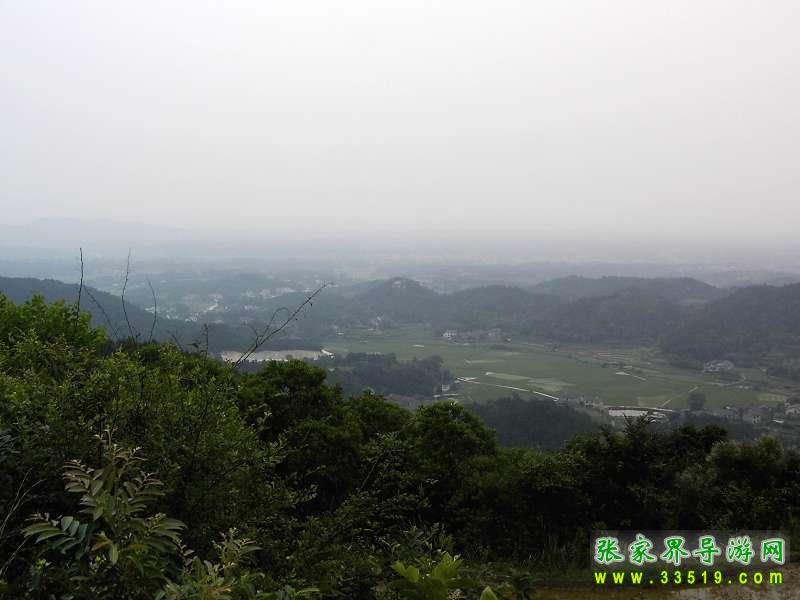
This attraction introduction is compiled from historical materials in the "Zhangjiajie Tour Guide Network" (33519.com · Scenic Spots section). Ticket prices, opening hours, transportation, and contact information mentioned in the text may be outdated. Please refer to the latest official announcements from the scenic area before traveling; some content consists of historical background/cultural introductions and is for reference only.
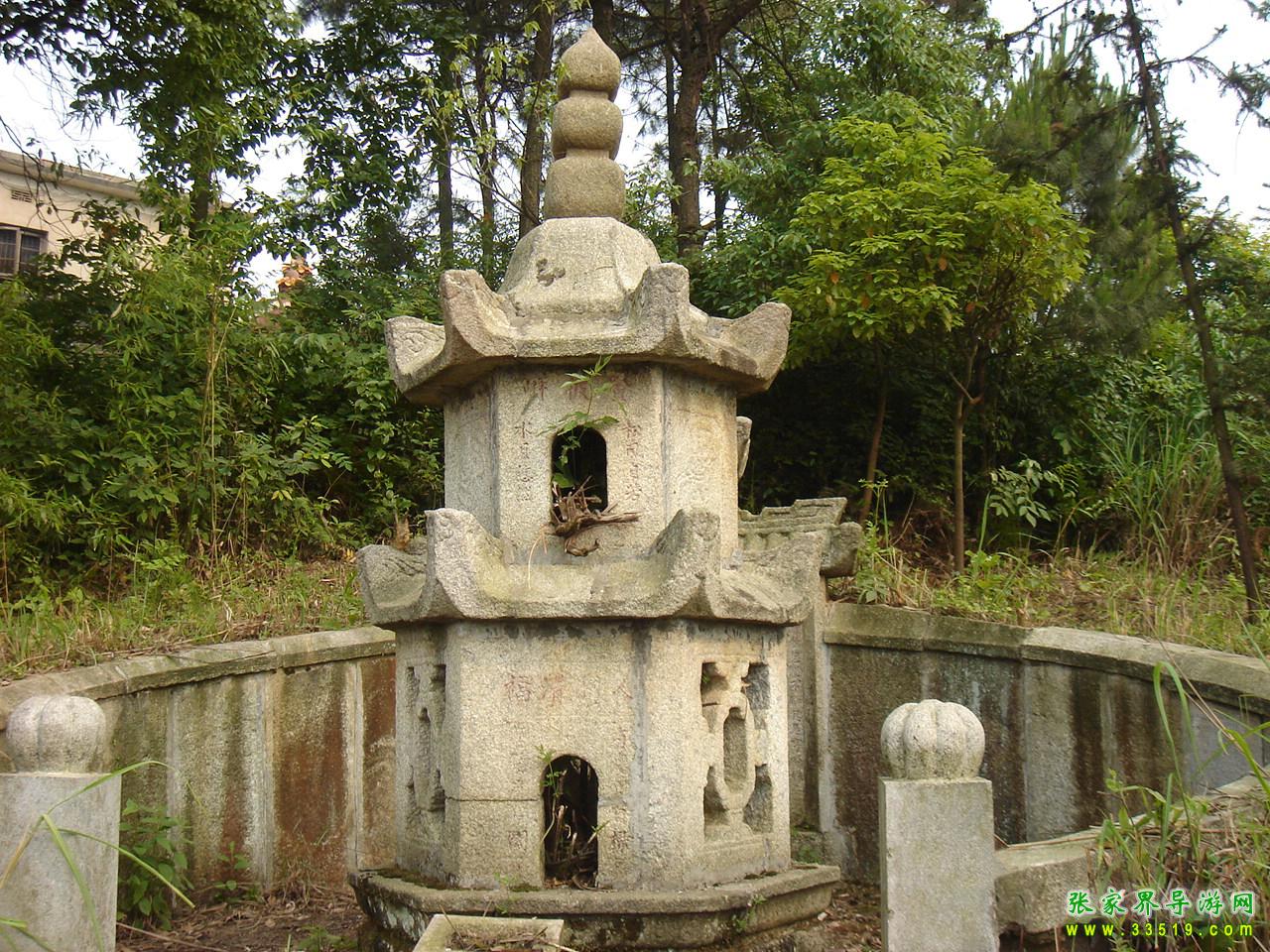
Tielu Temple is located in Hanhui Village, Laodaohe Town, Changsha County, Hunan Province, fifteen li from Changsha City. The date of its founding is unknown. In the early 1950s, two ancient tea trees with luxuriant branches and leaves grew in the courtyard in front of the temple hall. Legend has it that these tea trees were planted by Yue Fei himself when he led troops to the Dongting Lake area during the uprisings of Zhong Xiang and Yang Yao from the fourth year of Jianyan to the fifth year of Shaoxing (1130—1335) during the reign of Emperor Gaozong of the Southern Song Dynasty, and passed through this place. Based on this, the temple has a history of at least 864 years. By 1959, the temple was demolished, leaving only two miscellaneous rooms. The bhikkhunis Fudu and Zhengshun, master and disciple, still guarded it bitterly, diligently weaving and skillfully embroidering, maintaining a simple life through labor and a small government subsidy.
During the "Great Cultural Revolution," in the destruction of the "Four Olds," the Chinese temple suffered a catastrophe; monks and nuns were expelled, and Buddha statues were smashed. The two ancient tea trees growing at Tielu Temple also fell heavily on a stormy night with lightning and thunder. From then on, the ancient site declined, and the temple fell into ruin. After the catastrophe, everything awaited revival. Although the bhikkhunis of Tielu Temple did not have the grand feat of Master Xuanzang's solitary journey of ten thousand li to the West in search of the Dharma, nor the talent of the Eight-Fingered Ascetic whose wisdom was like the sea and who composed poems on the spot, they nevertheless, with their strong will and the plain mind of diligent practice, won a space for Buddhism to survive and develop. After the reform and opening up, Tielu Temple, with only two miscellaneous rooms remaining, by the appeal of its old site as a thousand-year-old temple, attracted bhikkhunis Liaozheng, Diguang, Jueming, Peiguang, and others to live together, and later Mingwu, Xiaochang, Peide, Xiaowu, and others came to register. On the one hand, they practiced slash-and-burn cultivation and lived together in ascetic practice; on the other hand, they economized on food and clothing, developed followers, and began to dream of reviving Tielu Temple. Over the following sixteen years, no matter how hard life was, they never gave up this original intention. In 1993, the dream of reviving the temple was fulfilled: a mountain gate with various sculpted scenes, bright in color, simple and natural; a cement avenue leading directly to the front courtyard of the newly built Mahavira Hall; buildings constructed in sequence including the Sangharama Hall, Skanda Hall, Medicine Buddha Hall, Patriarch Hall, Reception Hall, Buddha-Recitation Hall, Dining Hall, Xiangji Kitchen, Office, and other structures, with a unique layout, full of novelty, well-arranged, elegant and simple, making it the finest among existing Buddhist temples in Changsha City. Around the temple are thousands of qing of dense forest, with the soughing of pines swirling; within the temple, Buddha statues are solemn, with an awe-inspiring atmosphere; all the devas gather, lifelike. There is also curling incense smoke and ringing wind bells—truly a pure land in the dusty world, a Brahma palace in the human realm, a bright pearl in the hearts of the people of Changsha, pure and unstained by worldly dust. As the largest open Buddhist practice site in Changsha County, it attracts more and more devout men and women. Here there are female monks who cultivate their nature, worship Buddhas, and recite sutras; lay Buddhists who firmly believe in the Dharma and devoutly protect the teachings; Taiwanese compatriots who pilgrimage to famous mountains and support the ancestral temple; and Hong Kong visitors who return to their roots after years away. The persons in charge of Tielu Temple, the two bhikkhunis Liaozheng and Zhengshun, began the work of restoring the ancient temple and cultivating talent in 1977. Because the implementation of policies had just begun at that time, when restoring the temple, the buildings could only be built as courtyard-style farmhouses, and classical-style halls were not permitted. In addition, with limited economic income at the time, the bhikkhunis could only accumulate the income from Buddhist rituals and the alms of believers, and rebuild the Mahavira Hall, Buddha-Recitation Hall, living quarters, and miscellaneous rooms with earth-and-wood structures, and gild and enshrine the newly molded clay Buddha statues. Thus a simple religious activity site was opened to the public. During the construction process, the nuns took on heavy physical labor that generally only men could bear. By day they endured the assault of sun and rain, carrying bricks and tiles; by night they guarded materials, using wood as pillows. Through their actions, they embodied the ascetic spirit of the Buddhist gate: "to do what is difficult to do, to endure what is difficult to endure." The younger one at the time was the nun Xiaochang, over 40 years old, who almost took on all the heavier physical labor such as purchasing materials and arranging the daily life of the craftsmen. Interestingly, the illiterate bhikkhuni Xiaowu, relying on the time spent guarding materials at night, learned to recite fluently and without a single error the Great Dedication Text before the Buddha.
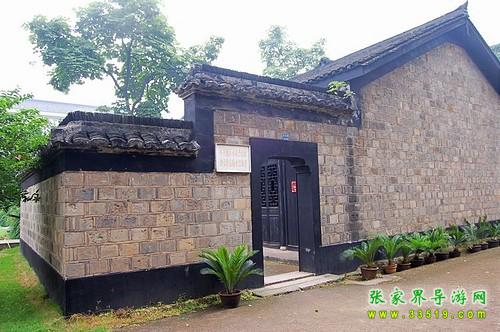
By 1982, Tielu Temple, which had gathered the painstaking efforts of many bhikkhunis, had nine rooms collapse due to the assault of heavy rain night after night. The news soon reached the ears of fellow practitioners living in Changsha City and at the famous Kaifu Temple in the Three Xiang region. They immediately generously extended a helping hand and widely informed believers of other temples to join in the good deed. In particular, after the two Hong Kong bhikkhunis Guoxing and Cimin, who had gone out from Changsha, heard the news, they vied with each other in donating money to help. Thus the collapsed houses were soon rebuilt. At this time, Tielu Temple, though lacking the solemnity and reverence of an ancient temple, had the simplicity and naturalness of a farmhouse, with the fragrance of earth everywhere. In their daily life of cutting firewood, growing vegetables, carrying water, and cooking, they did not forget to recite sutras, worship Buddhas, and teach believers. They lived a life of both farming and Chan. In simple dwellings and a plain life, the bhikkhunis could still cultivate, practice the Way, take disciples, and receive followers.
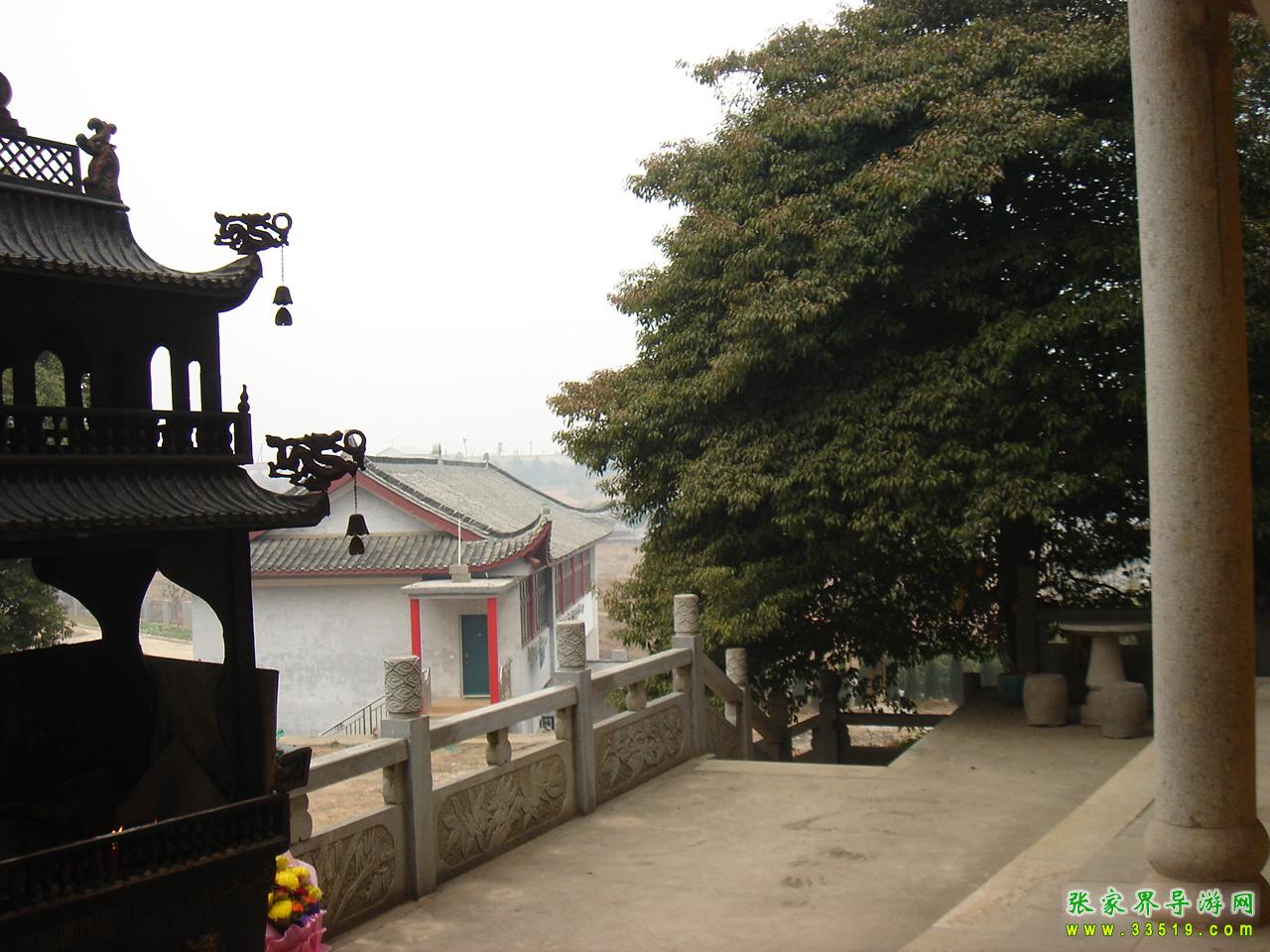
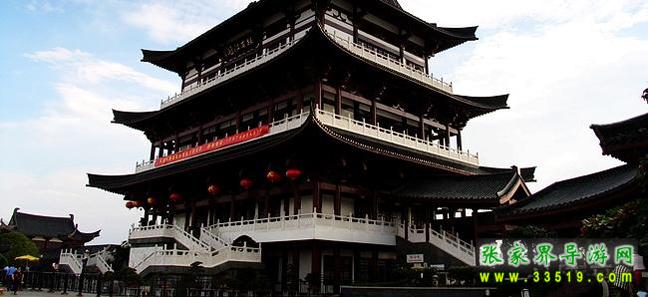
As the religious policy continuously took root in people's hearts, the farmhouse-style Buddha hall of Tielu Temple clearly could not meet the needs of the times. In 1987, with the support of the local government and the higher Buddhist Association, construction began on a Ming-Qing palace-style Mahavira Hall. It was decorated with carved granite railings; the outer corridor had 28 cement-made imitation stone pillars standing on the corridor base; a pair of stone lions in front of the hall were vivid and lifelike; and the surrounding greenery was carefully designed by landscape technicians, making it even more solemn and majestic. After the great hall was completed, a new-style building was also built to the east of the original temple, and with hardwood, statues of Shakyamuni Buddha, Ananda, Kashyapa, Thousand-Armed Guanyin, Manjushri, Samantabhadra, and the Twenty-Four Devas were newly carved and enshrined in the new hall. The original old hall and living quarters were all converted into a two-story hall. In 1993, with the help of the local government and the Land Bureau, part of the civilian vegetable plots within the temple were requisitioned according to policy, the temple boundaries were determined, and a mountain gate and enclosing wall were built. At this point the entire temple took on a completely new look. The Beijing calligrapher and painter Mr. Zong Jiashun wrote a couplet in praise: "Arouse a compassionate heart, no separation between self and things; this is a pure land, gloriously renewed." It is commendable that Tielu Temple, from restoration to reconstruction, cost 2 million yuan, yet never asked the government for a single cent; it was entirely the result of the painstaking management of the nuns and the generous donations of believers and great virtuous ones at home and abroad. Among them, Dharma Master Fazhi and Dharma Master Weiyi from Taiwan, and Master Guoxing and Master Cimin from Hong Kong, contributed the most. The older generation of monastics at Tielu Temple were especially enthusiastic about cultivating young monks. In 1983, two young women who had resolved to renounce the household life came to the temple to be tonsured. Because their aspirations were pure and their resolve sincere, they were kept at the temple for observation and given the dharma names Ziran and Weijing respectively. After several months of training, these two young women progressed rapidly, strengthened the resident community's capacity for Buddhist rituals and miscellaneous work, and became good helpers to the elderly bhikkhunis. In 1985, four more young women successively resolved to leave home and become nuns at the temple. By 1993, the wish of six middle-aged and young people to renounce the household life was also fulfilled. The elderly bhikkhunis understood the principle that "people can propagate the Way, not the Way propagate people," and they strongly supported these newly entered young people in going out to study, applying to religious colleges, and improving their political, cultural, and religious qualities, so that they could truly grow into successors who would preside over Buddhist temples and propagate the Dharma. Today, Ziran has been admitted to the Sichuan Buddhist Nuns' College for six years of study and has now graduated; Weijing is pursuing advanced studies at the Minnan Buddhist College; another three have graduated from the Nanyue Buddhist Lecture Institute; and one has gone to Pushou Temple on Mount Wutai to study Vinaya. Because these young Buddhist disciples received strict education from the moment they left home, and were influenced by their elders' emphasis on both farming and Chan and on both study and practice, they are firm and devout in faith and disciplined in life, becoming a group of good successors for Tielu Temple and indeed for the Buddhist community.
Tielu Temple has gone through rise and decline over the long river of history, and now the ancient temple shines again. Just as the contemporary great bhikkhuni Elder Longlian wrote in a couplet for it: "Cut off ignorance with resolute decisiveness; save sentient beings in the great furnace." It is believed that Tielu Temple, this thousand-year-old ancient practice site, will surely be built into a ten-direction bhikkhuni monastery that propagates Vinaya studies and regulates monastic conduct.