This attraction introduction is compiled from historical materials in the "Zhangjiajie Tour Guide Network" (33519.com · Scenic Spots section). Ticket prices, opening hours, transportation, and contact information mentioned in the text may be outdated. Please refer to the latest official announcements from the scenic area before traveling; some content consists of historical background/cultural introductions and is for reference only.
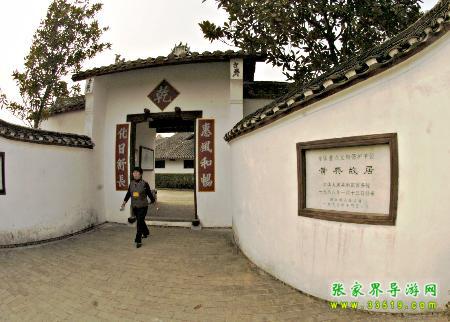
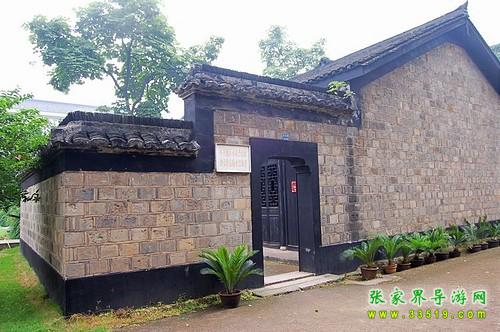
The Former Residence of Huang Xing is located in Liangtang, Yangtuo Village, Gaotang Township, Changsha County, Hunan Province, and is a nationally key cultural relic protection unit. On October 25, 1874, Huang Xing, a famous leader of the 1911 Revolution, was born here and spent 22 years of his life here. The Former Residence of Huang Xing was built in 1864, covering 2.05 mu. It was originally a large courtyard compound with two sections and two side rows, with 32 wing rooms on the left and right, of which 12 rooms still remain.
In the repaired former residence, there are displays including an introduction to the Former Residence of Huang Xing, an account of Huang Xing's life and deeds, and a sketch map of the former residence. The original appearance and furnishings of the living rooms of Huang Xing, his father Mr. Huang Xiaocun, and his mother Madame Luo during their lifetimes have also been restored and displayed. In 1981 it was designated a provincial key cultural relic protection unit. In October of the same year it was opened to the public.
The former residence is in Liangtang, Gaotang Village, Changsha County, Hunan Province. Huang Xing was born here and spent his youth here. Huang Xing (1874–1916) was a famous modern democratic revolutionary. His original name was Zhen, courtesy name Keqiang. In 1902 he went to Japan to study, and the following year returned to China, secretly engaging in anti-Qing revolutionary activities. In 1904 in Changsha he organized the Huaxing Society with Chen Tianhua, Song Jiaoren, and others; in 1905 in Tokyo he jointly organized the Tongmenghui with Sun Yat-sen. From 1907 onward he participated in and organized many anti-Qing uprisings. After the Wuchang Uprising in 1911, he was elected commander-in-chief of the revolutionary army. In 1912 he served as Minister of the Army and concurrently Chief of the General Staff of the Nanjing Provisional Government. In 1913 he served as commander-in-chief of the army against Yuan Shikai. In 1916 he died of illness in Shanghai. In 1917 a state funeral was held for him in Changsha. His tomb is at the top of Yuelu Mountain in Changsha City. In 1988 the State Council of the People's Republic of China declared it a nationally key cultural relic protection unit.
The former residence was built in the third year of Tongzhi in the Qing Dynasty (1864). It is a two-section courtyard compound with upper and lower main halls and a tea hall. On both sides of the main house there are several side houses and miscellaneous rooms. The building area is about 900 square meters, and only 12 rooms of the house remain. The building is a single-story earth-and-wood structure with a blue-tile roof, and the mud walls are coated with white lime on the outside. The main room on the left of the upper hall is Huang Xing's bedroom, and the main room on the right is the bedroom of Huang Xing's parents.
The tomb faces east with its back to the west. The tombstone is carved from a single piece of milky white rock, four-edged and shaped like a long sword, about 8 meters high. On the front of the tombstone is inlaid a 1.6-meter bronze plaque inscribed with "Tomb of Mr. Huang Keqiang." The tombstone is surrounded by stone pillars and iron railings, with an iron gate in front. The tomb is built of granite, with 92 stone steps in front and rest platforms beside the steps. In 1981 the 12 rooms of the former residence were repaired and restored for display, exhibiting 25 pieces of furniture and stationery used by Huang Xing during his lifetime, as well as photographs and calligraphy. In the same year the tomb of Huang Xing was repaired, and an exhibition of Huang Xing's deeds was arranged. In 1984 a new exhibition room on Huang Xing's revolutionary historical relics was opened in the former residence. A cultural relics management office for the Former Residence of Huang Xing was established. It is now managed by the Yuelu Park Management Office.
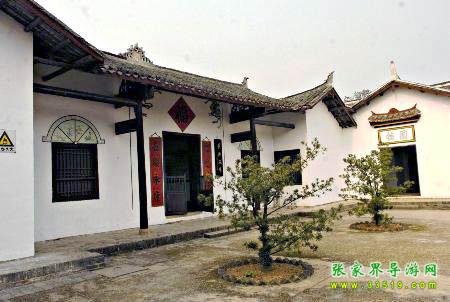
"The merit of founding the nation must not be forgotten; the people still speak of Sun and Huang." Huang Xing was a democratic revolutionary of the 1911 Revolution period who was named together with Mr. Sun Yat-sen, one of the highest leaders of the Chinese Tongmenghui, and was also honored as "one of the founders of the Republic." In August 2001, when the author came to the Former Residence of Huang Xing in Changsha County, Hunan, the largest renovation and maintenance since 1981 was underway, with the State Administration of Cultural Heritage and the county people's government investing a total of about 400,000 yuan. It is said that experts from the State Administration of Cultural Heritage were deeply interested in the "moat" of the Former Residence of Huang Xing, while Changsha County saw the brightest dawn for tourism in 20 years, and it was said that the main road would finally be built to the former residence.
The architectural part of the Former Residence of Huang Xing has been restored. Besides the role played by the allocated funds, the memory of Curator Tang of the museum also played a great role. For the author, who has come to see the former residence every year since the 1980s, Curator Tang's description of the original appearance of the former residence still came as a great surprise.
"Amazing deeds flow away with the water; loving my garden, I think of the setting sun." When Huang Xing was 39 years old, he left a homesick poem amid his wandering and turbulent revolutionary life. What exactly was the "garden" that Huang Xing thought of day and night?
In 1981, the Former Residence of Huang Xing was listed as a provincial key cultural relic protection unit and opened to the public. This single-story building, which at the time looked no different from those of the surrounding farmers, was enclosed by a wall for protection, and only a building with two sections, one courtyard, and 12 rooms was open; in this renovation, the "Huang rooms" on both sides connected to this building were restored, totaling 40 rooms, among which the west wing rooms were the rooms of Huang Xing's three elder sisters, named "Nanxuan," and the east wing rooms were the rooms where tenant farmers lived at the time, named "Jiapu." There were also a cattle mill room, granary, kitchen, and so on. These more than 50 large and small rooms made up the original appearance of Huang Xing's home, but this building covering 6 mu was only one-sixth of Huang Xing's estate.
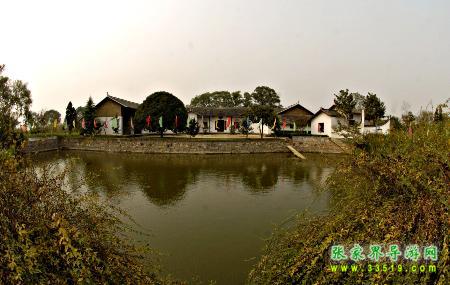
With the former residence as the center, the original overall layout of the residence was "a pond in front, a garden behind, pomegranates on the left, and purple bamboo on the right," covering a total of 36 mu (excluding water area), and on the outside it was encircled by a 4-to-5-meter-wide "moat," which connected with the "Big Liangtang," "Small Liangtang," and "Menqiantang" in front of the gate, three large ponds in total, with flowing water all year round. In this "manor" there was no farmland; the open spaces were all planted with flowers, grass, and trees, clear and pleasant. It is said that the pomegranate garden on the left side of the manor was bright and brilliant every spring, while in the purple bamboo garden on the right, every bamboo was purple, cultivated with considerable care. What connected the manor to the outside was a granite road extending outward from the "character-eight groove gate" on the due south side. The granite road was built very long, reaching east all the way to "Jiejialing" and west all the way to the Yangmei River (a tributary of the Liuyang River).
Huang Xing's father, Huang Xiaocun, ran a private school at home and also had 300 shi of grain fields (fields capable of producing 300 shi of grain), so Huang Xing's family was indeed a wealthy household in the countryside at that time. The wealth of Huang Xing's family is rarely mentioned in general historical materials, including when Huang Xing's youngest daughter Huang Dehua returned to her hometown in 1984 to visit the former residence; she did not mention the various aspects of the former residence's original appearance either, only marveling at the changes in her hometown.
In the summer and autumn of 1903, Huang Xing returned to Changsha from Japan and taught at the Mingde School, secretly contacting like-minded comrades and brewing plans to organize a revolutionary group against the rule of the Qing Dynasty. To avoid the attention of the Qing government, the name "Huaxing Company" was adopted externally, and the company's stated mission was "to establish mining enterprises," raising one million yuan as "mining capital." In reality, the word "mining" substituted for "revolution," "buying shares" substituted for "joining the society," and stock certificates served as membership cards. At the time, two business slogans were also put forward: "Strike the Manchus with one heart, settle accounts face to face," which in fact carried the meaning of "overthrowing the Manchu Qing."
Curator Tang said that the Huaxing Society founded by Huang Xing was in fact made possible only by selling off the family's ancestral farmland and grand mansion. In 1903, Huang Xing's father had already passed away, and his stepmother still lived in their hometown. To raise funds for founding the society, Huang Xing wanted to sell the family property and land in his hometown. Huang Xing, who had been raised to adulthood by his stepmother, knew he was letting her down, and knelt before her. His stepmother, Yi Ziru, had studied since childhood and deeply understood matters of principle. At this critical moment she supported Huang Xing, and the whole family moved out of the grand mansion to live about one li from the former residence, at Shijiahe Wharf, in the home of Huang Xing's eldest sister, who had married into the Liu family. From then on, the grand mansion passed through the hands of many different owners.
A little-known fact is that just east of Huang Xing's former residence, separated only by the "Zhuang-Protecting River," was actually the former residence of Wang Yiwu, a Grand Secretary of the Imperial College in the late Qing Dynasty. Across the Yangmei River from Huang Xing's former residence stands the actual tomb of Zuo Zongtang, who was enfeoffed as a marquis by the Qing court and posthumously granted the title Grand Tutor and the name Wenxiang. Zuo Zongtang was neither born locally, nor served as an official here, nor passed away here—so why did he choose to be buried in this very spot? Unfortunately, his epitaph has been destroyed, and to this day it remains a mystery.