This attraction introduction is compiled from historical materials in the "Zhangjiajie Tour Guide Network" (33519.com · Scenic Spots section). Ticket prices, opening hours, transportation, and contact information mentioned in the text may be outdated. Please refer to the latest official announcements from the scenic area before traveling; some content consists of historical background/cultural introductions and is for reference only.
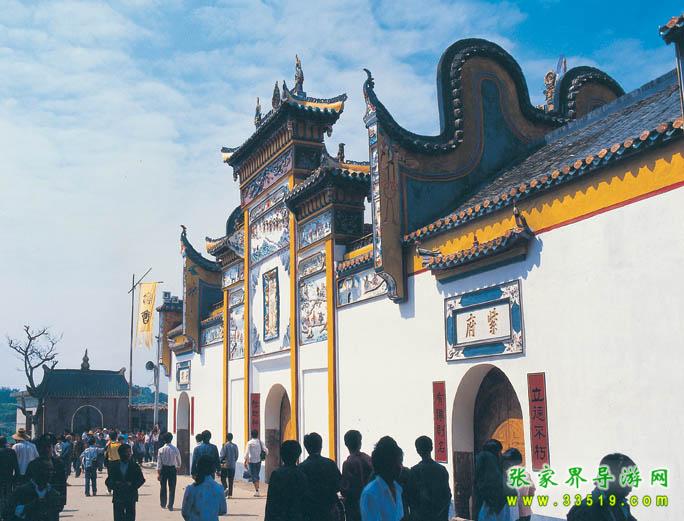
Taogong Temple is located in Langli Town, Changsha County, bordering the Liuyang River and nestled against Linxiang Mountain. Surrounded by ancient towering trees, the scenery is exceptionally beautiful. It is a provincial-level cultural relic protection unit.
Taogong Temple was built in the early Tianjian era of the Liang Dynasty (502–519 AD). It is known as "a temple surviving from the Six Dynasties, a famous mountain for a thousand years." According to historical records, it was built to honor Tao Dan, grandson of Tao Kan, Grand Commandant of the Jin Dynasty, and his nephew, who built a hut on Linxiang Mountain and later retired there together. The local people, admiring their pure reputation and great virtue, established this temple to offer sacrifices to them.
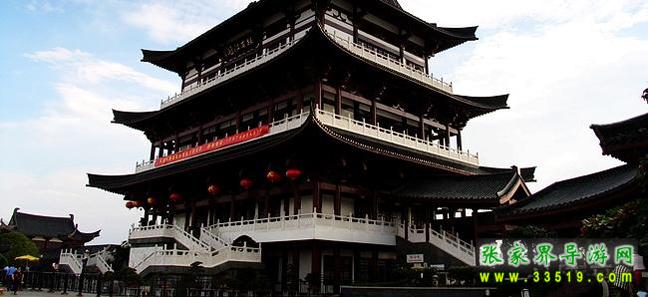
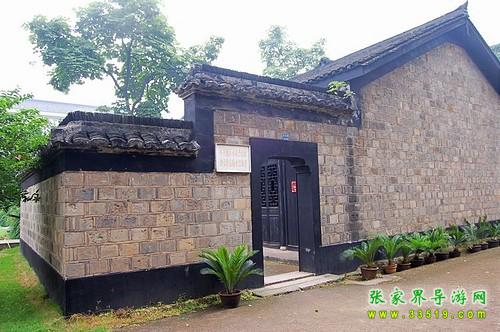
The ancient temple consists of the main hall, the mountain gate, the opera tower, and stone steps. Above the central gate of the mountain gate hangs a plaque reading "Linxiang Mountain." On both sides of the mountain gate is a couplet: "A prime minister in the mountains, an immortal on land." This couplet refers to: Tao Hongjing of the Southern Dynasties first served the Qi Dynasty, later entered the Liang Dynasty, and lived in seclusion on Mount Mao, repeatedly declining invitations to serve. During the reign of Emperor Wu, whenever the state had important matters, he would go to consult him, and people of the time called him "the prime minister in the mountains." Tao Yuanming of the Jin Dynasty was called "an immortal on land" because he was known for forgetting gains and losses. In addition, the left and right mountain gates are respectively inscribed with the horizontal plaques "Purple Mansion" and "Cinnabar Hill," and embedded with the couplets "Establishing virtue brings immortality; where there is an immortal, there is fame" and "A temple surviving from the Six Dynasties, a famous mountain for a thousand years."
According to the "Changsha County Gazetteer," Taogong Temple was first built in the third year of the Tianjian era of the Liang Dynasty during the Northern and Southern Dynasties (504 AD), giving it a history of nearly 1,500 years. After repeated expansions and restorations, Taogong Temple now covers more than 5,300 square meters, with a building area of about 2,000 square meters. It mainly consists of six parts: the mountain gate, the opera tower, the stone steps, the main hall, and the side halls.
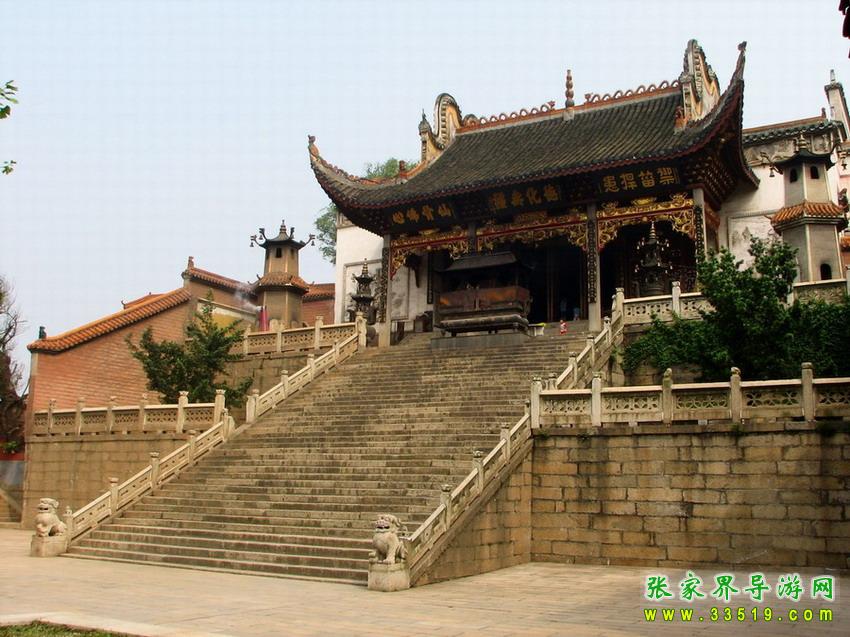
In the temple's architecture, whether roof ridges, upturned eaves, screen walls, decorated beams, hanging eaves, baseboards, railings, caisson ceilings, bracket sets, doors, or windows, various artistic techniques such as molded sculpture, carving, and polychrome painting are applied with perfect appropriateness as decoration, making the temple appear magnificent, antique, and divinely crafted. This fully demonstrates the superb skills of ancient Chinese architectural craftsmen and is truly breathtaking. The opera tower was originally named "Daguan" and later changed to its current name; the two characters "Gu Lou" (Ancient Tower) were written in the hand of Weng Tonghe, teacher of the Guangxu Emperor. The couplet at the stage opening was written in the hand of the famous calligrapher of our province, Mr. Yan Jialong.
According to legend, the thirteenth day of the first lunar month and the seventeenth day of the eighth lunar month are the birthdays of Tao Gong and his nephew. Therefore, on these two birthdays each year, Taogong Temple holds a temple fair. Today, the Taogong Temple fair in Langli Town has stepped out of tradition and incorporated more healthy cultural content. Since 1997, the Changsha County People's Government has designated the Taogong "Birthday Temple Fair" as the "Taogong Temple Cultural Temple Fair," guiding it to become a mass festival that spreads advanced technology and advanced culture.