This attraction introduction is compiled from historical materials in the "Zhangjiajie Tour Guide Network" (33519.com · Scenic Spots section). Ticket prices, opening hours, transportation, and contact information mentioned in the text may be outdated. Please refer to the latest official announcements from the scenic area before traveling; some content consists of historical background/cultural introductions and is for reference only.
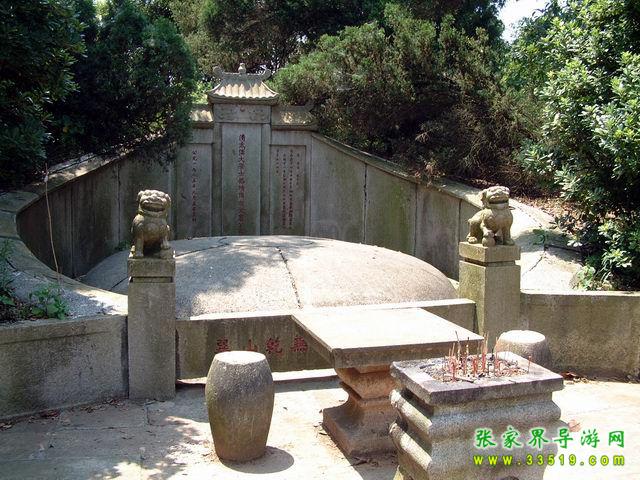
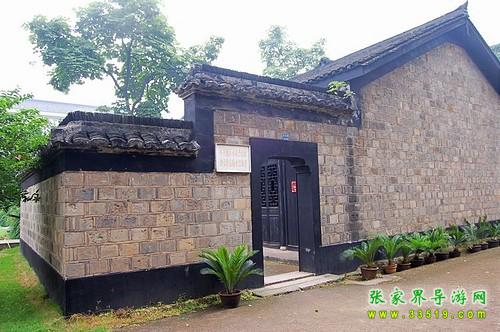
Zuo Zongtang's tomb is located in Baizhu Village, Shimen Township, Changsha County. From Huang Xing's former residence, cross the Yangmei River Bridge and head south about 2 kilometers, and you will see the "Stele Record of the Reconstruction of Zuo Zongtang's Tomb" by the roadside. Climb several dozen stone steps from behind the stele, and "Tomb of Zuo Wenxiang Gong, Grand Tutor and Grand Secretary of the Qing Dynasty, Marquis of Jing" leaps into view. In front of the tomb is a stone platform, accompanied by a stone table, stone drum, and stone incense burner. On both sides, the ornamental columns are inscribed with a couplet: "Han achievements and Tang institutions forever secure the western frontier; Qin plains and Long roads, the frontier willows ever green."
Zuo Zongtang, courtesy name Jigao, also styled Pucun, was born on the seventh day of the tenth month of the renchen year in the seventeenth year of the Jiaqing reign of the Qing Dynasty (1812) at Zuojia Duan in Xiangyin, Hunan.
Zuo Zongtang was one of the representative figures of China's modern Self-Strengthening Movement. He founded the Fuzhou Shipyard, the Gansu Manufacturing Bureau, and the Lanzhou Machine Weaving and Woolen Mill, among others.
Zuo Zongtang's greatest contribution was recovering Xinjiang and consolidating coastal defense. Since the Tongzhi reign of the Qing Dynasty, Yaqub Beg of Central Asia had invaded southern Xinjiang; Tsarist Russia had seized Ili and attempted to forcibly occupy northern Xinjiang. Li Hongzhang and his faction advocated abandoning "frontier defense," refused to send troops, and spread the claim that "sending troops will surely lead to defeat." Zuo Zongtang overcame all objections and, in his rare seventies, "carried his coffin on the western expedition," greatly boosting morale. With his outstanding military talent, he commanded the troops: "Do not rape or plunder, do not slaughter the innocent; the king's army is like timely rain." He won the support of all ethnic groups. The Qing army "drove more than three thousand li in a month," sweeping all before them and bringing Xinjiang back into the embrace of the motherland. He then established military farms on the frontier, "teaching the people farming methods to make full use of the land's productivity." Not long afterward, French invaders provoked war in the south. Zuo Zongtang was then a Grand Councilor and was promoted to Grand Secretary, enfeoffed as First-Class Marquis Kejing and then Second-Class Marquis. He volunteered to go to the front to command the troops, and was soon transferred to Viceroy of Liangjiang, "supervising Fujian military affairs as Imperial Commissioner." Despite illness and the infirmities of old age, he personally went to Fuzhou to organize defenses and formed the "Kejing Taiwan-Supporting Army" to cross east to Taiwan. On July 27, 1885, he died in the army at Fuzhou and was posthumously given the name Wenxiang. Before his death, he still blamed himself, saying, "I have not greatly extended our punitive expeditions or spread our nation's prestige; this regret lasts my whole life, and I shall die with my eyes open." His patriotic devotion is deeply moving, and he is worthy of being called an outstanding national hero.