This attraction introduction is compiled from historical materials in the "Zhangjiajie Tour Guide Network" (33519.com · Scenic Spots section). Ticket prices, opening hours, transportation, and contact information mentioned in the text may be outdated. Please refer to the latest official announcements from the scenic area before traveling; some content consists of historical background/cultural introductions and is for reference only.
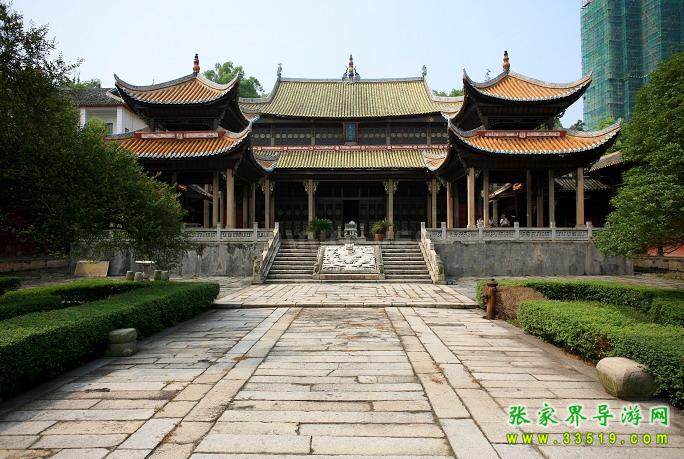
Liuyang Confucian Temple is a cultural relic protection unit of Hunan Province. It is located on Mashi Street (now Guizhai Road) in Liuyang County town. It was first built in the Song Dynasty and moved to its present site in the twenty-third year of the Jiaqing reign of the Qing Dynasty (1818). In the twenty-third year of the Daoguang reign (1843), County Magistrate Shen Luzheng moved the Chongsheng Shrine to the east of the Confucian Temple, rebuilt the Dacheng Hall, added the Kuiwen Pavilion behind the hall, and repaired other buildings in the temple, forming the present layout of the Liuyang Confucian Temple.
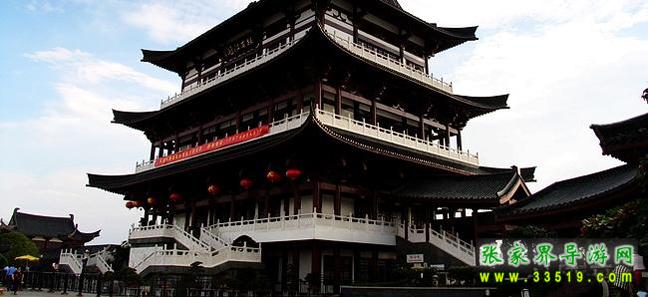
The Confucian Temple faces south, covering an area of 6,000 square meters. Along its central axis are, in order, the Lingxing Gate (now rebuilt), the Pan Pond (now a flowerbed), the Dacheng Gate, the Imperial Path, the Dacheng Hall, and the Kuiwen Pavilion. Flanking these on the east and west are the Zhuangyuan Gate, the Bell and Drum Pavilion, the Music and Dance Pavilion, side rooms, and covered corridors, all enclosed by vermilion walls. The Dacheng Hall is the main structure of the temple, built of brick, stone, and wood, with an area of 136.3 square meters and a height of 16.5 meters. It has a double-eaved hip-and-gable roof, covered with glazed cylindrical tiles, with blue-and-white porcelain tiles forming the ridge and a gourd-shaped finial at the center. Inside the hall, 32 stone columns support the beam framework, arranged in three tiers. The front features carved openwork central doors as a screen, with stone balustrades and corridors on three sides, and an imperial stele pavilion behind the hall, creating a rigorous layout that is elegant and serene. The Dance Pavilion and Music Pavilion are placed east and west of the moon terrace, both square pavilions with four-cornered double-eaved pyramidal roofs. The Kuiwen Pavilion originally housed plaques inscribed by Qing emperors Kangxi and Qianlong, such as "Civilization Rests Here" and "Model Teacher for All Ages," which were destroyed during the "Cultural Revolution." The temple was a site for worshipping Confucius, with a statue of Confucius originally in the Dacheng Hall, flanked by tablets of sages from successive dynasties. During the Daoguang reign of the Qing Dynasty, ancient musical instruments for Confucius worship were made in the temple, and the eight-row dance was practiced (the complete set of ancient instruments is now kept in the Hunan Provincial Museum). After 1949, most of the temple buildings were used for teaching at Liuyang County No. 1 Middle School. Starting in 1986, the provincial cultural relics department allocated funds in stages for repairs and designated the Liuyang County cultural department to manage it. Currently, the main buildings such as the main hall, Dacheng Gate, Dance Pavilion, and east and west side rooms have been repaired and completed, basically restoring the Qing Dynasty layout. The Confucian Temple will be opened as the Liuyang Museum.